
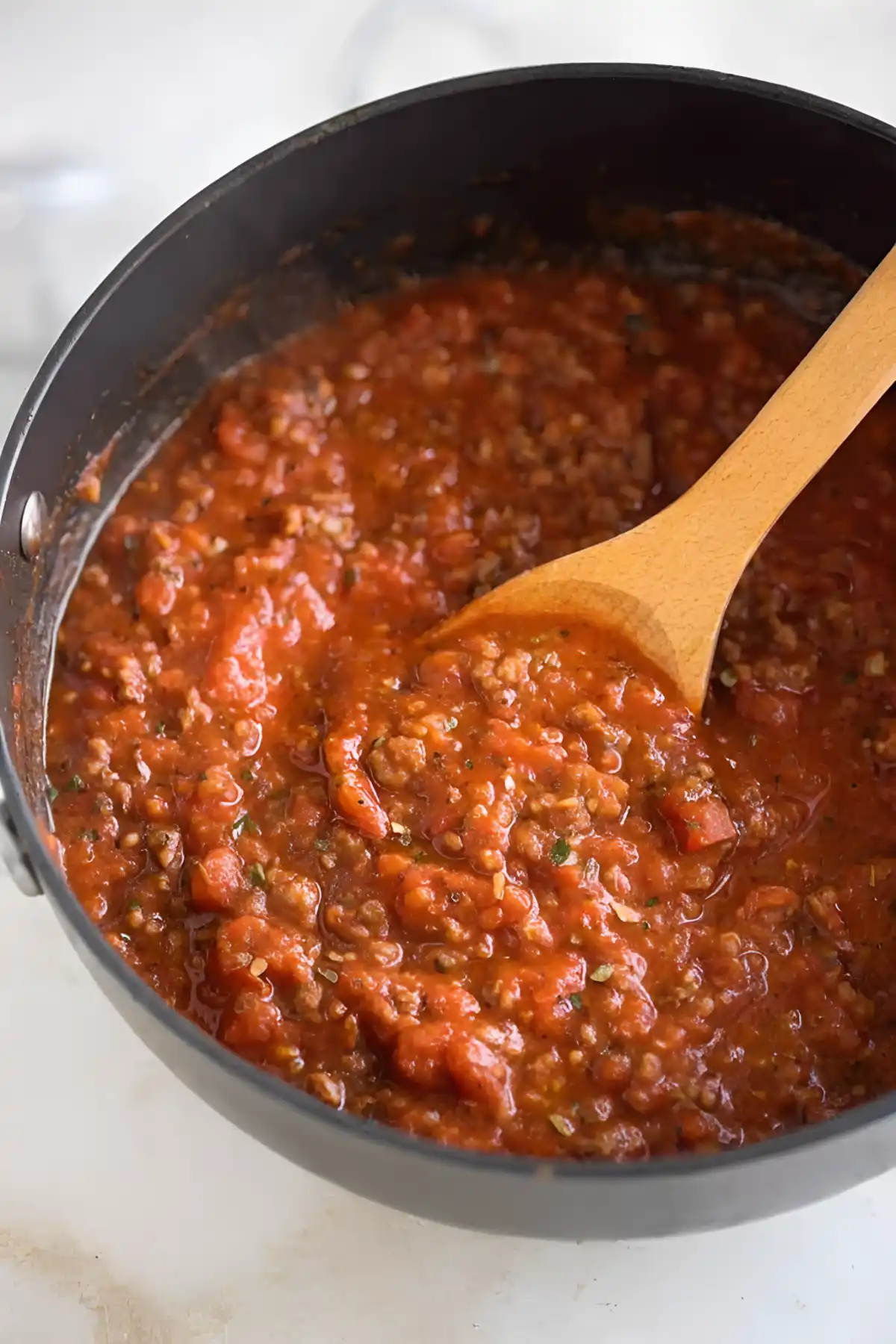
I grew up watching a simple pot of spaghetti sauce turn an ordinary evening into something special. The smell alone meant dinner was going to be rich, warm, and satisfying. This recipe brings that same feeling but with a faster and smarter method. You get bold flavor, smooth texture, and a sauce that tastes like it simmered all day. If you want a homemade spaghetti sauce that is easy, reliable, and full of taste, you are in the right place.
Table of Contents
Why This Recipe Works
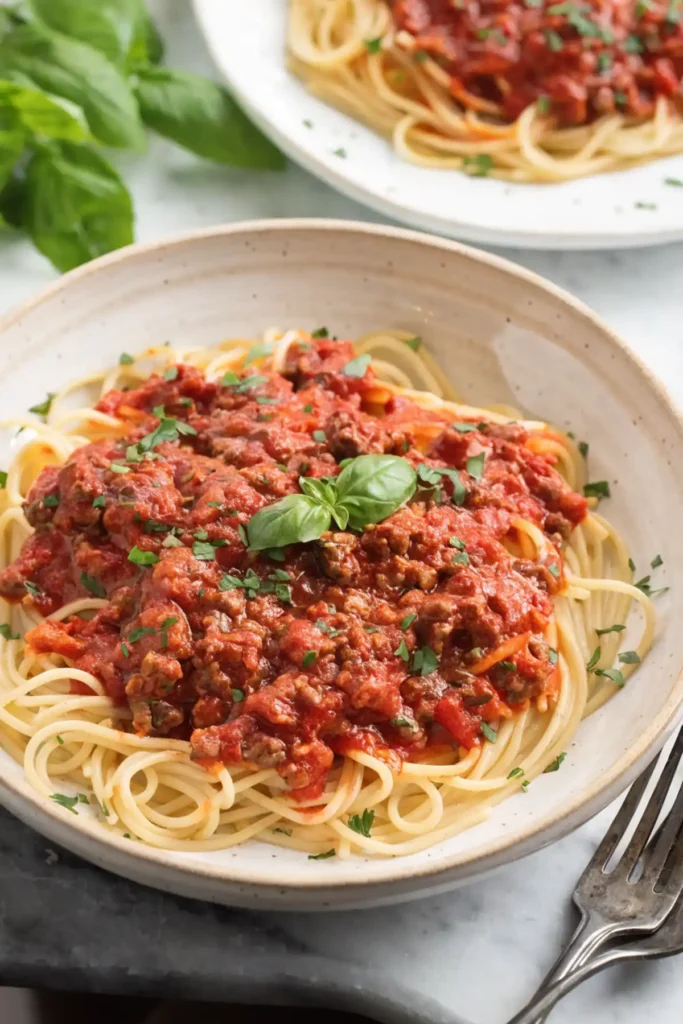
The Texture Secret:
Most sauces feel chunky or uneven. This method fixes that. After browning the meat, you pulse it briefly in a food processor. The result is a fine, smooth texture that blends perfectly into the sauce. It is ideal for kids or anyone who prefers a softer bite.
The Umami Booster:
A small amount of Worcestershire sauce adds deep flavor fast. It gives the sauce a rich, slow-cooked taste without hours on the stove. This step makes a big difference with very little effort.
The Acidity Balance:
Canned tomatoes can taste sharp or slightly bitter. A touch of sugar helps balance that flavor. It softens the acidity and brings out the natural sweetness of the tomatoes.
Ingredients Needed
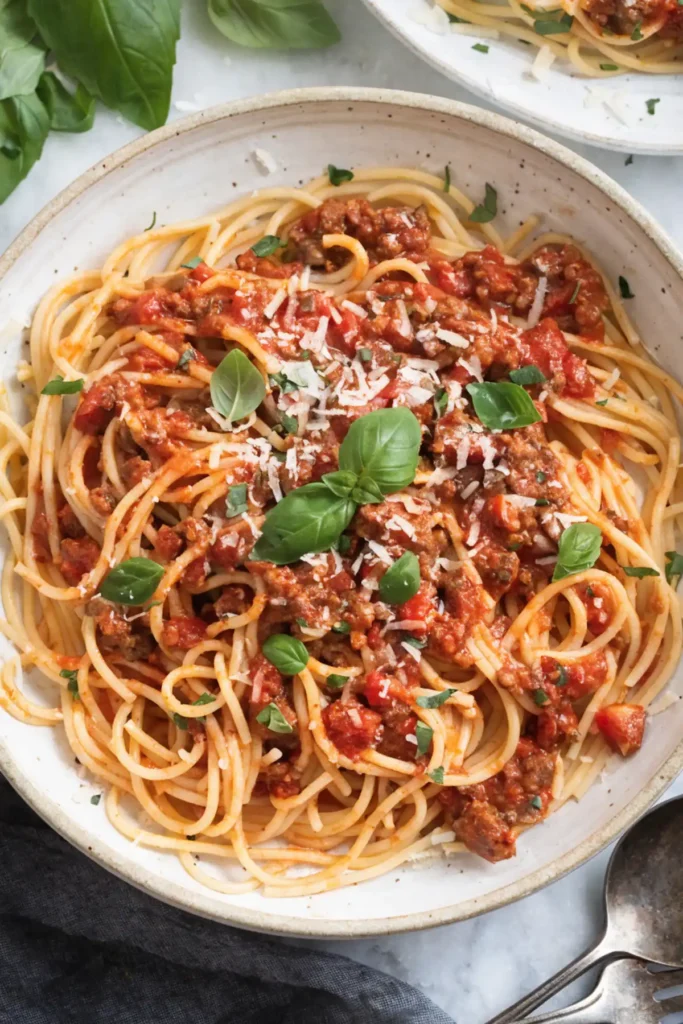
For the Meat Base
- 1 pound ground beef
You can also use half ground beef and half Italian sausage for a richer taste - Salt and freshly ground black pepper
Season to your preference while cooking - 1 medium onion, finely chopped
This builds the base flavor and adds natural sweetness
For the Tomato Sauce
- 15 ounces tomato sauce
A smooth base that holds everything together - 6 ounces tomato paste
Thickens the sauce and deepens the flavor - 1 teaspoon garlic powder
Gives a steady garlic taste without burning - 1 half teaspoon Italian seasoning
A mix of herbs that adds classic flavor - 1 tablespoon dried parsley flakes
Adds a mild herbal note - Crushed red pepper flakes
Use a small pinch or more if you like heat
Flavor Boosters
- 1 tablespoon Worcestershire sauce
Adds depth and a rich savory taste - 1 tablespoon granulated sugar
Helps balance the acidity of the tomatoes - 1 cup water
Adjusts the consistency of the sauce - 1 quarter cup fresh basil leaves, chopped
Optional but adds fresh aroma at the end
For Serving
- Spaghetti noodles
Cook according to package instructions and serve with the sauce
This ingredient list keeps things simple while building strong flavor in every layer.
How to Make Homemade Spaghetti Sauce
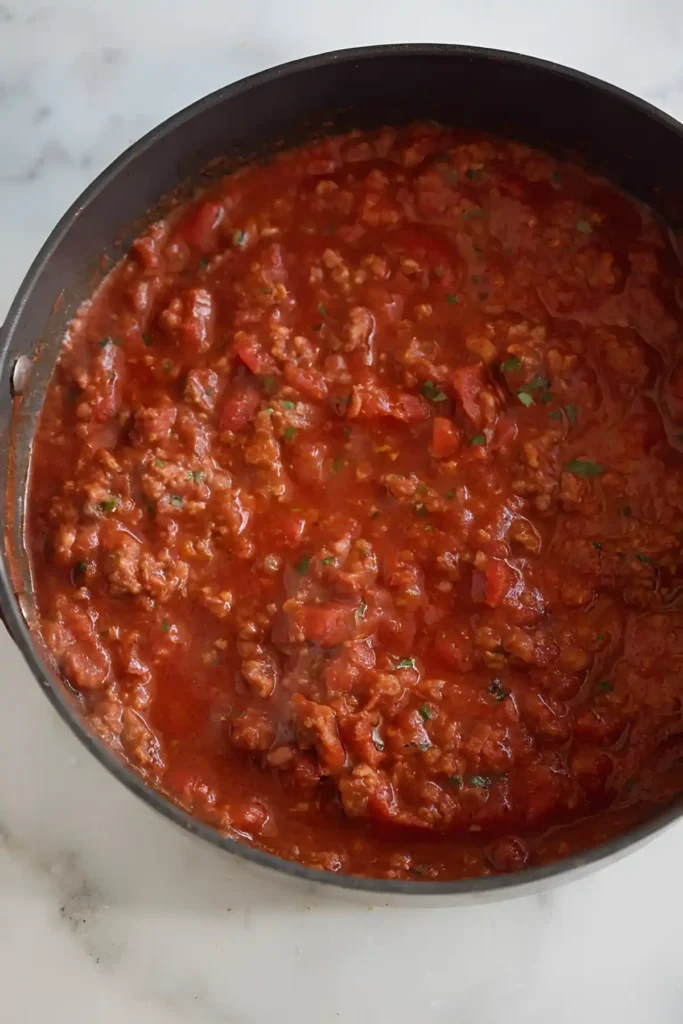
Step 1: Season the Meat
Start by placing the ground beef in a large bowl. Add salt and black pepper. Mix lightly with your hands so the seasoning spreads evenly. This step builds flavor from the very beginning.
Step 2: Brown the Beef and Onion
Heat a large skillet over medium heat. Add the seasoned beef and chopped onion. Cook while breaking the meat into small pieces with a spoon. Continue until the beef is fully browned and the onion turns soft and slightly golden. This process creates a rich base for the sauce.
Drain any extra grease to keep the sauce from feeling heavy.
Step 3: Improve the Texture
Transfer the cooked meat mixture to a food processor. Pulse a few times until the texture becomes fine and smooth. Do not over process. You want a soft texture, not a paste. This step helps the sauce feel more balanced and is great for picky eaters.
Step 4: Build the Sauce
Return the meat mixture to the skillet. Add tomato sauce, tomato paste, garlic powder, Italian seasoning, dried parsley, crushed red pepper flakes, Worcestershire sauce, and sugar. Stir well until everything is fully combined. Each ingredient adds a layer of flavor.
Step 5: Bring to a Gentle Boil
Turn the heat slightly higher and let the sauce reach a light boil. Stir occasionally to prevent sticking. This helps the flavors start to blend together.
Step 6: Adjust the Consistency
Pour in the water and stir again. This loosens the sauce and helps it cook evenly. You can adjust the amount later if needed.
Step 7: Simmer for Depth
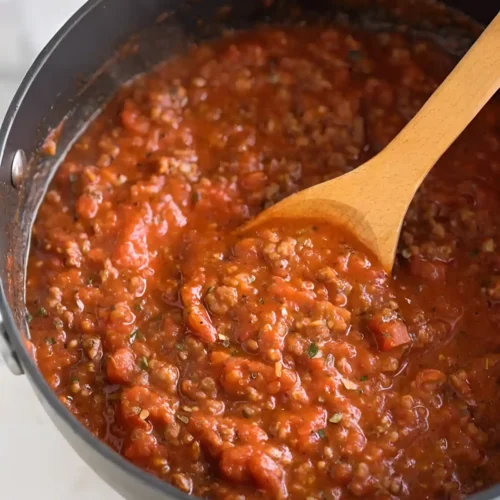
Reduce the heat to low. Let the sauce simmer for about 30 minutes. Stir from time to time. As it cooks, the sauce will thicken and develop a deeper taste. You will notice it coating the spoon more easily when ready.
Step 8: Add Fresh Basil
Just before serving, stir in the chopped fresh basil if using. This adds a fresh aroma and a light finish to the sauce.
Step 9: Serve and Enjoy
Serve the sauce over cooked spaghetti noodles. For extra flavor, you can toss the noodles in the sauce for a few minutes before plating so they absorb more taste.
This sauce also works well in baked dishes like spaghetti pie, layered pasta bakes, or slow cooker meals.
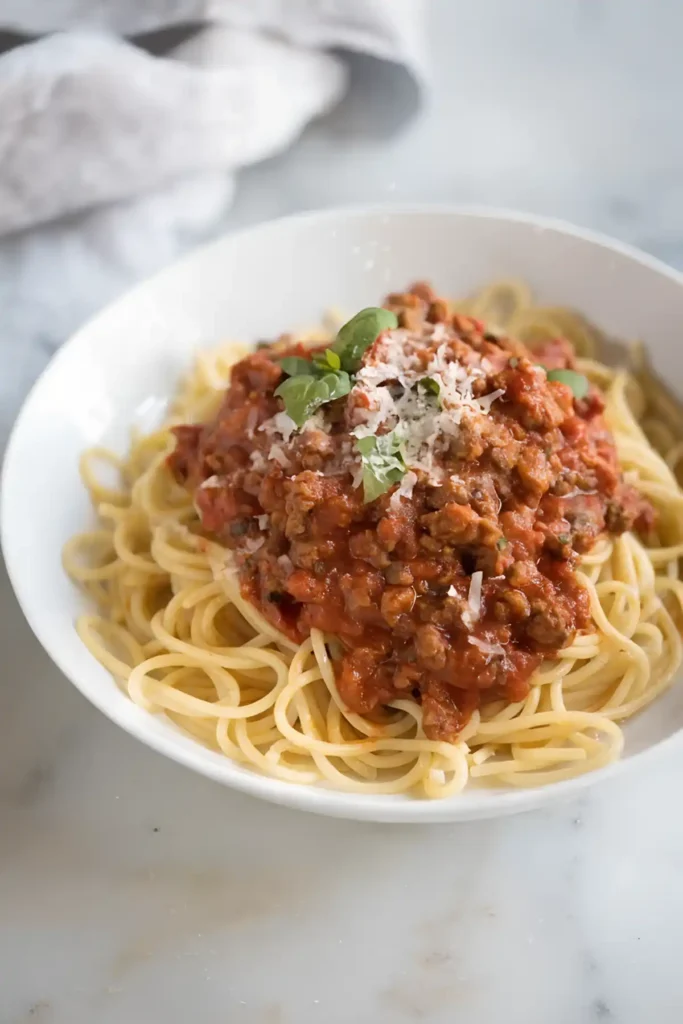
Acidity & Texture: Troubleshooting Your Sauce
If the Sauce Feels Too Thick
Sometimes the sauce reduces more than expected during simmering. Add water slowly, about one quarter cup at a time. Stir well after each addition. Stop once the sauce reaches a smooth, pourable consistency that still coats the spoon.
If the Taste Feels Too Bitter
Canned tomatoes can have a sharp or slightly metallic taste. A small amount of sugar helps balance this. Start with a little, taste, then adjust if needed. This step brings out a more rounded and pleasant flavor.
For a Smooth Texture Every Time
If the sauce feels too chunky, the food processor step makes a big difference. It blends the meat into the sauce, creating a soft and even texture.
Picky Eater Tip
Kids often avoid sauces with visible pieces. The blended texture helps hide onions and meat bits. The result is a cleaner look and a more enjoyable bite for them.
What to Serve with Spaghetti Sauce
A good spaghetti sauce becomes even better when paired with the right sides. These simple options help turn your meal into a complete and satisfying dinner.
Bread Options
Soft breadsticks work perfectly with this sauce. Try making homemade breadsticks inspired by Olive Garden style. They are great for dipping and soaking up every bit of sauce on your plate.
Fresh Salads
A crisp salad balances the richness of the sauce. A classic wedge salad adds crunch and a creamy bite. A tomato and cucumber salad brings a fresh and light contrast that keeps the meal from feeling too heavy.
More Ways to Use This Sauce
This sauce is not just for spaghetti. You can use it in baked dishes like spaghetti pie or slow cooker lasagna. It also works well in quick meals like Instant Pot spaghetti. Having one sauce that fits many dishes saves time and adds variety to your weekly meals.
Make-Ahead, Storage, and Freezing
Make-Ahead Tip
You can prepare this spaghetti sauce in advance to save time during busy days. The flavor often tastes even better the next day as the ingredients settle together.
Fridge Storage
Let the sauce cool to room temperature. Transfer it to an airtight container. Store in the fridge for up to 3 to 4 days. Reheat on the stove over medium heat, stirring until warmed through.
Freezer Instructions
Allow the sauce to cool fully before freezing. Pour it into a gallon freezer bag. Lay the bag flat to save space and help it freeze evenly. Label with the date so you can track storage time. The sauce keeps well for 4 to 6 months.
Reheating from Frozen
Place the frozen sauce directly into a pot. Heat over medium heat. Stir occasionally as it softens and warms. Add a small splash of water if needed to reach your desired consistency.
Conclusion
This homemade spaghetti sauce stands out because it is simple, rich, and full of flavor without needing hours of cooking. The smooth texture makes every bite feel balanced, while the mix of seasonings and Worcestershire sauce gives it a deep, satisfying taste. It works for quick dinners and also fits well in baked pasta dishes.
If you tried this recipe, leave a comment and share your thoughts. Your feedback helps others and makes this recipe even better. You can also give it a star rating to show how it turned out for you.
Feel free to share this recipe on Pinterest or Facebook so others can enjoy it too. Did you try any changes like adding sausage or extra spices? Tell us what worked best for you.
YOU MIGHT ALSO LIKE…
Spaghetti Sauce

Ingredients
Meat Base
- 1 lb ground beef
- 1 medium onion, finely chopped
- salt to taste
- black pepper to taste
Tomato Sauce
- 15 oz tomato sauce
- 6 oz tomato paste
- 1 tsp garlic powder
- 0.5 tsp Italian seasoning
- 1 tbsp dried parsley flakes
- 1 pinch crushed red pepper flakes optional
Flavor Boosters
- 1 tbsp Worcestershire sauce
- 1 tbsp granulated sugar
- 1 cup water
- 0.25 cup fresh basil leaves, chopped optional
For Serving
- spaghetti noodles cooked according to package
Instructions
- Place ground beef in a bowl and season with salt and black pepper. Mix lightly to distribute seasoning evenly.
- Heat a large skillet over medium heat. Add the beef and chopped onion. Cook until beef is browned and onion is soft. Drain excess grease.
- Transfer the cooked mixture to a food processor. Pulse briefly until texture is fine and smooth. Do not over-process.
- Return the meat mixture to the skillet. Add tomato sauce, tomato paste, garlic powder, Italian seasoning, parsley, red pepper flakes, Worcestershire sauce, and sugar. Stir well.
- Bring the sauce to a gentle boil, stirring occasionally.
- Add water and stir to adjust consistency.
- Reduce heat to low and simmer for about 30 minutes, stirring occasionally, until thickened.
- Stir in fresh basil just before serving for added aroma.
- Serve over cooked spaghetti noodles and enjoy.
Notes
Nutrition Facts per Serving
- Calories: 303 kcal
- Carbohydrates: 16 g
- Protein: 18 g
- Fat: 18 g
- Saturated Fat: 7 g
- Cholesterol: 64 mg
- Sodium: 814 mg
- Potassium: 948 mg
- Fiber: 3 g
- Sugar: 11 g
- Vitamin A: 885 IU
- Vitamin C: 16 mg
- Calcium: 56 mg
- Iron: 4 mg
FAQs
What can I put in my homemade spaghetti sauce to make it taste better?
You can add Worcestershire sauce for deeper flavor, a pinch of sugar to balance acidity, or fresh basil at the end for a brighter taste. Some people also mix in a bit of beef broth for a richer result.
What seasonings go in spaghetti sauce?
Common seasonings include garlic powder, Italian seasoning, dried parsley, and crushed red pepper flakes. Salt and black pepper are also key. These simple spices create a well-rounded flavor.
What is the one ingredient I never skip when making spaghetti sauce?
Worcestershire sauce is a key ingredient in this recipe. It adds a deep, savory taste that makes the sauce feel like it cooked much longer than it actually did.
What are the best herbs for spaghetti sauce?
Basil, oregano, and parsley are the most popular herbs. Fresh basil added at the end gives the best aroma, while dried herbs work well during cooking.
What enhances the flavor of spaghetti sauce?
Slow simmering helps develop flavor. Also, browning the meat properly at the start builds a strong base. Small additions like sugar and Worcestershire sauce can make a big difference.
What mixture is spaghetti sauce?
Spaghetti sauce is a mix of tomatoes, cooked meat, herbs, and seasonings. It often includes a balance of savory, sweet, and slightly acidic elements to create a full and rich taste.