
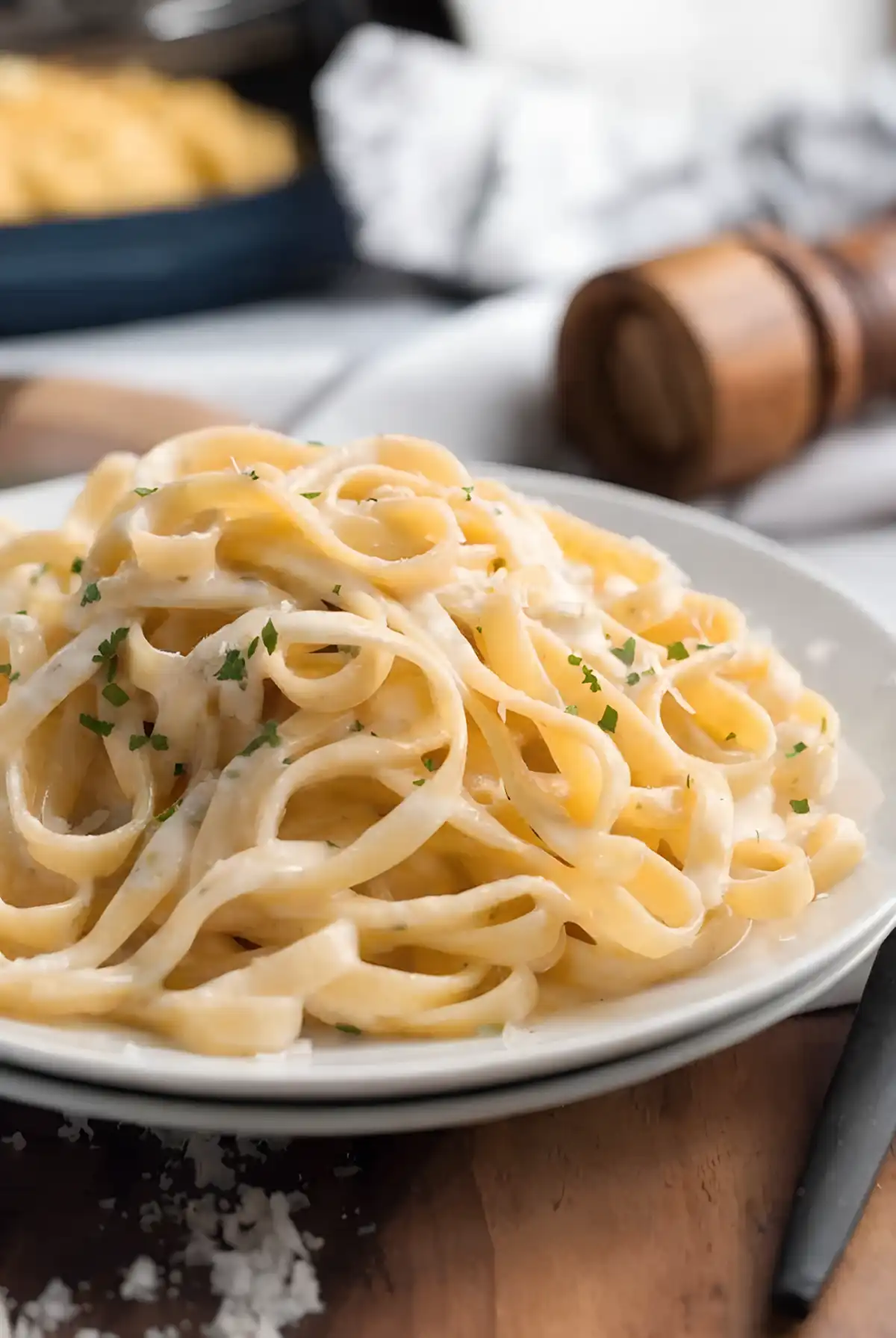
Fettuccine Alfredo is one of those dishes I keep coming back to when I want something rich, simple, and deeply satisfying. The first time I made it at home, I was surprised by how a few basic ingredients could turn into such a smooth and creamy pasta. This recipe focuses on balance, texture, and timing. If you want a silky sauce that clings to every strand of pasta, you are in the right place.
Table of Contents
Why You’ll Love This Recipe

- Quick and simple to make
You only need a few basic ingredients and about 20 minutes. It fits perfectly into busy days when you still want a homemade meal. - Ultra creamy and smooth texture
The sauce turns silky without feeling heavy. The key lies in mixing the cheese off the heat and using pasta water to bind everything together. - Better than restaurant versions
This method focuses on technique. You get a rich flavor and perfect coating on every strand of pasta, not a sauce that sits at the bottom. - Comfort food that feels special
Each bite feels warm and satisfying. It is the kind of dish that makes a simple dinner feel like a treat. - Easy to impress guests
Serve this once and people will think you spent hours cooking. The taste and texture feel refined, yet the process stays simple.
Ingredients Needed
For the Pasta
- 8 oz or 250g dried fettuccine
Choose a good-quality pasta for better texture and bite
For the Alfredo Sauce
- 3 tablespoons unsalted butter
Use unsalted so you can control the seasoning - 1 small shallot, very finely minced
This adds a soft and slightly sweet flavor - 1 half cup heavy cream
Gives the sauce its rich and smooth base - 3 quarters cup freshly grated Parmigiano Reggiano or parmesan
Grate it yourself for the best melt and texture - 1 quarter teaspoon salt
Adjust later if needed - Freshly ground black pepper
Adds a gentle heat and depth
For Garnish
- Fresh parsley, finely chopped, optional
Adds a fresh contrast to the creamy sauce - Extra Parmigiano Reggiano
For serving and extra flavor on top
Simple ingredients, but each one plays a key role in building that classic creamy texture.
How to Make Fettuccine Alfredo
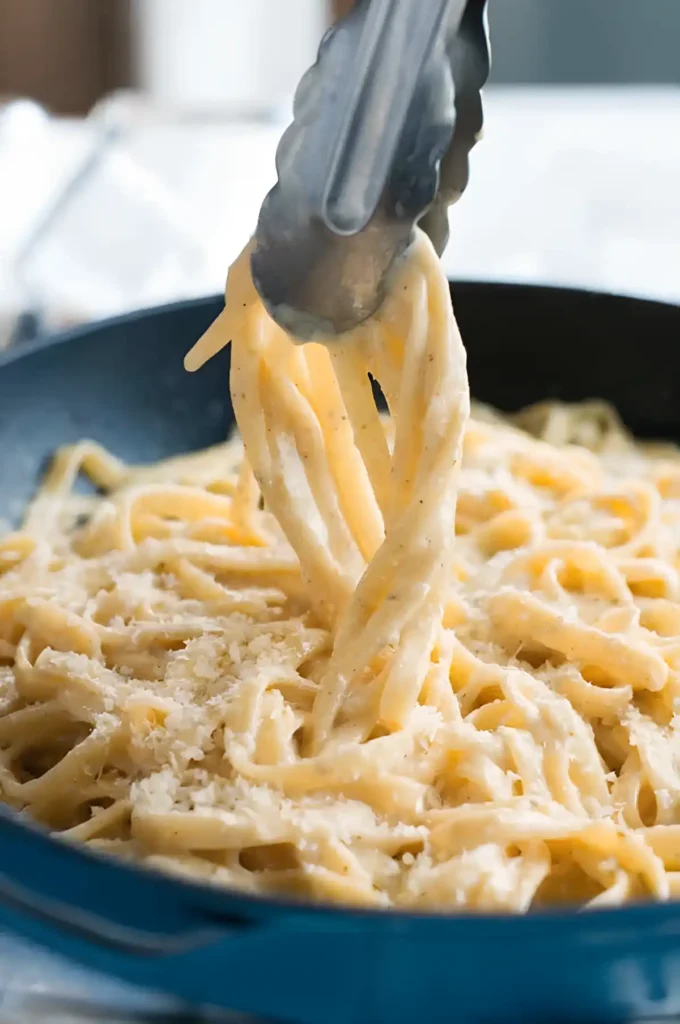
- Boil the pasta water
Fill a large pot with water and add a good pinch of salt. Bring it to a full boil before adding the fettuccine. The salted water builds flavor from the start. - Cook the fettuccine
Add the pasta and cook until al dente. This means the pasta is tender but still has a slight bite. Check the package time, but taste a strand to be sure. - Start the sauce base
While the pasta cooks, place a deep pan over medium to high heat. Melt the butter gently until it starts to foam. - Cook the shallots
Add the finely minced shallot to the butter. Stir and cook for about 2 minutes until soft and slightly translucent. This step builds a subtle and sweet flavor base. - Add the cream
Pour in the heavy cream and bring it to a gentle boil. Once it starts bubbling, lower the heat to medium low and let it simmer for 3 minutes. The sauce will begin to thicken slightly. - Incorporate the cheese off the heat
Take the pan off the heat before adding the cheese. Stir in the grated Parmigiano Reggiano, salt, and black pepper. Mixing off the heat keeps the sauce smooth and prevents clumping. - Reserve pasta water before draining
Before draining the pasta, scoop out about one quarter cup of the starchy pasta water. Take a little extra just in case you need to adjust the sauce later. - Combine pasta and sauce
Drain the pasta, then transfer it directly into the sauce. Add the reserved pasta water. Place the pan back on medium to high heat. - Toss to create a silky sauce
Gently toss the pasta for about 1 minute. This step helps the sauce coat each strand and form a smooth texture. The starch in the water binds everything together. - Serve immediately
Remove from heat and plate right away. Finish with extra Parmigiano Reggiano and a sprinkle of fresh parsley if you like. The sauce is at its best while hot and creamy.
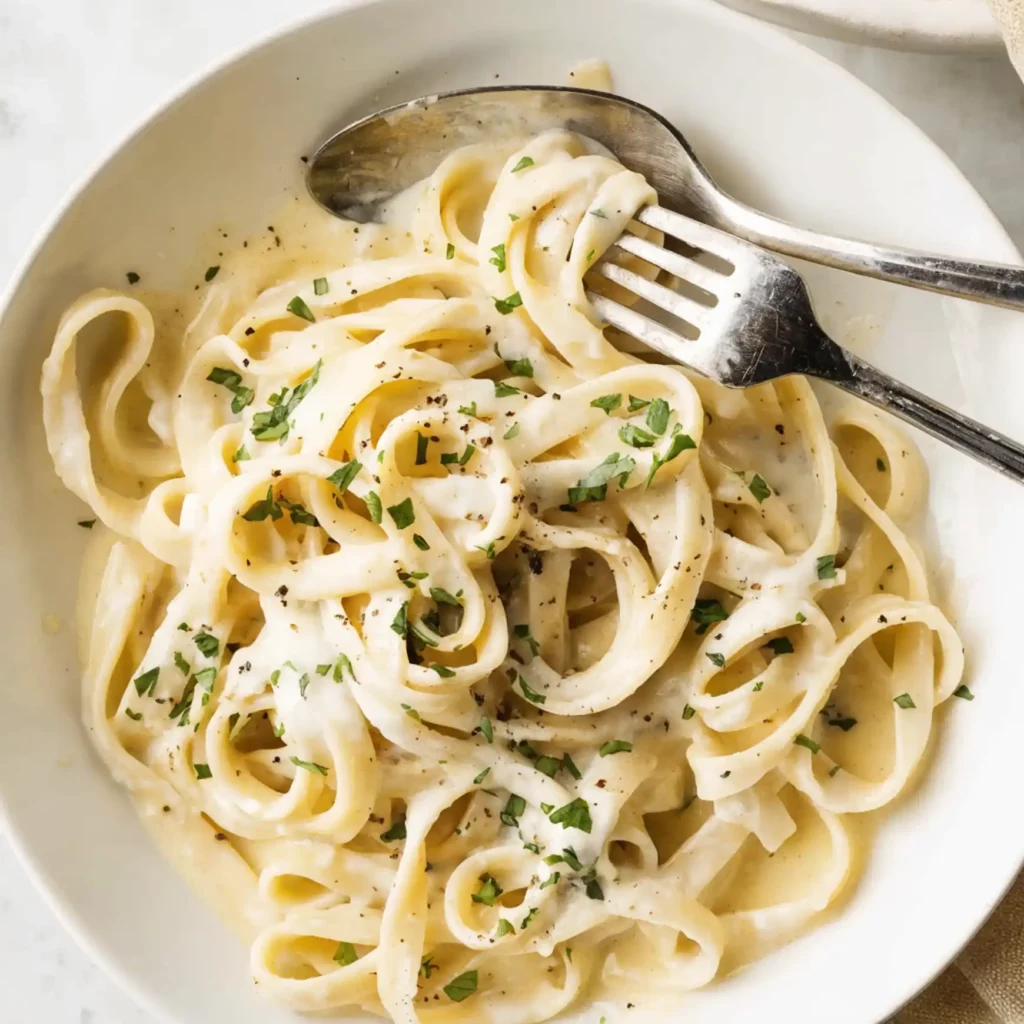
Chef’s Tips for Success
Do not skip the shallots
Shallots give a softer and slightly sweet flavor compared to garlic. They blend smoothly into the sauce and do not overpower the cheese.
Add the cheese off the heat
Always remove the pan from heat before mixing in the cheese. High heat can cause the cheese to clump or turn oily instead of melting smoothly.
Move fast when combining
Once the pasta meets the sauce, work quickly. Tossing at the right moment helps create that silky coating. Waiting too long can make the sauce thicken too much.
Use freshly grated cheese only
Pre-grated cheese often contains additives that stop it from melting well. Freshly grated Parmigiano Reggiano gives a smooth and rich finish.
Adjust with pasta water if needed
If the sauce feels too thick, add a small splash of reserved pasta water. This helps bring back the creamy texture without losing flavor.
What to Serve with Fettuccine Alfredo
Light and fresh sides
Fettuccine Alfredo is rich and creamy, so pairing it with something fresh makes a big difference. A simple green salad with a light dressing adds balance and keeps the meal from feeling too heavy. Raw carrots or sliced cucumbers also work well and add a nice crunch.
Vegetable options
Steamed broccoli or sautéed spinach pairs nicely with the creamy sauce. These vegetables bring color and a mild taste that complements the pasta without overpowering it.
Refreshing drinks
A glass of sparkling water with a squeeze of lemon helps cut through the richness. You can also try iced tea or fresh lemonade for a clean and refreshing contrast.
Keeping the sides light allows the Fettuccine Alfredo to stay the star of the plate while still creating a complete and satisfying meal.
Troubleshooting & FAQs
Why is my sauce grainy
This usually happens when the cheese does not melt properly. The most common reasons are using pre-grated cheese or adding cheese while the pan is too hot. Always use freshly grated Parmigiano Reggiano and mix it in off the heat for a smooth result.
Can I make it ahead of time
Fettuccine Alfredo tastes best right after cooking. The sauce thickens as it sits. If you need to reheat it, place it on low heat and add a small splash of milk or cream. Stir gently until the sauce becomes smooth again.
Can I freeze it
Freezing is not a good option for this dish. Cream-based sauces tend to separate after thawing. The texture will not be the same, and the sauce may look broken.
Why is my sauce too thick
This often happens if the pasta sits too long or if too much heat is used. Add a bit of reserved pasta water and gently mix to loosen the sauce and bring back the creamy texture.
Why is my sauce too thin
If the sauce feels too runny, let it cook for a short time while tossing the pasta. This helps the sauce cling better and reach the right consistency.
Conclusion
Fettuccine Alfredo is a simple dish, yet it delivers rich flavor and a smooth, creamy texture when done right. With just a few ingredients and the right technique, you can create a pasta that feels comforting and satisfying every time. The key comes down to timing, gentle heat, and using freshly grated cheese for that perfect finish.
If you tried this recipe, I would love to hear how it turned out. Leave a comment and share your rating to help others. You can also share your plate on Pinterest or Facebook and show your own twist on this classic dish.
Did you add chicken, shrimp, or vegetables to make it your own? Tell me below and let’s talk about your favorite version.
YOU MIGHT ALSO LIKE…
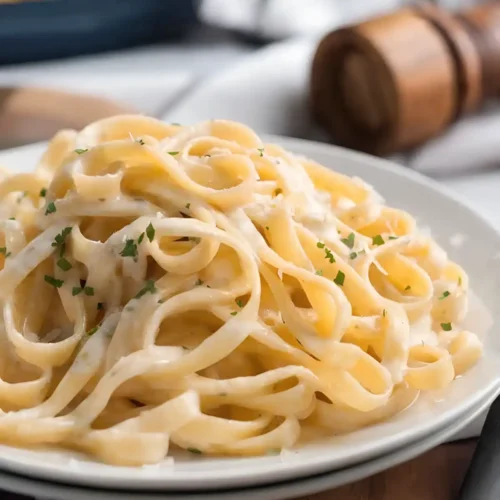
Fettuccine Alfredo

Ingredients
Pasta
- 8 oz dried fettuccine use good-quality pasta
Alfredo Sauce
- 3 tbsp unsalted butter
- 1 small shallot finely minced
- ½ cup heavy cream
- ¾ cup Parmigiano Reggiano freshly grated
- ¼ tsp salt
- black pepper to taste
Garnish
- fresh parsley finely chopped, optional
- Parmigiano Reggiano extra for serving
Instructions
- Bring a large pot of salted water to a boil. Add the fettuccine and cook until al dente according to package instructions.
- While the pasta cooks, melt the butter in a deep pan over medium heat until it begins to foam.
- Add the minced shallot and cook for about 2 minutes until soft and translucent.
- Pour in the heavy cream and bring to a gentle boil. Reduce heat and let simmer for 3 minutes until slightly thickened.
- Remove the pan from heat and stir in the grated Parmigiano Reggiano, salt, and black pepper until smooth.
- Reserve about 1/4 cup (60 ml) of pasta water before draining the pasta.
- Add the drained pasta directly to the sauce along with the reserved pasta water.
- Return to medium heat and toss gently for about 1 minute until the sauce becomes silky and coats the pasta evenly.
- Serve immediately topped with extra cheese and fresh parsley if desired.
Notes
Nutrition Facts (Per Serving)
- Calories: 540 kcal
- Fat: 32 g
- Saturated Fat: 19 g
- Protein: 18 g
- Carbohydrates: 45 g
- Sugar: 2 g
- Fiber: 2 g
- Sodium: 420 mg
FAQs
Is fettuccine Alfredo actually Italian
Yes, but the original version is different from what most people know today. In Rome, the classic dish is made with just butter and Parmigiano Reggiano. The creamy version with heavy cream became popular later, especially in the United States.
What is authentic Alfredo made of
Authentic Alfredo uses only three main ingredients. These are fettuccine, butter, and high-quality Parmigiano Reggiano. The creamy texture comes from mixing the cheese with the butter and a bit of pasta water.
What is the secret to creamy Alfredo
The key is balance and timing. Use freshly grated cheese, add it off the heat, and mix with reserved pasta water. This helps create a smooth sauce that coats the pasta evenly without clumping.
Are fettuccine Alfredo and carbonara the same
No, they are different dishes. Alfredo is based on butter, cream, and cheese. Carbonara uses eggs, cheese, cured meat, and no cream. The taste and texture are very different.
Is Alfredo healthy or unhealthy
Fettuccine Alfredo is rich and high in calories because of the butter, cream, and cheese. It is best enjoyed in moderation or paired with lighter sides like vegetables or salad.
Can I use milk instead of heavy cream in my Alfredo sauce
Yes, but the sauce will be lighter and less rich. To improve the texture, you can simmer the milk a bit longer or add a small amount of extra cheese to help thicken it.