
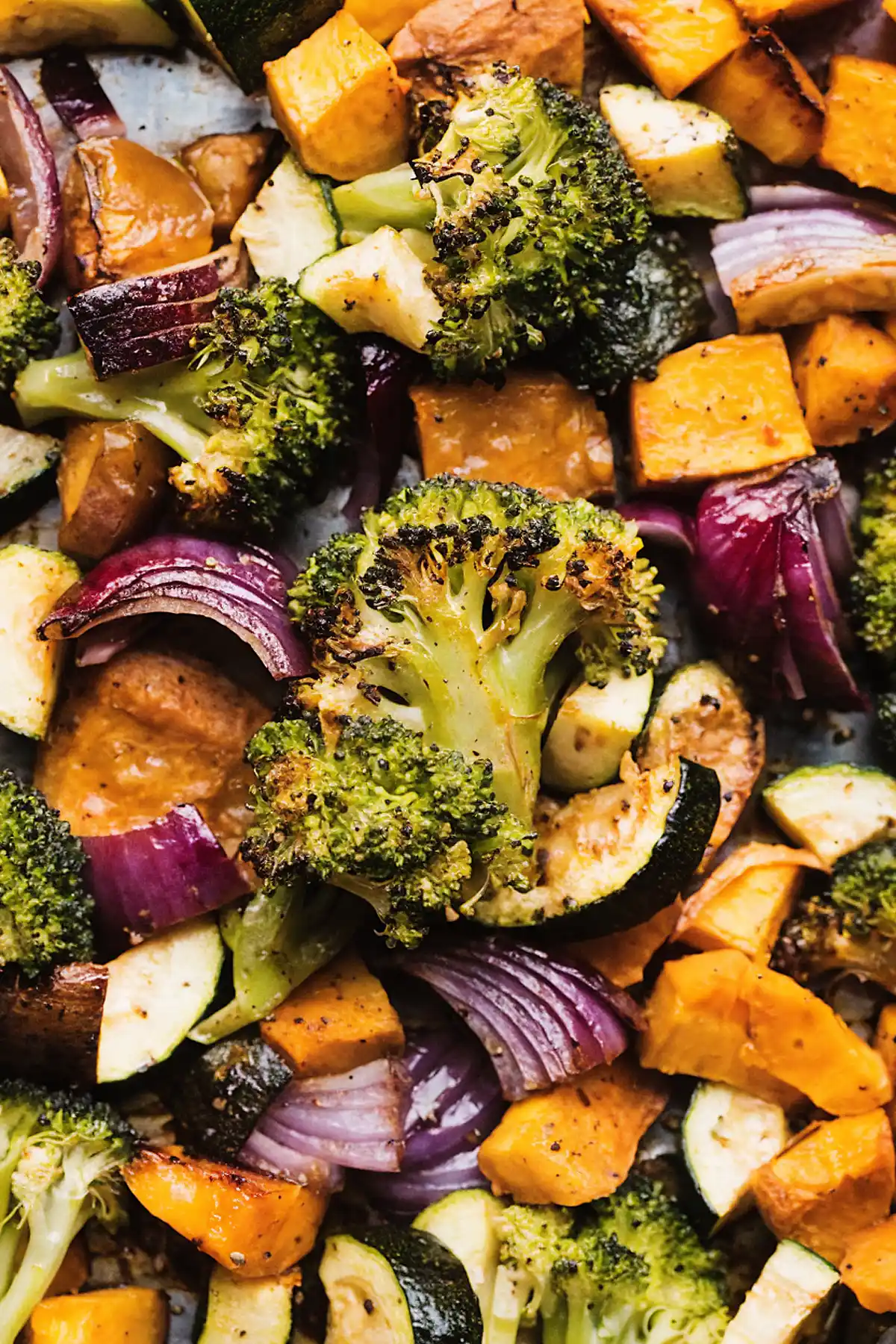
Roasted vegetables sound simple. Chop them, add oil, and bake. Yet many home cooks pull out a tray of soft, pale veggies that taste steamed instead of crisp. I have tested this method for years, and I can tell you the difference comes down to heat, spacing, and smart seasoning.
This guide shows you the expert way to make roasted vegetables that turn deeply golden and crisp at the edges. A simple Italian style blend and one quiet flavor booster take them to the next level. They are so good, you will snack on them straight from the sheet pan.
Table of Contents
Why This Method Works
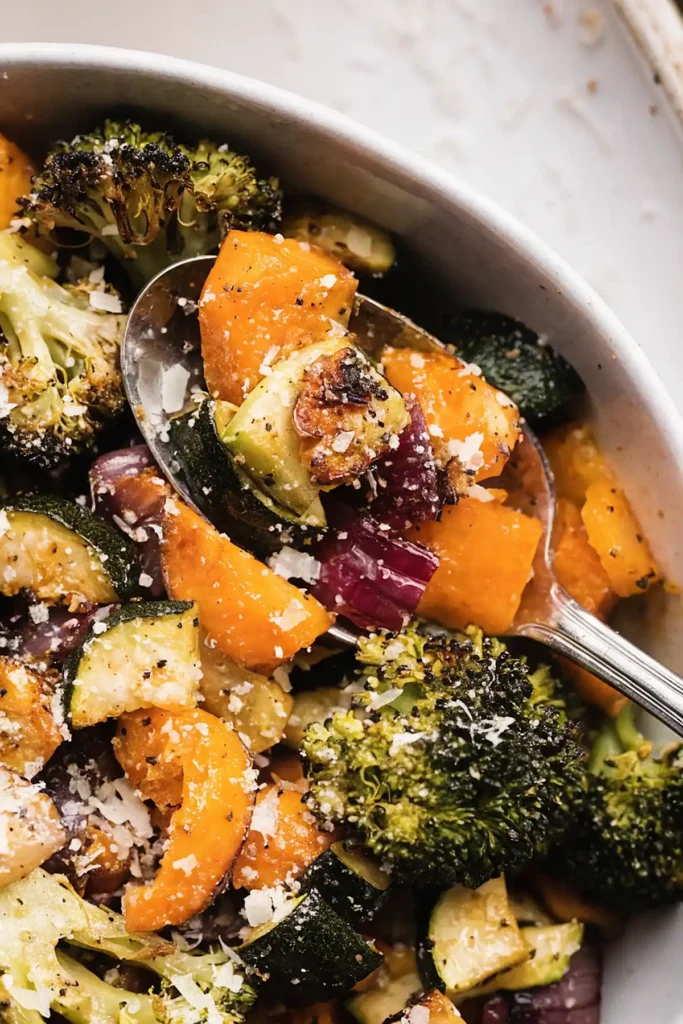
Roasting vegetables at 400°F changes everything. High heat pulls out natural sugars and creates caramelization on the surface. That is what turns raw or bland tasting vegetables into sweet, tender bites with crisp, golden edges. The outside browns while the inside stays soft and tender crisp.
The second key is Dijon mustard. It blends with the olive oil and coats every piece. You do not taste it strongly, but it adds a gentle tang that works magic in the background. The result feels richer and more balanced.
This roasted vegetable recipe is also a healthy side dish packed with fiber, vitamins, and color. Even picky eaters tend to love the slightly sweet flavor and crispy texture.
Ingredients Needed
This roasted vegetable recipe uses simple, fresh ingredients. Each one plays a clear role in flavor and texture.
For the Vegetables
- 2 medium bell peppers, cut into 1 inch pieces
Red, yellow, or orange add natural sweetness and bright color. - 2 medium zucchini, ends trimmed and sliced into 1 half inch chunks
Cut evenly so they cook at the same rate. - 1 small sweet potato, scrubbed well and cut into 3 quarter inch cubes
Slightly smaller pieces help it roast at the same speed as the softer vegetables. - 1 small red onion, chopped into 1 inch squares
The edges caramelize beautifully in the oven. - 1 small head of broccoli, separated into florets
You can swap in cauliflower florets or about 8 ounces of trimmed Brussels sprouts if preferred.
For the Flavor Coating
- 3 tablespoons extra virgin olive oil
This helps the vegetables brown and develop crisp edges. - 1 tablespoon Dijon mustard
Adds a subtle tang. If you prefer, use one more tablespoon olive oil instead. - 2 teaspoons Italian seasoning
A blend of dried herbs that gives a classic Italian style flavor. - 1 teaspoon kosher salt
Adjust slightly based on your taste. - 1 half teaspoon garlic powder
Adds depth without burning like fresh garlic can. - 1 half teaspoon ground black pepper
Optional Finish
- 3 tablespoons freshly grated Parmesan cheese
Sprinkle on at the end for a salty, savory touch.
Using a mix of root vegetables, cruciferous vegetables, and softer varieties gives you the best balance of sweet, tender, and crisp textures in every bite.
How to Make Roasted Vegetables
- Preheat the oven and prepare the pans
Place oven racks in the upper and lower thirds if you are using two baking sheets. If you are using one sheet pan, position the rack in the center. Preheat the oven to 400°F. Lightly coat two large rimmed baking sheets with nonstick spray. Preheating fully is key because high heat drives caramelization from the start. - Combine the vegetables
Add the bell peppers, zucchini, sweet potato, red onion, and broccoli to a very large mixing bowl. If you prefer fewer dishes, you can divide them directly between the sheet pans. - Add oil and seasoning
Drizzle the extra virgin olive oil and Dijon mustard over the vegetables. Sprinkle with Italian seasoning, kosher salt, garlic powder, and black pepper. Toss thoroughly until every piece looks lightly coated. Pay close attention to the broccoli florets. They need a thin layer of oil on their tops to prevent dry or burnt tips. - Spread in a single layer
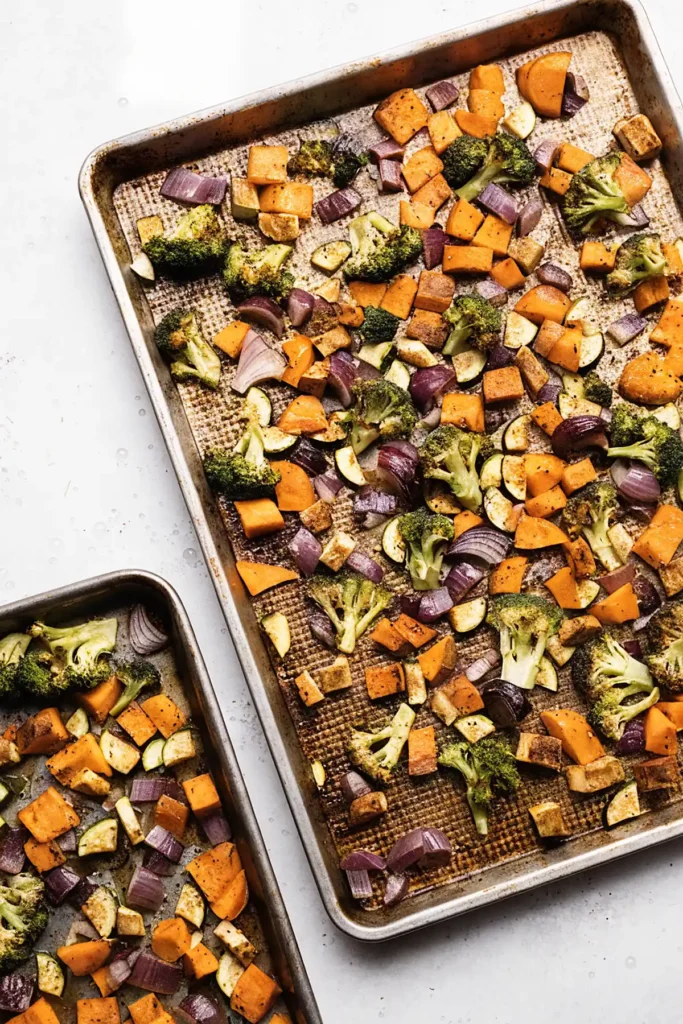
Divide the vegetables evenly between the prepared baking sheets. Arrange them in a single layer with space around each piece. This step prevents steaming and helps create crisp, browned edges. - Roast until golden and tender
Roast at 400°F for 25 to 35 minutes. If using convection, set the oven to 375°F and check at 20 to 25 minutes. Halfway through cooking, rotate each pan 180 degrees and switch their positions in the oven. Toss the vegetables gently to promote even browning.
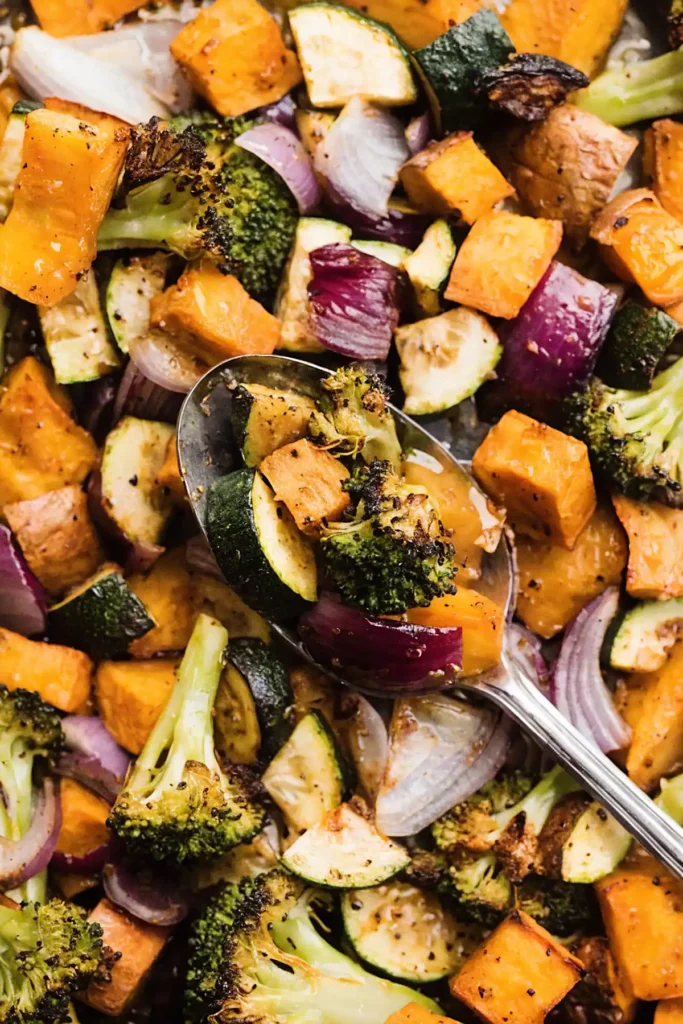
The roasted vegetables are ready when the edges are golden brown, the sweet potatoes are fork tender, and the peppers look slightly blistered. - Finish with Parmesan
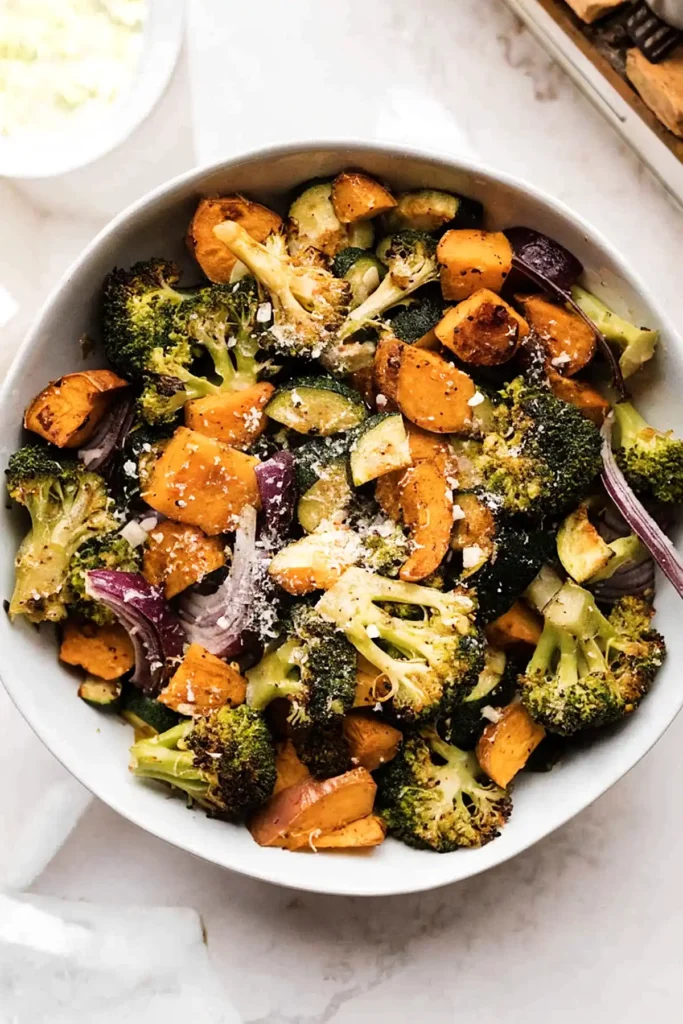
Remove the pans from the oven and sprinkle with grated Parmesan cheese while the vegetables are hot. Taste and adjust with extra salt and pepper if needed.
Serve immediately for the crispiest texture, or let them cool slightly. They are just as good at room temperature and often disappear straight from the sheet pan.
Why Are My Vegetables Soggy?
Soggy roasted vegetables usually come down to three common mistakes.
1. Overcrowding the pan
If you pile too many vegetables onto one sheet pan, they trap moisture. Instead of roasting, they steam. Always spread them in a single layer with visible space between pieces. If needed, use two pans.
2. Oven temperature too low
Roasting requires high heat. If your oven is set below 400°F, the vegetables soften before they brown. That means less caramelization and no crisp edges. Always preheat fully before placing the pan inside.
3. Covering the pan
Do not cover the vegetables with foil while roasting. Covering traps steam and prevents browning. Leave them uncovered so moisture can escape and the surfaces can turn golden and crisp.
Fix these three issues, and your oven roasted vegetables will come out tender inside with perfectly browned edges.
Storage, Reheating, and Meal Prep
Storage
Let the roasted vegetables cool completely before storing. Place them in an airtight container and refrigerate for up to 5 days. Keeping air out helps maintain texture and flavor.
Freezing
You can freeze roasted vegetables for up to 3 months. Spread them on a baking sheet first and freeze until solid, then transfer to a freezer safe container or bag. This prevents them from sticking together. Keep in mind that after thawing, the texture may be slightly softer.
Reheating
For the best texture, reheat in the oven at 350°F for about 10 to 15 minutes. This helps bring back some crispness to the edges.
If you need a quick option, use the microwave in short intervals, stirring between each. The vegetables will be softer, but still flavorful.
These roasted vegetables are perfect for weekly meal prep. Make a large batch on Sunday and use them in different meals throughout the week.
Creative Ways to Use Leftovers
Roasted vegetables are just as useful the next day. Their deep flavor works in many quick meals.
Breakfast Ideas
Stir them into scrambled eggs for a fast veggie packed breakfast. Fold them into an omelet with a little goat cheese or mozzarella. You can also mix them into a frittata or breakfast casserole before baking. The roasted edges add more flavor than raw vegetables ever could.
Lunch and Dinner Ideas
Add roasted vegetables to grain bowls with quinoa, brown rice, or farro. Spoon them over pasta such as Pasta al Limone for extra color and texture. They also make a great pizza topping. Scatter them over dough with fresh mozzarella and bake until bubbly.
Sandwich Upgrade
Layer the vegetables inside a grilled cheese sandwich with provolone or sharp cheddar. Press and toast until the bread turns golden and crisp. The warm, caramelized vegetables melt into the cheese and create a rich, satisfying bite.
With a batch of roasted vegetables in your fridge, quick meals come together with very little effort.
Conclusion
This roasted vegetables recipe proves that simple ingredients and the right method make all the difference. High heat creates rich caramelization, while a touch of Dijon mustard adds quiet depth in the background. The result is tender crisp vegetables with golden edges and bold flavor. It is an easy, healthy side dish that works for busy weeknights or relaxed weekend dinners.
If you tried this oven roasted vegetables recipe, I would love to hear from you. Leave a comment below and share your star rating. Your feedback helps others feel confident making it too.
Feel free to share this recipe on Pinterest or Facebook so more people can enjoy it. What vegetables did you use, and did you try any fun variations? Let us know below.
YOU MIGHT ALSO LIKE…
Roasted Vegetables

Ingredients
Vegetables
- 2 medium bell peppers, cut into 1-inch pieces red, yellow, or orange
- 2 medium zucchini, sliced into 1/2-inch chunks ends trimmed
- 1 small sweet potato, cut into 3/4-inch cubes scrubbed well
- 1 small red onion, chopped into 1-inch squares
- 1 small head broccoli florets
Flavor Coating
- 3 tablespoons extra virgin olive oil
- 1 tablespoon Dijon mustard
- 2 teaspoons Italian seasoning
- 1 teaspoon kosher salt adjust to taste
- 0.5 teaspoon garlic powder
- 0.5 teaspoon ground black pepper
Optional Finish
- 3 tablespoons freshly grated Parmesan cheese optional
Instructions
- Preheat the oven to 400°F (200°C). Position racks in the upper and lower thirds if using two pans. Lightly coat baking sheets with nonstick spray.
- Add bell peppers, zucchini, sweet potato, red onion, and broccoli to a large mixing bowl.
- Drizzle with olive oil and Dijon mustard. Sprinkle Italian seasoning, salt, garlic powder, and black pepper over the vegetables. Toss thoroughly until evenly coated.
- Spread vegetables in a single layer across the prepared baking sheets, leaving space between pieces to prevent steaming.
- Roast for 25 to 35 minutes, rotating pans halfway through and gently tossing vegetables for even browning. Cook until edges are golden and sweet potatoes are fork tender.
- Remove from the oven and sprinkle with freshly grated Parmesan if desired. Adjust seasoning to taste and serve immediately.
Notes
Nutrition Facts Per Serving
- Calories: 164 kcal
- Carbohydrates: 21 g
- Protein: 5 g
- Fat: 8 g
- Saturated Fat: 1 g
- Polyunsaturated Fat: 1 g
- Monounsaturated Fat: 5 g
- Fiber: 6 g
- Sugar: 8 g
- Potassium: 743 mg
- Vitamin A: 6736 IU
- Vitamin C: 156 mg
- Calcium: 90 mg
- Iron: 2 mg
FAQs
What is the secret to crispy roasted vegetables?
The secret is high heat and proper spacing. Roast at 400°F and spread the vegetables in a single layer on the sheet pan. When air can circulate around each piece, moisture escapes and caramelization forms on the edges. A light but even coating of olive oil also helps them brown instead of dry out.
Which vegetables take longer to roast?
Dense root vegetables such as sweet potatoes, carrots, parsnips, and beets take longer to roast. Softer vegetables like zucchini, bell peppers, asparagus, and cherry tomatoes cook faster. Cut harder vegetables into slightly smaller pieces so everything finishes at the same time.
What oil and temperature are best for roasting vegetables?
Extra virgin olive oil works very well for both flavor and browning. Roast most vegetables between 400°F and 425°F. This range creates a balance between tender centers and crisp, golden edges.
Why are my oven roasted veggies soggy?
Sogginess usually happens when the pan is overcrowded, the oven is not hot enough, or the vegetables are covered during cooking. Too much moisture builds up and causes steaming instead of roasting. Always leave space between pieces and keep the pan uncovered.
What vegetables can be roasted together?
You can roast a mix of root vegetables, cruciferous vegetables like broccoli or Brussels sprouts, and softer options such as zucchini and peppers. Just adjust the cut size based on density. Hard vegetables should be slightly smaller so they cook at the same pace as softer ones.
How do I store and reheat roasted vegetables?
Store cooled roasted vegetables in an airtight container in the fridge for up to 5 days. To reheat, place them in a 350°F oven for about 10 to 15 minutes to bring back some crisp texture. For a faster option, warm them in the microwave, though they will be softer.