

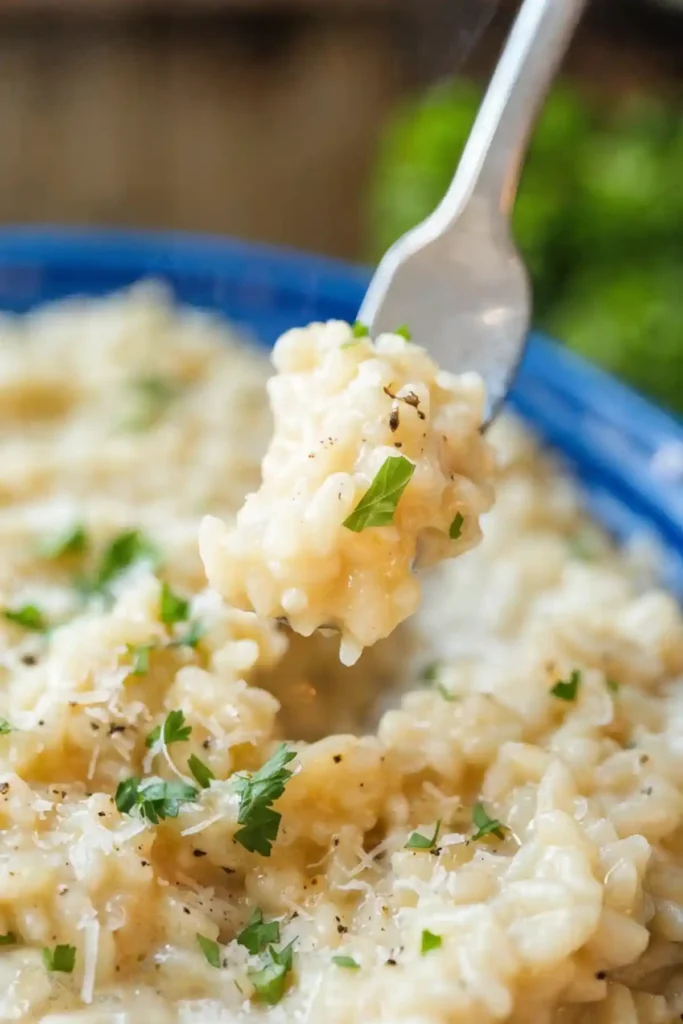
This recipe works because it focuses on the natural starch found in Arborio rice. Arborio has a high starch level that releases slowly during cooking. As the rice cooks and you stir, the starch blends with the broth and forms a smooth, creamy texture. You do not need heavy cream. The rice itself creates the richness that makes risotto so satisfying.
Another key step is to toast the rice before adding liquid. This short cooking stage coats each grain with butter and oil. It helps the rice keep its shape while it cooks. The grains stay firm in the center while the outside turns creamy. This balance gives risotto its classic texture that feels rich but still light.
Table of Contents
Ingredients Needed
For the risotto base
• 4 tablespoons unsalted butter, divided. Use good quality butter for a richer taste.
• 1 tablespoon extra virgin olive oil. This helps cook the onions gently without burning.
• 1 half medium yellow onion, finely chopped. This should give about 1 cup.
• 2 garlic cloves, pressed or finely grated for smooth flavor.
• 1 half teaspoon fine sea salt, plus extra if needed later.
For cooking the rice
• 7 to 8 cups chicken stock with low sodium, or vegetable stock for a vegetarian option. Keep the stock warm while cooking.
• 2 cups Arborio rice. This short grain rice releases starch that creates the creamy texture.
• 1 cup warm chicken or vegetable stock.
• 1 to 2 teaspoons fresh lemon juice to add a light acidity and balance the flavor.
For the final finish
• 1 half cup freshly grated Parmesan cheese, plus extra for serving. Freshly grated cheese melts better than pre grated cheese.
• Freshly cracked black pepper for garnish and light heat.
• 1 tablespoon fresh parsley, finely chopped, for a bright finish.
How to Make Risotto Recipe
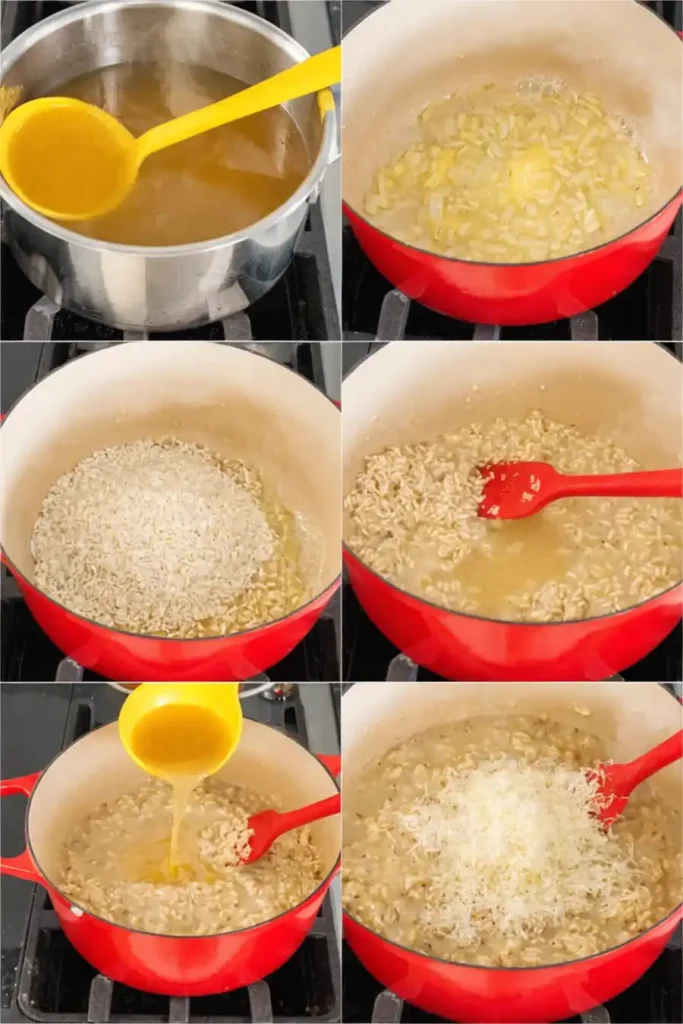
- Warm the stock first.
Place the chicken or vegetable stock in a medium saucepan. Heat it until it reaches a gentle simmer. Lower the heat so it stays hot but does not boil. Warm stock helps the rice cook evenly and keeps the texture smooth during the process. - Cook the onion and garlic.
Set a large pot or a 5½ quart Dutch oven on the stove over medium low heat. Add 2 tablespoons of butter and the olive oil. Once the butter melts, stir in the chopped onion and the salt. Cook slowly while stirring often for about 6 to 7 minutes. The onion should turn soft and slightly translucent, not brown. This step builds the flavor base. Add the garlic and cook for about 30 seconds until fragrant. - Toast the Arborio rice.
Add the Arborio rice to the pot and raise the heat slightly to medium. Stir the rice constantly for about 2 to 3 minutes. Each grain should get coated in the butter and oil. The rice will begin to look slightly translucent around the edges with a light golden tone. Toasting helps the grains keep their shape during cooking. - Add the stock and lemon mixture.
Pour in 1 cup warm chicken or vegetable stock and 1 to 2 teaspoons fresh lemon juice. Stir while scraping the bottom of the pot with a spatula to release any flavorful bits. Let the liquid cook until most of it is absorbed. This usually takes about 2 minutes. - Start adding the stock slowly.
Scoop one ladle of hot stock into the rice. Stir gently and keep the rice moving. Cook until the liquid is almost fully absorbed. You should be able to drag a spatula across the pan and see the bottom briefly before the rice flows back together. - Continue the ladle method.
Add another ladle of stock and repeat the process. Stir regularly and wait until the liquid nearly disappears before adding more. Keep going one ladle at a time. Do not let the pan dry out. This slow process allows the rice to release starch and create a creamy texture. The cooking time usually takes about 20 to 25 minutes. - Check the texture.
Taste the rice near the end of cooking. The grains should feel tender but still slightly firm in the center. This texture is known as al dente and is the classic finish for risotto. - Finish the risotto.
Stir in the remaining 2 tablespoons of butter and the grated Parmesan cheese. Mix until the cheese melts and the risotto turns creamy and glossy. Taste and add more salt if needed. - Garnish and serve.
Spoon the risotto into warm bowls. Sprinkle with extra Parmesan, freshly cracked black pepper, and chopped parsley. Serve right away while the texture is rich and creamy.
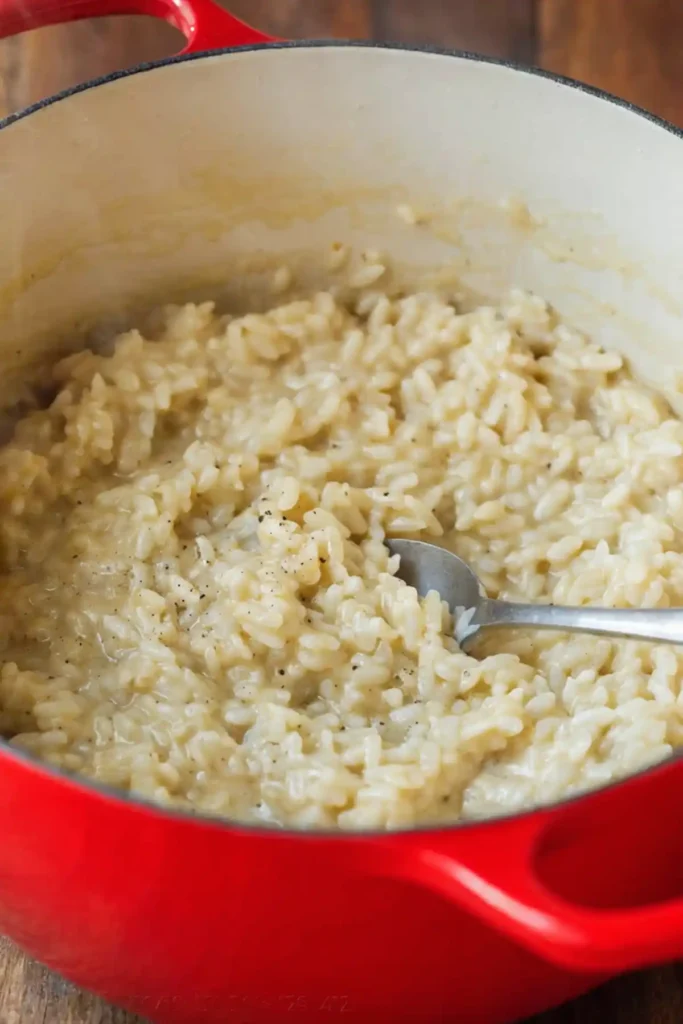
Serving Suggestions and Variations
Main Pairings
Risotto works well with many main dishes because its creamy texture balances richer proteins. A classic option is pan seared steak. The deep flavor of the meat pairs nicely with the smooth rice. Salmon is another great choice. The light and buttery fish complements the savory Parmesan base. For a special dinner, serve risotto with lobster tail. The sweet seafood flavor blends beautifully with the creamy rice.
You can also keep the meal simple by serving risotto with roasted vegetables or a crisp green salad. This creates a balanced plate without making the meal too heavy.
Flavor Variations
This base recipe can turn into many different risotto styles with a few simple changes.
For mushroom risotto, cook sliced cremini, shiitake, or porcini mushrooms in butter before adding the rice. The mushrooms add deep earthy flavor that pairs perfectly with Parmesan.
For shrimp risotto, cook peeled shrimp in a separate pan with olive oil and garlic. Stir the cooked shrimp into the risotto near the end so they stay tender and juicy.
These small changes give you new flavors while keeping the same creamy risotto base.

Storage and Reheating Instructions
Refrigeration
Allow the risotto to cool slightly before storing. Transfer it to an airtight container and place it in the refrigerator. It will stay fresh for about 4 to 5 days. The texture will thicken as it rests because the rice continues to absorb moisture.
Reheating
To warm the risotto again, place it in a saucepan over medium heat. Add a small splash of water or warm stock to loosen the texture. Stir gently while it heats so the rice warms evenly and becomes creamy again. Add a little more liquid if needed until the risotto reaches the smooth consistency you like.
Conclusion
This risotto recipe proves that a rich and creamy dish can come from simple ingredients and careful technique. The key steps are keeping the stock warm, adding it slowly, and stirring as the rice cooks. Arborio rice releases starch during this process, which creates the smooth texture that makes risotto so satisfying.
Once you learn this base method, you can adjust the flavors with mushrooms, shrimp, seafood, or seasonal vegetables. The same cooking process works every time.
If you tried this recipe, leave a comment and a star rating below. Your feedback helps other readers decide what to cook next. You can also share the recipe on Pinterest or Facebook so friends and family can enjoy it too.
What variation did you try? Mushroom, shrimp, or something different? Tell us in the comments.
YOU MIGHT ALSO LIKE…

Risotto Recipe

Ingredients
Risotto Base
- 4 tablespoons unsalted butter divided
- 1 tablespoon extra virgin olive oil
- 0.5 medium yellow onion finely chopped
- 2 cloves garlic pressed or finely grated
- 0.5 teaspoon fine sea salt plus extra to taste
Cooking the Rice
- 8 cups chicken or vegetable stock low sodium and kept warm
- 2 cups Arborio rice
- 1 cup warm chicken or vegetable stock for first addition
- 2 teaspoons fresh lemon juice
Final Finish
- 0.5 cup Parmesan cheese freshly grated
- 1 tablespoon fresh parsley finely chopped
- 1 teaspoon black pepper freshly cracked for garnish
Instructions
- Place the chicken or vegetable stock in a medium saucepan and heat until it reaches a gentle simmer. Keep the stock warm over low heat so it does not boil.
- In a large pot or Dutch oven over medium-low heat, melt 2 tablespoons of butter with the olive oil. Add the chopped onion and salt. Cook slowly for 6–7 minutes, stirring often, until the onion becomes soft and translucent.
- Add the garlic and cook for about 30 seconds until fragrant.
- Add the Arborio rice to the pot and increase the heat slightly to medium. Stir continuously for 2–3 minutes until the rice grains are coated in butter and look slightly translucent around the edges.
- Pour in 1 cup of warm stock and the lemon juice. Stir while scraping the bottom of the pot to release any flavorful bits. Cook until most of the liquid is absorbed.
- Add one ladle of hot stock to the rice and stir gently. Cook until the liquid is nearly absorbed before adding more.
- Continue adding stock one ladle at a time, stirring regularly and allowing the liquid to nearly disappear before adding the next ladle. Repeat this process for about 20–25 minutes.
- Taste the rice near the end of cooking. The grains should be tender but still slightly firm in the center (al dente).
- Stir in the remaining 2 tablespoons of butter and the grated Parmesan cheese. Mix until melted and creamy.
- Spoon the risotto into warm bowls. Garnish with extra Parmesan, freshly cracked black pepper, and chopped parsley. Serve immediately.
Notes
Nutrition Facts
Parmesan RisottoAmount per serving Calories: 333 Fat: 11 g
17% Daily Value Saturated Fat: 5 g
31% Daily Value Trans Fat: 0.2 g Polyunsaturated Fat: 1 g Monounsaturated Fat: 4 g Cholesterol: 20 mg
7% Daily Value Sodium: 320 mg
14% Daily Value Potassium: 266 mg
8% Daily Value Carbohydrates: 45 g
15% Daily Value Fiber: 2 g
8% Daily Value Sugar: 1 g
1% Daily Value Protein: 9 g
18% Daily Value Vitamin A: 271 IU
5% Daily Value Vitamin C: 1 mg
1% Daily Value Calcium: 73 mg
7% Daily Value Iron: 3 mg
17% Daily Value Percent Daily Values are based on a 2000 calorie diet.
FAQs
What is the secret to a good risotto?
The main secret is patience and gradual cooking. Risotto needs warm stock added little by little while you stir the rice. This slow process helps the rice release its starch, which creates the creamy texture. Using Arborio rice and keeping the broth warm also plays a big part in the final result.
What are some common mistakes to avoid when making risotto?
A common mistake is adding all the stock at once. Risotto cooks best when liquid is added in small amounts. Another mistake is cooking with cold broth, which slows the cooking process and affects texture. Browning the onions can also change the flavor and color of the dish, so cook them gently until soft and slightly translucent.
What makes a risotto creamy?
The creaminess comes from the starch in short grain rice such as Arborio. As the rice cooks and you stir it, the starch blends with the broth. Butter and Parmesan added at the end also help create a rich and smooth finish.
What meat pairs well with risotto?
Many meats pair well with risotto. Pan seared steak gives a hearty and bold flavor. Salmon adds a lighter seafood taste that works well with creamy rice. Lobster tail also pairs beautifully for a more elegant meal.
Can risotto be a full meal?
Yes, risotto can easily become a full meal. You can mix in proteins such as shrimp, chicken, or mushrooms to make it more filling. Adding vegetables like peas, spinach, or roasted squash also turns it into a balanced dish.
Do you put onions in risotto?
Yes, onions are commonly used in risotto. Finely chopped onion cooked in butter or olive oil forms the flavor base of the dish. The onions should cook slowly until soft and translucent so they blend smoothly into the rice.