
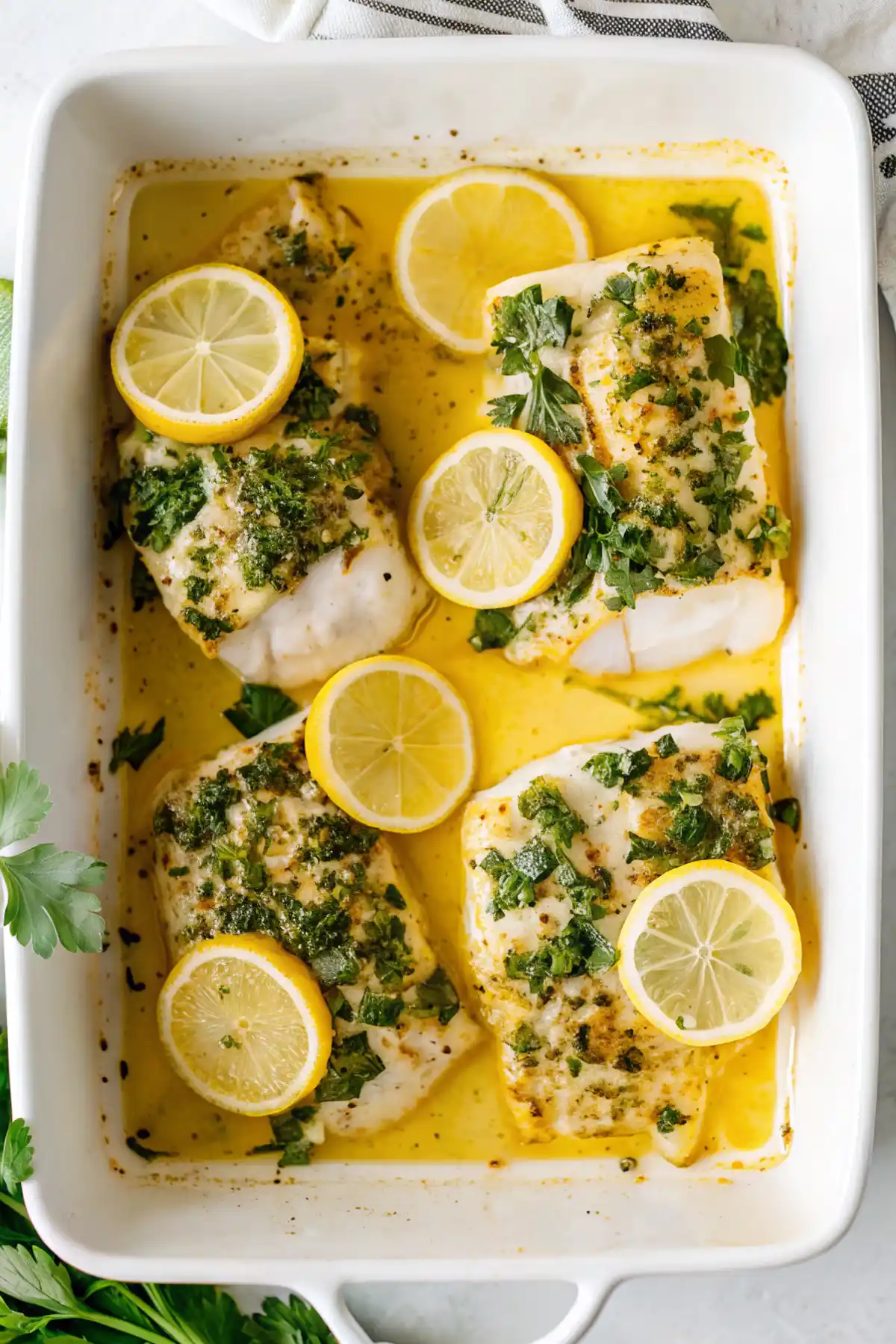
When I need a healthy, light dinner that feels special but takes less than 25 minutes, baked cod is my first choice. It is fresh, simple, and full of flavor without feeling heavy. You get a restaurant style meal with very little effort.
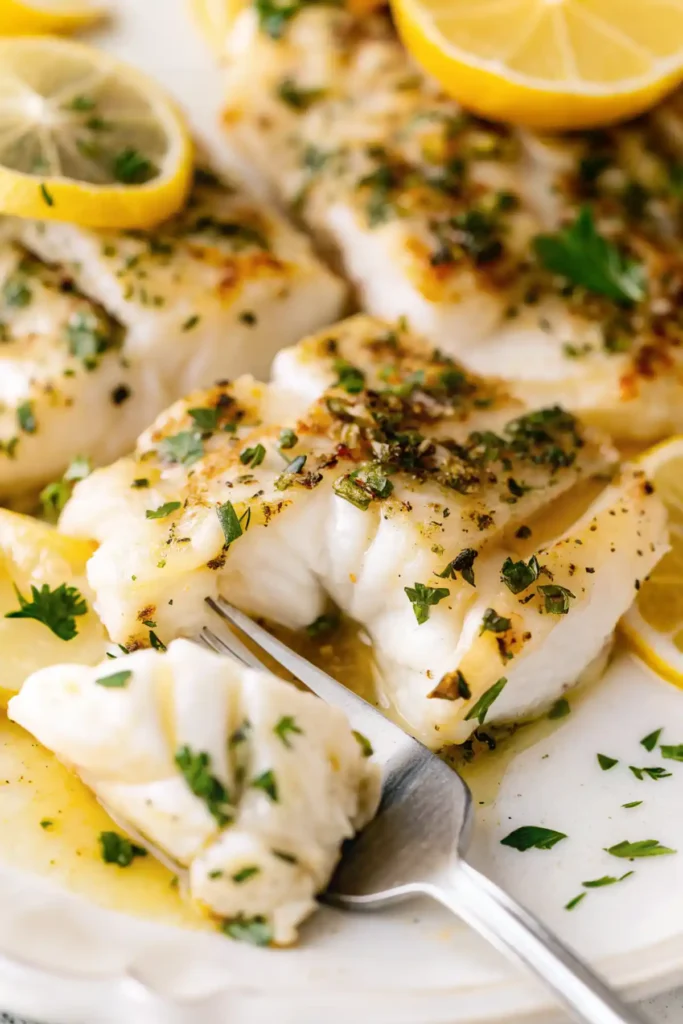
Baked cod is superior to pan searing because the oven cooks the fish gently and evenly. There is no oil splatter, no sticking, and no guesswork. The result is a tender, flaky texture every time. For perfect doneness, baked cod should reach an internal temperature of 145°F (63°C) and flake easily with a fork.
Table of Contents
Why You’ll Love This Recipe
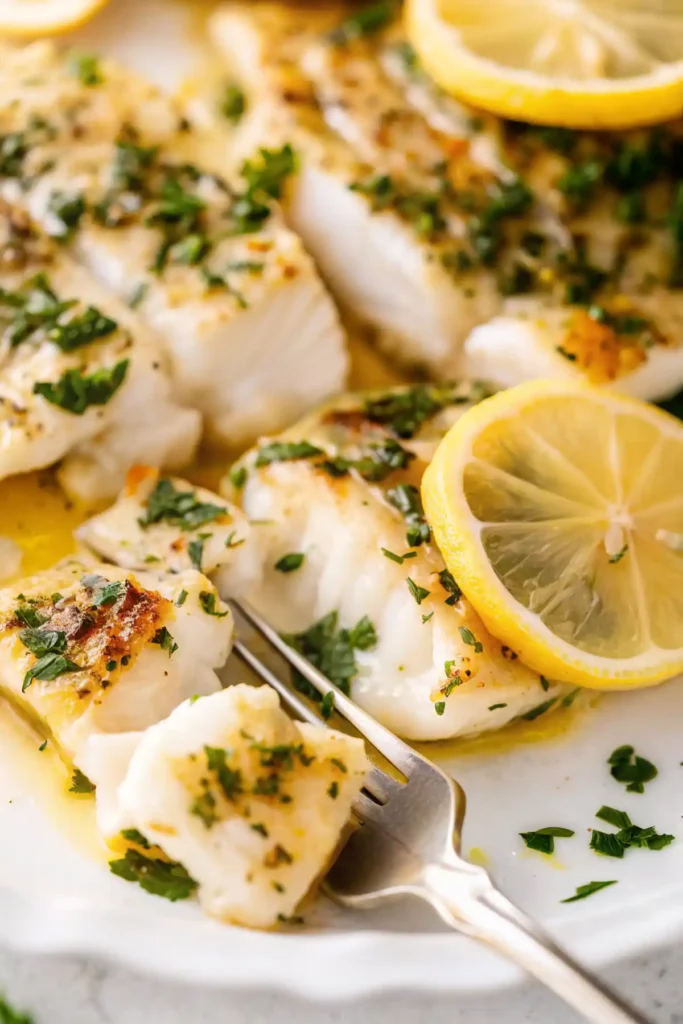
This baked cod shines because of the classic garlic and butter pairing. Garlic adds a bold, savory bite, while butter brings richness and depth. When baked together, they melt into the fish and create a simple sauce that tastes fresh and comforting at the same time. A touch of lemon and herbs keeps everything bright and balanced.
Cod is known for its mild flavor and meaty, flaky texture. When cooked to 145°F, it turns opaque and breaks apart easily with a fork. Each bite feels tender yet firm, making it a favorite mild white fish for both beginners and seafood lovers.
Ingredients Needed
For the Cod
- 4 cod fillets, about 6 ounces each, skinless or skin on
- Kosher salt, to taste
- Freshly ground black pepper, to taste
- 1 lemon, thinly sliced
Choose thick cod fillets or cod loin pieces if possible. Thicker cuts stay juicy and give you that firm, flaky texture once baked.
For the Garlic Herb Butter
- 3 tablespoons unsalted butter, softened to room temperature
- 1 tablespoon extra virgin olive oil
- 3 garlic cloves, finely minced
- 2 tablespoons freshly chopped parsley, chives, thyme, or a mix of your favorite herbs
- ½ teaspoon paprika
Softened butter blends smoothly with the garlic and herbs, creating a rich topping that melts into the fish as it bakes. Fresh herbs add brightness, while paprika gives mild warmth and color.
How to Make Baked Cod
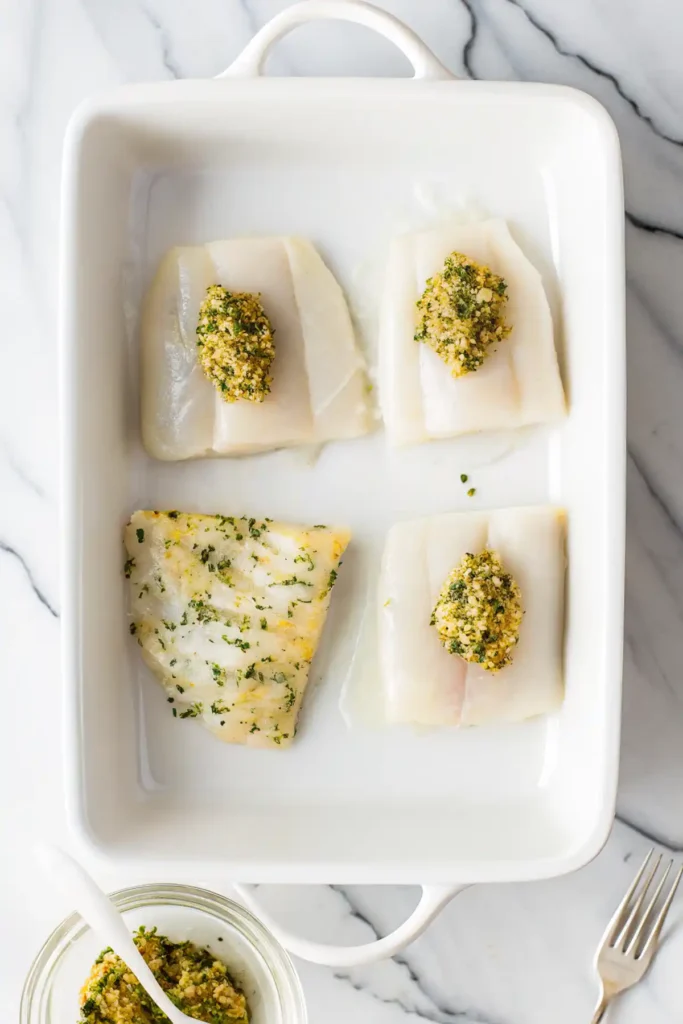
- Preheat the oven and prepare the dish.
Set your oven to 400°F or 200°C. Allow it to fully heat before placing the fish inside. Lightly grease a baking dish with olive oil to prevent sticking. Place the cod fillets in a single layer with a little space between each piece. - Pat the cod dry.
Use paper towels to gently pat both sides of the cod fillets dry. This step is very important. Removing excess moisture helps the butter mixture cling to the fish and prevents a watery texture during baking. - Mix the garlic herb butter.
In a small bowl, combine the softened butter, olive oil, minced garlic, chopped herbs, paprika, salt, and black pepper. Stir until smooth and evenly blended. The mixture should look creamy and speckled with herbs. - Coat the fillets.
Spoon the garlic herb butter over each fillet. Spread it evenly across the top using the back of a spoon. Make sure each piece is fully covered so the flavor melts into the fish as it cooks. - Add the lemon slices.
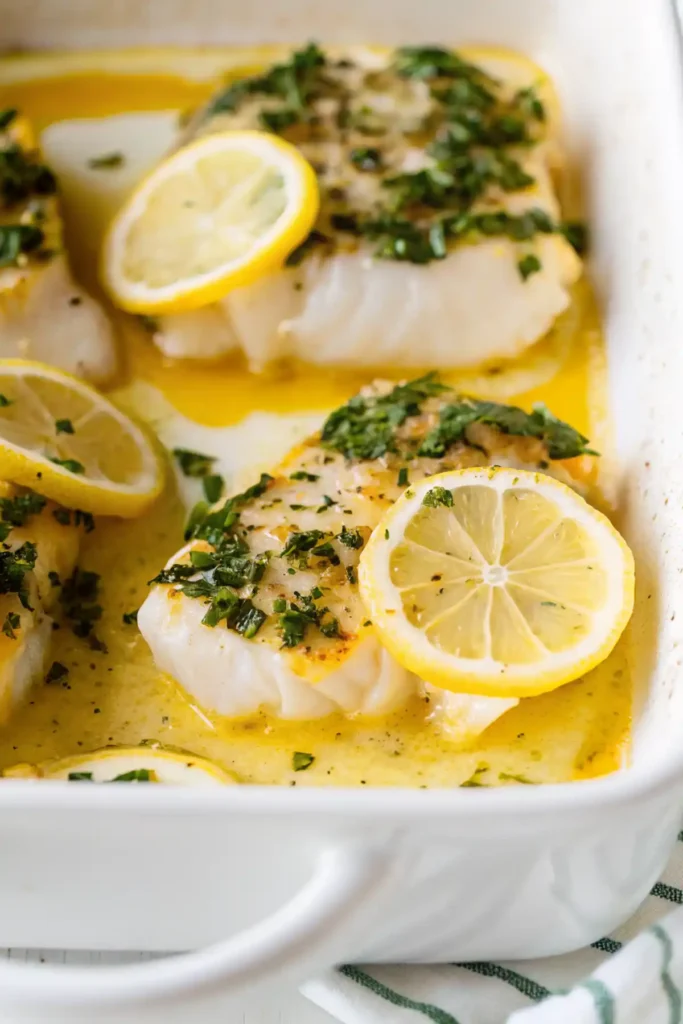
Slide a few thin lemon slices under the fillets and place a few on top. The slices underneath infuse moisture from below, while the slices on top add fresh citrus flavor as they roast. - Bake the cod.
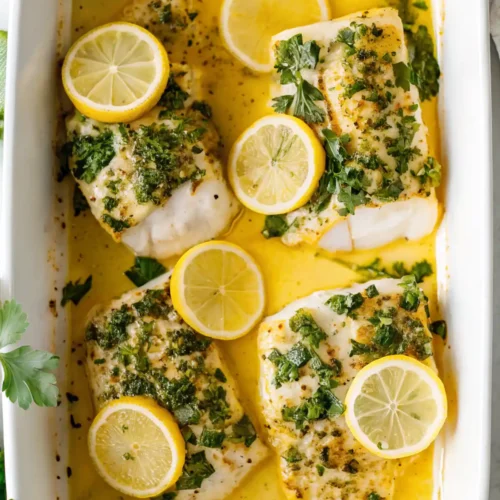
Place the baking dish on the center rack of the oven. Bake for 13 to 15 minutes. The fish is done when it turns opaque and flakes easily with a fork. For accuracy, check that the internal temperature reaches 145°F or 63°C at the thickest part. - Spoon and serve.
Remove the dish from the oven. Let the cod rest for 2 minutes. Spoon the warm pan juices over each fillet before serving. This adds extra flavor and keeps the fish moist.
Pro Tips for the Best Baked Cod
Do Not Overcook the Fish
Cod cooks quickly, and even a few extra minutes can dry it out. Start checking at the 12 minute mark if your fillets are thin. The safest and most accurate way to test doneness is with a thermometer. The internal temperature should reach 145°F or 63°C at the thickest part. The flesh should look opaque and separate easily into moist flakes.
Fresh vs Frozen Cod
Fresh cod is great when it is truly fresh from a reliable source. However, frozen wild caught Alaskan cod is often frozen right after being caught, which locks in quality. If using frozen cod, thaw it fully in the refrigerator overnight. Pat it very dry before baking to avoid excess moisture.
Skin On vs Skinless
Skinless cod is common and easy to serve. However, skin on fillets can help hold the fish together while baking. The skin also helps protect the flesh from direct heat, which can keep it juicier. If using skin on cod, bake it skin side down and remove the skin after cooking if desired.
Flavor Variations
Cajun Twist
For a bold Southern style version, replace the paprika with Cajun seasoning. Add a small pinch of cayenne if you enjoy extra heat. The spices create a deeper color and a smoky kick that pairs well with the rich garlic butter. Serve with rice or roasted vegetables to balance the spice.
Mexican Style
Swap the parsley and thyme for freshly chopped cilantro. Replace the lemon slices with lime slices and add a small pinch of ground cumin to the butter mixture. The lime adds bright acidity, while cumin brings warm, earthy flavor. This version tastes great with cilantro rice or a simple cabbage slaw.
Mediterranean Style
Add a handful of halved cherry tomatoes to the baking dish before placing it in the oven. You can also scatter sliced olives around the cod. As the fish bakes, the tomatoes soften and release their juices, creating a light sauce in the pan. Finish with extra fresh herbs for a clean, vibrant flavor.
What to Serve with Baked Cod
Potatoes
Roasted potatoes are a classic side for baked cod. Their crispy edges and soft centers balance the tender, flaky fish. Toss them with olive oil, salt, and rosemary before roasting for extra flavor. Kale mashed potatoes are another great option if you want something creamy with a healthy touch.
Grains
Lemon herb rice pilaf pairs beautifully with cod. The light citrus notes match the lemon slices used in the recipe and keep the plate fresh. Garlic parmesan orzo is another favorite. The small pasta shape soaks up the buttery pan juices, making each bite rich and satisfying.
Vegetables
Air fryer vegetables such as broccoli, carrots, or green beans add color and texture to the plate. They cook quickly and keep the meal light. Sautéed zucchini with garlic is also a simple choice that complements the mild white fish without overpowering it.
Storage Tips
Store leftover baked cod in an airtight container in the refrigerator. It will stay fresh for up to 3 days. Let the fish cool to room temperature before sealing it to prevent excess moisture inside the container.
To reheat, place the cod in a small baking dish and cover it loosely with foil. Warm it in a 300°F oven for about 8 to 10 minutes, or until heated through. Low heat helps prevent the fish from drying out. You can also spoon a little of the stored pan juices over the top before reheating to keep it moist.
Avoid microwaving if possible, as high heat can make the cod rubbery. If you must use a microwave, heat in short intervals at medium power and check frequently.
Conclusion
This baked cod recipe proves that a healthy dinner can be simple, fast, and full of flavor. In less than 25 minutes, you get tender, flaky fish topped with rich garlic butter and fresh lemon. Baking keeps the texture moist and light, while the 145°F internal temperature guarantees perfect results every time.
If you tried this recipe, I would love to hear from you. Leave a comment below and share your experience. Did you try one of the flavor variations or create your own twist? Please rate the recipe with a star review to help others find it. You can also share it on Pinterest or Facebook so your friends and family can enjoy it too.
YOU MIGHT ALSO LIKE…
Baked Cod

Ingredients
For the Cod
- 4 fillets cod, about 6 oz each, skinless or skin on
- 1 Kosher salt to taste
- 1 Freshly ground black pepper to taste
- 1 lemon, thinly sliced
For the Garlic Herb Butter
- 3 tbsp unsalted butter softened to room temperature
- 1 tbsp extra virgin olive oil
- 3 cloves garlic finely minced
- 2 tbsp fresh herbs chopped parsley, chives, thyme or a mix
- 0.5 tsp paprika
Instructions
- Preheat your oven to 400°F (200°C). Lightly grease a baking dish with olive oil.
- Pat the cod fillets dry with paper towels to remove excess moisture.
- In a small bowl, mix the softened butter, olive oil, minced garlic, chopped herbs, paprika, salt, and pepper until smooth.
- Spoon the garlic herb butter over each fillet, spreading it evenly across the tops.
- Place thin lemon slices both under and on top of the cod fillets.
- Bake the cod on the center rack for 13–15 minutes, or until the internal temperature reaches 145°F (63°C) and the fish flakes easily with a fork.
- Let the fish rest for 2 minutes, then spoon pan juices over the top before serving.
Notes
Nutrition Facts Per Serving
Calories: 258 kcalCarbohydrates: 4 g
Protein: 31 g
Fat: 13 g
Saturated Fat: 6 g
Cholesterol: 96 mg
Sodium: 169 mg
Potassium: 760 mg
Fiber: 1 g
Sugar: 1 g
Vitamin A: 622 IU
Vitamin C: 19 mg
Calcium: 44 mg
Iron: 1 mg
FAQs
How do you keep cod from drying out?
Pat the cod dry before baking so the butter mixture sticks properly. Bake at 400°F and avoid overcooking. The most reliable method is using a thermometer. Remove the fish once it reaches 145°F or 63°C. You can also place lemon slices under the fillets to add moisture as they cook.
How do you know when cod is done?
Cod is done when it turns opaque and flakes easily with a fork. The flesh should separate into large, moist flakes without looking translucent. For full accuracy, check that the internal temperature reaches 145°F or 63°C at the thickest part.
How long to bake cod at 400°F?
At 400°F or 200°C, cod usually takes 13 to 15 minutes to bake. Thicker cod loin pieces may need up to 16 minutes. Thin fillets may cook faster, so start checking around 12 minutes.
Can I use frozen cod for this recipe?
Yes, frozen cod works very well. In many cases, wild caught Alaskan cod is frozen shortly after being caught, which keeps it fresh. Thaw the fish overnight in the refrigerator. Pat it completely dry before seasoning to prevent excess moisture during baking.
How to cook cod without it falling apart?
Handle the fish gently and avoid moving it too much during cooking. Baking helps the fillets stay intact since they cook evenly without flipping. Using skin on fillets can also help hold the fish together. Let the cod rest for a couple of minutes after baking before serving.
Is it better to bake or pan sear cod?
Baking is more forgiving and cleaner than pan searing. The oven provides even heat, which helps the cod cook through without burning the outside. Pan searing can create a crisp surface, but it requires closer attention. For consistent, flaky results with less mess, baking is often the better choice.