
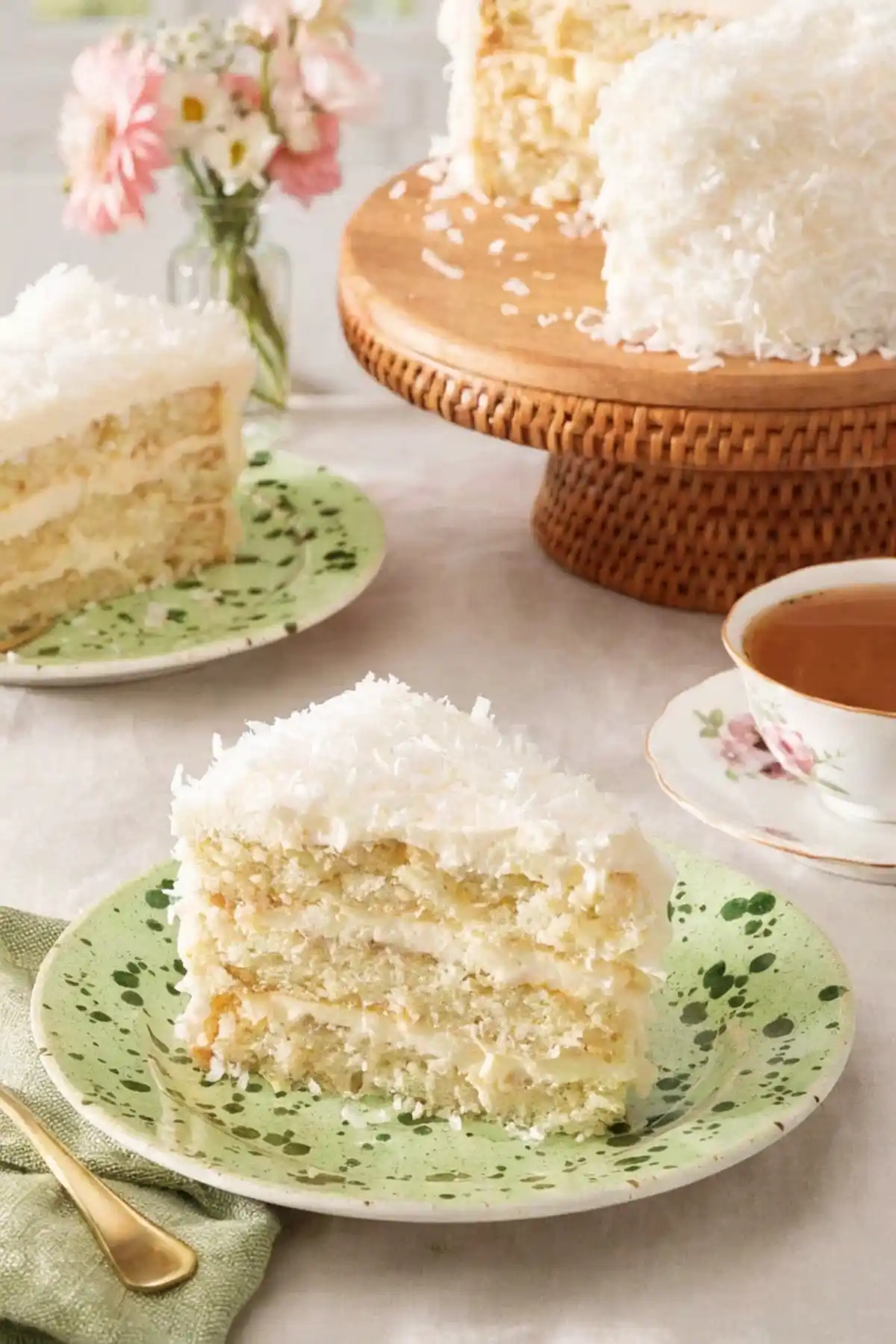
A dry coconut cake can ruin the whole experience. You expect soft layers, rich coconut flavor, and frosting that melts into every bite. Instead, many recipes turn out dense, bland, or overly sweet. This coconut cake fixes those common problems.
It uses cake flour for a light crumb, coconut milk for extra moisture, and sweetened shredded coconut for real texture without making the cake heavy. The coconut cream cheese frosting adds a smooth, tangy finish that balances the sweetness perfectly. Whether you’re baking for Easter, birthdays, or weekend cravings, this homemade coconut cake delivers bakery-style results with simple steps anyone can follow.
Table of Contents
Why You’ll Love This Recipe
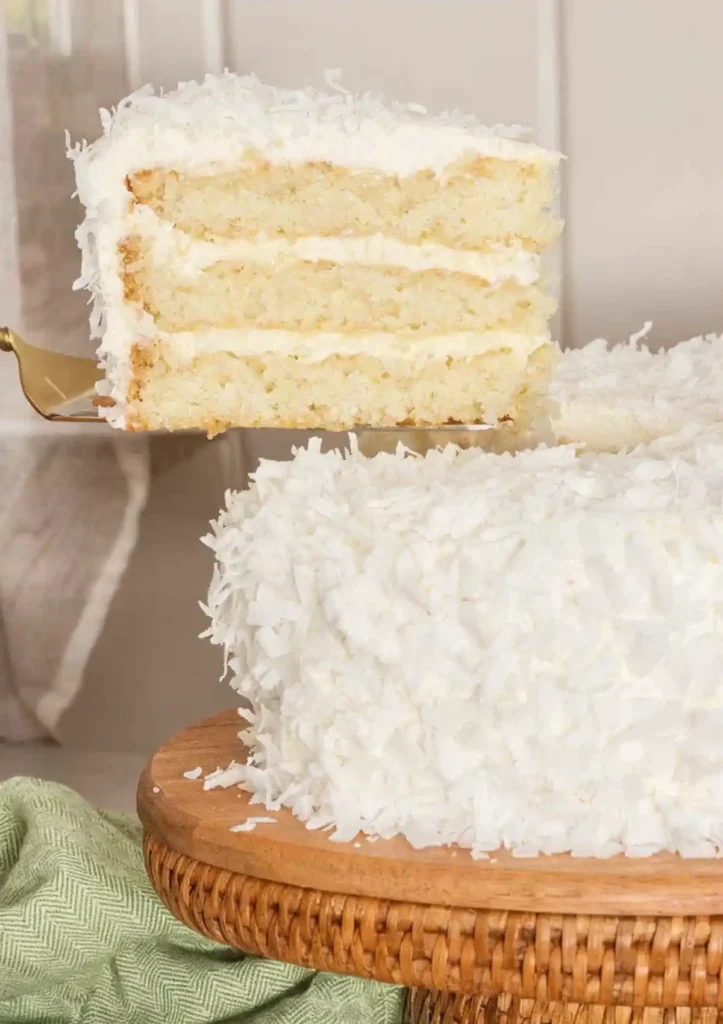
- This coconut cake stays incredibly moist thanks to coconut milk, oil, and softened butter working together for a soft texture.
- The coconut cream cheese frosting adds the perfect balance of sweetness and tanginess, so the cake never feels too heavy.
- Simple pantry ingredients make this recipe easy for home bakers without sacrificing bakery-quality results.
- Sweetened shredded coconut adds real coconut flavor in every bite.
- It works beautifully for birthdays, Easter gatherings, holidays, or anytime you want a dessert that impresses guests and disappears fast.
Ingredients Needed
For the Coconut Cake
- 3 cups cake flour (360g), spooned and leveled for accurate measuring
- 2 teaspoons baking powder to help the cake rise evenly
- ½ teaspoon baking soda for a softer crumb
- 1 teaspoon salt to balance the sweetness
- 2 cups granulated sugar (400g)
- ½ cup unsalted butter (113g), softened at room temperature
- ½ cup vegetable oil (120ml), which helps keep the cake moist for days
- 4 large egg whites, lightly beaten for a lighter cake color and texture
- 2 teaspoons vanilla extract
- ½ teaspoon coconut extract for stronger coconut flavor
- 1 cup canned coconut milk (240ml), shaken well before opening
- 1 cup sweetened shredded coconut (100g), finely chopped if you prefer a softer texture
For the Coconut Cream Cheese Frosting
- 1 cup unsalted butter (227g), softened
- 8 ounces cream cheese (227g), softened to room temperature
- 1 teaspoon vanilla extract
- ½ teaspoon coconut extract
- ¼ teaspoon salt
- 6 cups confectioners’ sugar (720g), sifted if lumpy
- 2½ cups sweetened shredded coconut (250g) for coating the cake
Optional Flavor Additions
- Lemon curd for a bright citrus layer between cake layers
- Raspberry jam for a sweet and tart filling option
- Toasted coconut for extra crunch and deeper coconut flavor
- Fresh pineapple filling for a tropical twist
Using room temperature ingredients makes a big difference here. Cold butter, eggs, or cream cheese can create a lumpy batter and affect the final texture.
How to Make Coconut Cake
1. Prepare Your Pans and Oven
Preheat your oven to 350°F. Grease three 9 inch round cake pans with butter or nonstick baking spray. Line the bottoms with parchment paper circles to prevent sticking. This small step makes cake removal much easier later.
2. Mix the Dry Ingredients
In a medium bowl, whisk together the cake flour, baking powder, baking soda, and salt until evenly combined. Set the bowl aside. Mixing these ingredients first helps distribute the leavening agents evenly throughout the batter.
3. Cream Butter, Sugar, and Oil
In a large mixing bowl or stand mixer, beat the granulated sugar, softened butter, and vegetable oil on medium speed for about 3 minutes.
The mixture should look pale, creamy, and fluffy. This step adds air into the batter, which helps create a lighter coconut cake texture.
4. Add Egg Whites and Extracts
Pour in the lightly beaten egg whites, vanilla extract, and coconut extract.
Mix for about 1 minute until fully blended. Using egg whites instead of whole eggs keeps the cake lighter in color and gives it a soft, delicate crumb.
5. Alternate Dry Ingredients and Coconut Milk
Reduce the mixer speed to low.
Add one-third of the flour mixture and mix just until combined.
Pour in half of the coconut milk and mix again.
Repeat with another third of the flour mixture, followed by the remaining coconut milk.
Finish with the final portion of flour.
Scrape down the bowl as needed so everything mixes evenly. Stop mixing once the flour disappears to avoid a dense cake.
6. Fold in the Coconut
Use a spatula to gently fold in the shredded coconut.
If you prefer a softer texture, pulse the coconut in a food processor before adding it to the batter. This helps prevent large chewy pieces.
7. Fill the Cake Pans
Divide the batter evenly between the prepared cake pans.
Smooth the tops with a spatula because the batter will be thick.
Try using a kitchen scale if you want perfectly even layers.
8. Bake Until Golden
Bake for 30 to 32 minutes.
Rotate the pans after about 20 minutes for even baking.
The cakes are ready when the centers spring back when lightly pressed or a toothpick comes out clean.
9. Cool the Cake Layers
Let the cakes cool in their pans for 20 minutes.
Carefully turn them onto a wire rack and remove the parchment paper.
Allow them to cool completely before frosting. Warm cake layers can melt the frosting.
Make the Coconut Cream Cheese Frosting
10. Beat Butter and Cream Cheese
In a large bowl, beat softened butter and cream cheese for about 3 minutes until smooth and fluffy.
Add vanilla extract, coconut extract, and salt.
Mix again until fully combined.
11. Add the Sugar Slowly
Add confectioners’ sugar one cup at a time while mixing on low speed.
This prevents a sugar cloud in your kitchen.
Once fully mixed, beat on medium speed for 1 minute until light and creamy.
Assemble the Cake
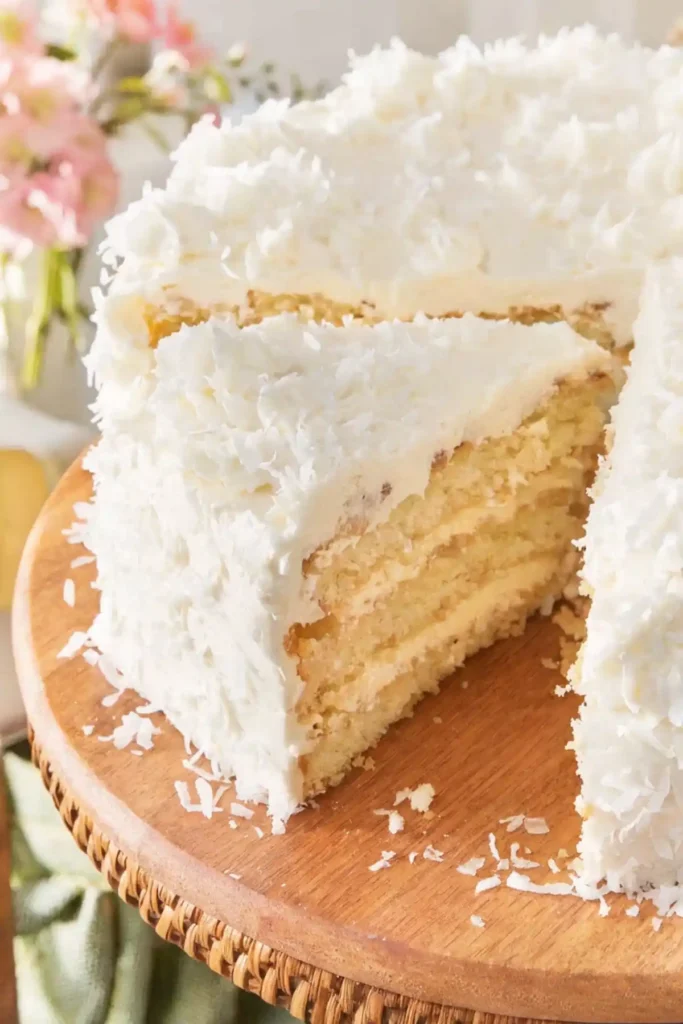
12. Layer the Cake
Place the first cake layer on a cake stand or serving plate.
Spread about 1 cup of frosting evenly across the top.
Add the second layer and repeat.
Place the final layer on top.
13. Frost the Outside
Spread the remaining frosting over the top and sides of the cake.
Use an offset spatula for smoother coverage.
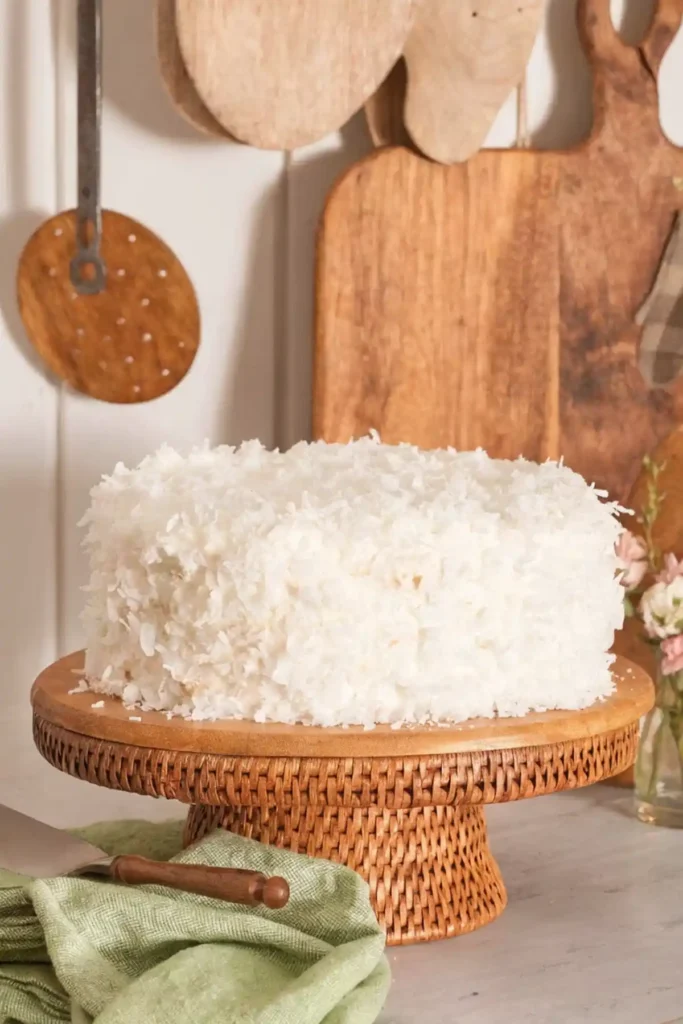
14. Add the Coconut Finish
Press shredded coconut onto the top and sides of the cake until fully coated.
For deeper flavor, lightly toast some of the coconut before adding it.
15. Chill Before Serving
Refrigerate the cake for 30 minutes before slicing.
This helps the frosting set and gives you cleaner slices.
Serve chilled or let it sit at room temperature for 15 minutes before serving for a softer texture.
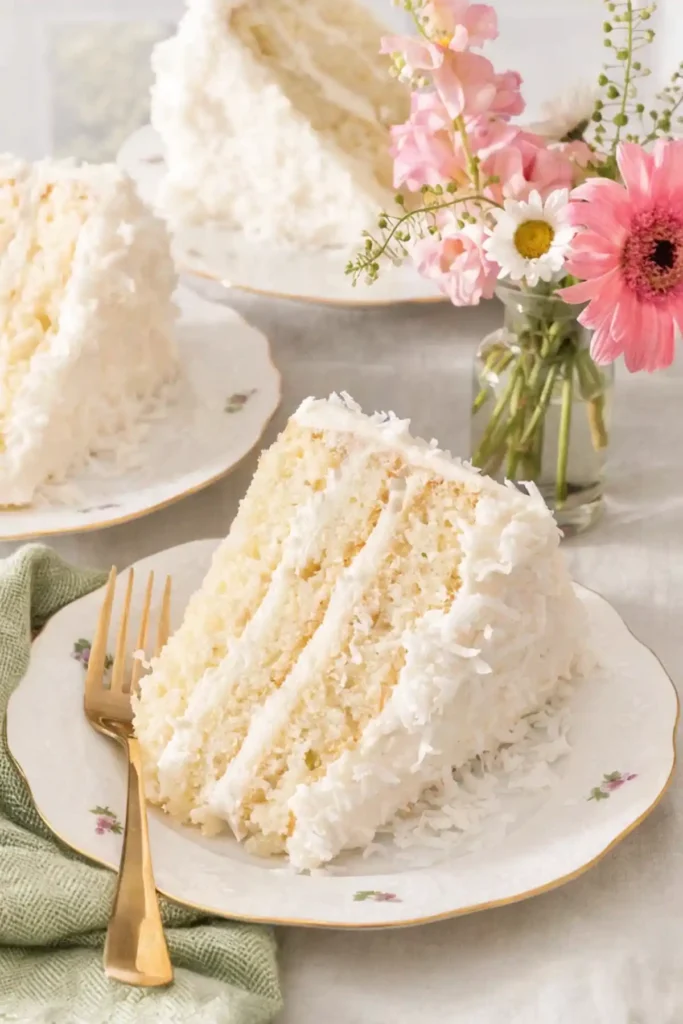
Customization & Variations
Pan Size Conversions
This coconut cake recipe is flexible, which makes it perfect for different occasions.
| Pan Size | Bake Time |
| 6-inch round pans | 25 to 30 minutes |
| 9×13-inch sheet cake | About 35 minutes |
| Cupcakes | 20 to 25 minutes |
Always start checking a few minutes early since oven temperatures can vary. The cake is done when the center springs back gently when touched or a toothpick comes out clean.
Add a Fruity Filling
Want a bakery-style upgrade? Add a thin layer of filling between each cake layer.
Popular options include:
- Lemon curd for a bright citrus contrast
- Raspberry jam for a sweet and tart flavor
- Pineapple filling for a tropical dessert feel
These fillings pair beautifully with coconut cream cheese frosting and keep each bite interesting.
Make It Extra Coconuty
For stronger coconut flavor:
- Toast shredded coconut before folding it into the batter
- Add extra coconut extract in small amounts
- Use coconut buttercream instead of cream cheese frosting if you prefer a sweeter finish
Make It Gluten-Free
Swap the cake flour with a high-quality 1:1 gluten-free baking flour blend that contains xanthan gum.
Check your cake a little earlier because gluten-free cakes can bake faster.
Make It Dairy-Free
Replace:
- Butter with plant-based butter
- Cream cheese with dairy-free cream cheese
- Use a dairy-free frosting if needed
This variation works well for guests with dietary restrictions.
Turn It Into a Simple Coconut Cake
If you need a faster version:
- Use white cake mix
- Replace water with coconut milk
- Add shredded coconut
- Top with whipped frosting
This shortcut version saves time while still delivering great coconut flavor.
Troubleshooting & Pro Tips
Use Room Temperature Ingredients
Cold butter, eggs, cream cheese, or coconut milk can cause the batter to look curdled or uneven.
Set your ingredients out about 30 to 45 minutes before baking. Room temperature ingredients blend faster and create a smoother batter, which helps produce soft and even cake layers.
Shake the Coconut Milk First
Canned coconut milk often separates inside the can.
The thick coconut cream rises to the top while the liquid settles at the bottom. Shake the can well before opening so the fat and liquid mix properly. This helps keep the cake moist and balanced.
Do Not Overmix the Batter
Once you add the flour, mix only until the last streak of flour disappears.
Too much mixing develops gluten, which can leave you with a dense cake instead of a soft, fluffy crumb.
If Your Batter Looks Curdled
Do not panic.
This can happen when fat and liquid ingredients mix at different temperatures. In many cases, the batter smooths out once the dry ingredients are added.
Avoid Dry Coconut Cake
Dry cake usually happens because of overbaking.
Start checking your cake a few minutes early. Remove it once the center springs back lightly when touched or a toothpick comes out with a few moist crumbs.
Fix Thick Frosting
If your frosting feels too thick, add 1 tablespoon of coconut milk at a time until it reaches a spreadable texture.
If it becomes too soft, place it in the refrigerator for 15 minutes before using it.
Want Better Coconut Texture?
Large coconut flakes can feel chewy in cake layers.
Pulse sweetened shredded coconut in a food processor for a few seconds if you want a softer texture throughout the cake.
Cool the Layers Completely
Warm cake layers can melt frosting quickly.
Allow each layer to cool fully before assembling your coconut cake for clean layers and better presentation.
Storage, Make-Ahead, and Freezing
How to Store Coconut Cake
Because this cake uses cream cheese frosting, it should be stored in the refrigerator.
Place the cake in an airtight container or cover it tightly with plastic wrap to keep it from drying out.
It will stay fresh for up to 5 days in the fridge.
For the best flavor and texture, let the cake sit at room temperature for about 20 to 30 minutes before serving.
Make the Cake Layers Ahead of Time
If you want to save time, bake the cake layers in advance.
Once the layers cool completely:
- Wrap each layer tightly in plastic wrap
- Add a layer of foil for extra protection
- Keep them at room temperature for up to 1 day
You can frost the cake the next day when you’re ready to serve it.
Freeze Cake Layers
Coconut cake layers freeze very well.
Wrap each cooled layer tightly in plastic wrap, then place them in a freezer-safe bag or container.
Freeze for up to 1 month.
Thaw the layers overnight in the refrigerator before frosting.
Freeze a Fully Frosted Coconut Cake
Yes, you can freeze the entire decorated cake.
Place the frosted cake in the freezer uncovered for about 1 hour until the frosting becomes firm.
Then wrap it tightly in plastic wrap followed by foil.
Store it in the freezer for up to 3 months.
When ready to serve, thaw the cake in the refrigerator overnight.
Store Leftover Slices
Wrap individual slices tightly or place them in airtight containers.
This makes it easy to grab a quick dessert later without exposing the whole cake to air.
Leftover slices usually stay fresh for 3 to 5 days in the refrigerator.
Final Thoughts
This coconut cake is worth making when you want a dessert that feels special but still uses simple ingredients. The cake layers stay soft and moist, the coconut flavor stands out in every bite, and the cream cheese frosting adds the perfect balance without being too sweet.
It also works for birthdays, Easter celebrations, family dinners, and holiday dessert tables. You can keep it classic or try fun additions like lemon curd, raspberry jam, or toasted coconut.
If you made this coconut cake, leave a comment below and share your star rating. I’d love to hear how it turned out for you.
Did you try a fun variation? Share your favorite twist.
Don’t forget to save this recipe on Pinterest or share it with friends on Facebook.
YOU MIGHT ALSO LIKE…
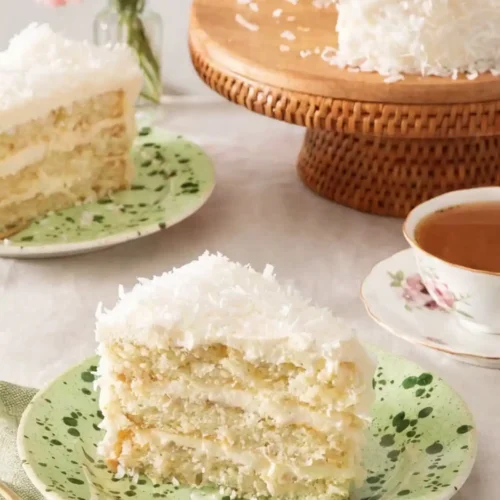
Coconut Cake

Ingredients
For the Coconut Cake
- 3 cups cake flour spooned and leveled
- 2 teaspoons baking powder
- ½ teaspoon baking soda
- 1 teaspoon salt
- 2 cups granulated sugar
- ½ cup unsalted butter softened
- ½ cup vegetable oil
- 4 large egg whites lightly beaten
- 2 teaspoons vanilla extract
- ½ teaspoon coconut extract
- 1 cup canned coconut milk shaken well
- 1 cup sweetened shredded coconut finely chopped if desired
For the Coconut Cream Cheese Frosting
- 1 cup unsalted butter softened
- 8 ounces cream cheese softened
- 1 teaspoon vanilla extract
- ½ teaspoon coconut extract
- ¼ teaspoon salt
- 6 cups confectioners’ sugar sifted if needed
- 2 ½ cups sweetened shredded coconut for coating cake
Optional Fillings & Variations
- lemon curd for layering
- raspberry jam for layering
- toasted coconut for garnish
- pineapple filling optional tropical variation
Instructions
- Preheat oven to 350°F (175°C). Grease three 9-inch round cake pans and line the bottoms with parchment paper.
- In a medium bowl, whisk together cake flour, baking powder, baking soda, and salt. Set aside.
- In a large mixing bowl, beat sugar, softened butter, and vegetable oil for about 3 minutes until pale and fluffy.
- Add egg whites, vanilla extract, and coconut extract. Mix until fully combined.
- Alternate adding the flour mixture and coconut milk, beginning and ending with the flour mixture. Mix on low speed until just combined.
- Gently fold in shredded coconut using a spatula.
- Divide batter evenly between prepared pans and smooth the tops.
- Bake for 30–32 minutes, rotating pans halfway through baking. Cakes are done when a toothpick inserted in the center comes out clean.
- Cool cakes in pans for 20 minutes, then transfer to a wire rack to cool completely.
- To make frosting, beat butter and cream cheese until fluffy. Add vanilla extract, coconut extract, and salt.
- Gradually add confectioners’ sugar, one cup at a time, mixing until smooth and creamy.
- Place one cake layer on a serving plate and spread frosting evenly on top. Repeat with remaining layers.
- Frost the top and sides of the cake with remaining frosting.
- Press shredded coconut onto the top and sides of the cake until fully coated.
- Refrigerate for 30 minutes before slicing for cleaner cuts. Serve chilled or let sit at room temperature for 15 minutes before serving.
Notes
Nutrition Facts Per Serving
| Nutrient | Amount |
| Calories | 1003 kcal |
| Carbohydrates | 130g |
| Protein | 7g |
| Fat | 53g |
| Saturated Fat | 32g |
| Polyunsaturated Fat | 7g |
| Monounsaturated Fat | 10g |
| Trans Fat | 1g |
| Cholesterol | 80mg |
| Sodium | 513mg |
| Potassium | 215mg |
| Fiber | 2g |
| Sugar | 104g |
| Vitamin A | 964 IU |
| Vitamin C | 0.4mg |
| Calcium | 78mg |
| Iron | 2mg |
FAQs
What is the best flour to use for coconut cake?
Cake flour is the best choice for coconut cake because it has less protein than all purpose flour. This creates a softer, lighter crumb that works perfectly with coconut milk and shredded coconut. If you only have all purpose flour, you can still use it, but the texture may feel slightly heavier.
How to make simple coconut cake?
For a quicker version, use a white cake mix as your base. Replace the water with canned coconut milk, then stir in shredded coconut for extra flavor. Bake according to the package instructions and finish with whipped frosting or cream cheese frosting for an easy homemade touch.
What filling goes with coconut cake?
Coconut cake pairs well with fillings that add contrast. Popular choices include lemon curd, raspberry jam, pineapple filling, vanilla pastry cream, and coconut custard. These fillings add moisture and make each layer more flavorful.
Is coconut cake an Easter tradition?
Yes, coconut cake is often served during Easter in many Southern households in the United States. Its white frosting and coconut coating give it a festive spring look, making it a popular dessert for Easter brunch and family gatherings.
Where is the famous coconut cake from?
One of the most famous coconut cakes is linked to Peninsula Grill in Charleston. Their towering Ultimate Coconut Cake became widely known after being featured in food publications and travel guides.