
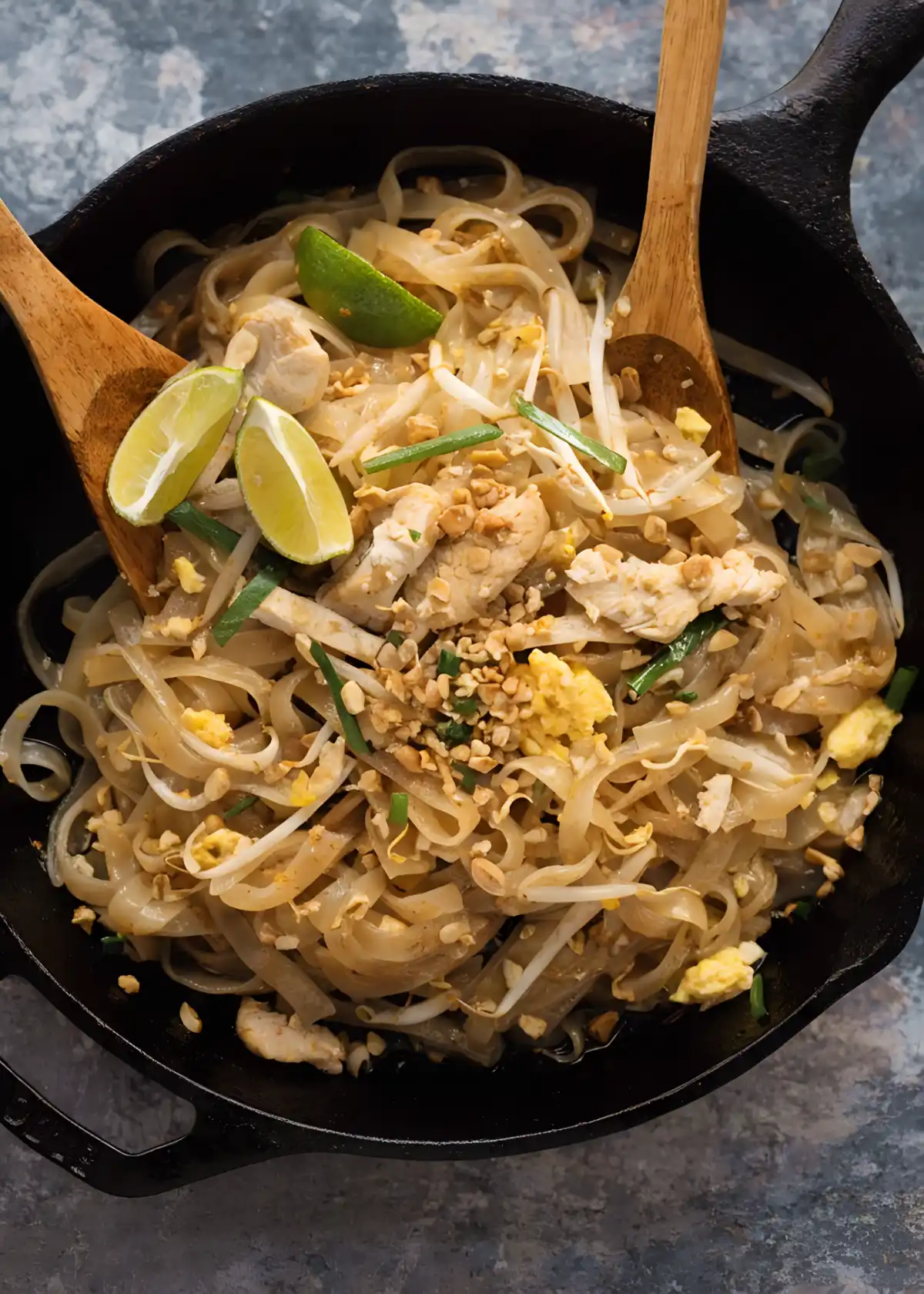
I’ve cooked pad thai more times than I can count, and one thing became clear fast. Most recipes either chase strict tradition or cut corners too much. This version fixes that. You get the real balance of sweet, sour, and salty flavors without hunting for rare items. It cooks fast, tastes rich, and avoids the soggy noodles that ruin many home attempts. If you want a dish that feels like takeout but comes together in your own kitchen, you’re in the right place.
Table of Contents
Why You’ll Love This Recipe
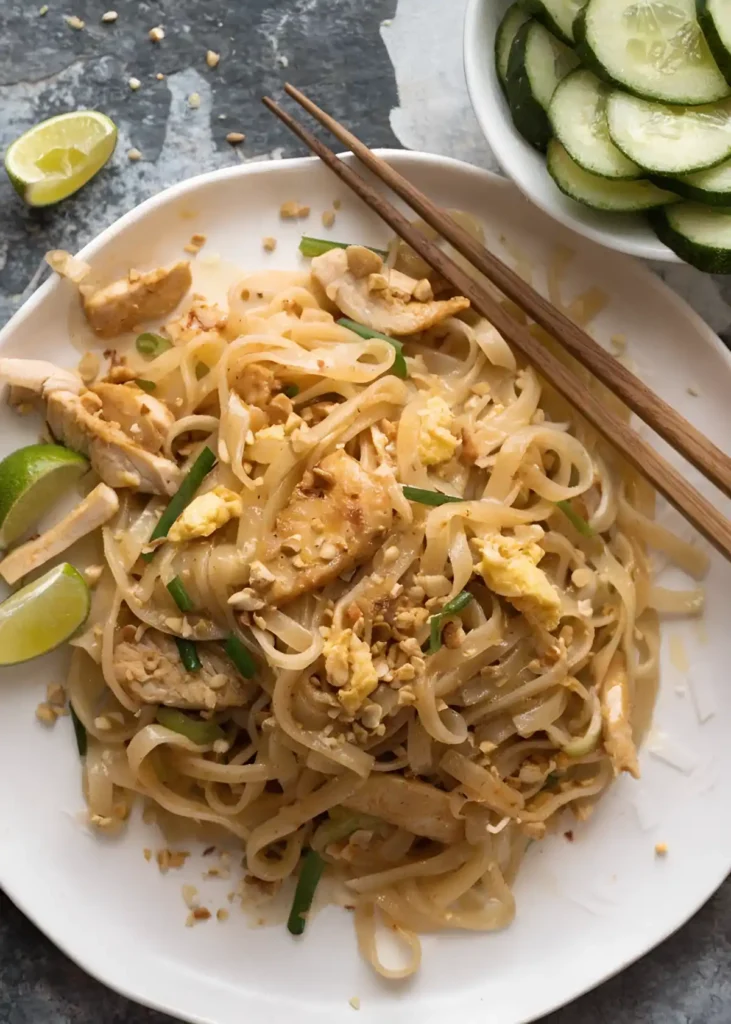
- Quick to cook and ready in about 30 minutes, perfect for busy nights
- Uses simple ingredients you can find in most stores, with easy swaps included
- Delivers the true balance of sweet, sour, and salty flavors without being too complex
- Gives you soft yet firm noodles, not sticky or clumped together
- Great for family meals or when you want to impress guests with bold flavors
This recipe stands out because it respects the core taste of pad thai while staying practical. You do not need hard-to-find items to get that rich, deep flavor.
Ingredients Needed
For the Noodles Base
- 125 g dried rice stick noodles, medium width such as Pad Thai style. These soften quickly and hold sauce well
For the Pad Thai Sauce
- 1 1/2 tablespoons tamarind puree, not concentrate, for that classic tangy taste
- 3 tablespoons brown sugar, packed, to bring a soft sweetness
- 2 tablespoons fish sauce, adds depth and saltiness
- 1 1/2 tablespoons oyster sauce, gives a rich and slightly savory finish
For the Stir Fry
- 2 to 3 tablespoons vegetable oil or canola oil, for high heat cooking
- 1/2 onion, sliced thin, yellow or brown works best
- 2 garlic cloves, finely chopped for strong flavor
- 150 g chicken breast or thigh, sliced thin so it cooks fast
- 2 eggs, lightly beaten before adding to the pan
- 1 1/2 cups bean sprouts, fresh and crunchy
- 1/2 cup firm tofu, cut into small batons for texture contrast
- 1/4 cup garlic chives, cut into short pieces for a mild onion taste
- 1/4 cup peanuts, finely chopped for a nutty crunch
For Serving
- Fresh lime wedges, essential for brightness
- Ground chili or cayenne pepper, optional for heat
- Extra bean sprouts, for added crunch and freshness
How to Make Pad Thai
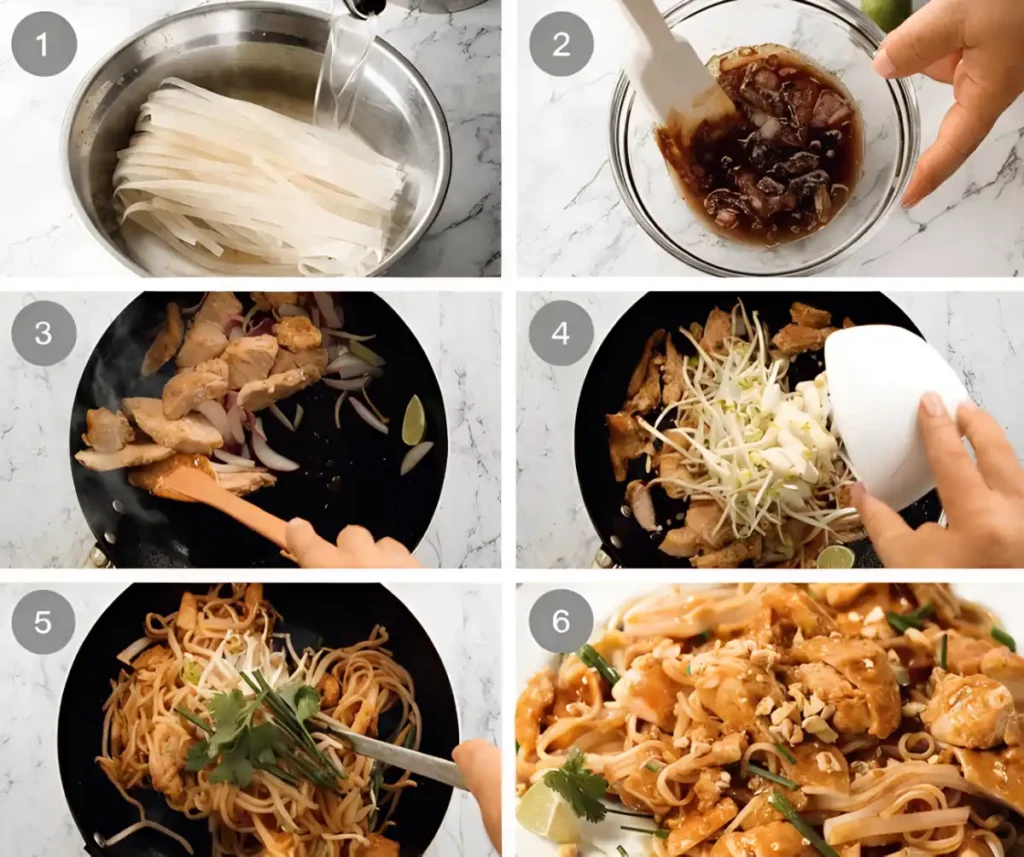
- Soak the noodles first
Place the dried rice noodles in a large bowl. Pour boiling water over them until fully covered. Let them soak for exactly 5 minutes. Stir once or twice so they soften evenly. Drain right away and rinse briefly under cold water to stop cooking. Do not let them sit too long or they will turn sticky. - Mix the sauce
In a small bowl, combine the tamarind puree, brown sugar, fish sauce, and oyster sauce. Stir until the sugar dissolves. Taste it. You should notice a balance of sweet, sour, and salty. - Heat the pan properly
Place a large nonstick pan or well-seasoned skillet over high heat. Add 2 tablespoons of oil. Wait until the oil looks hot and slightly shimmering. This step helps prevent sticking and builds flavor fast. - Cook the aromatics
Add the chopped garlic and sliced onion. Stir for about 30 seconds until fragrant. The onion should start to soften but not brown too much. - Add the chicken
Place the sliced chicken into the pan. Spread it out so it cooks evenly. Stir for about 1 to 2 minutes until it is mostly cooked through. Thin slices help it cook quickly without drying out. - Scramble the eggs
Push the chicken to one side of the pan. Pour the beaten eggs into the empty space. Let them set slightly, then scramble gently. If the pan looks dry, add a small splash of oil. Once cooked, mix the eggs into the chicken. - Combine the main ingredients
Add the bean sprouts, tofu, soaked noodles, and prepared sauce. Use tongs or a spatula to toss everything gently. Keep the heat high so the sauce coats the noodles instead of soaking in too slowly. - Toss until coated
Continue tossing for about 1 to 2 minutes. The noodles should absorb the sauce and turn glossy. They should be soft but still hold their shape. - Finish with fresh elements
Add the garlic chives and half of the chopped peanuts. Toss quickly for a few seconds, just enough to mix. Turn off the heat right away to keep the herbs fresh. - Serve immediately
Transfer to plates while hot. Sprinkle the remaining peanuts on top. Add lime wedges on the side, along with extra bean sprouts and a pinch of chili if you like heat. Squeeze fresh lime juice over the noodles just before eating for the best flavor.
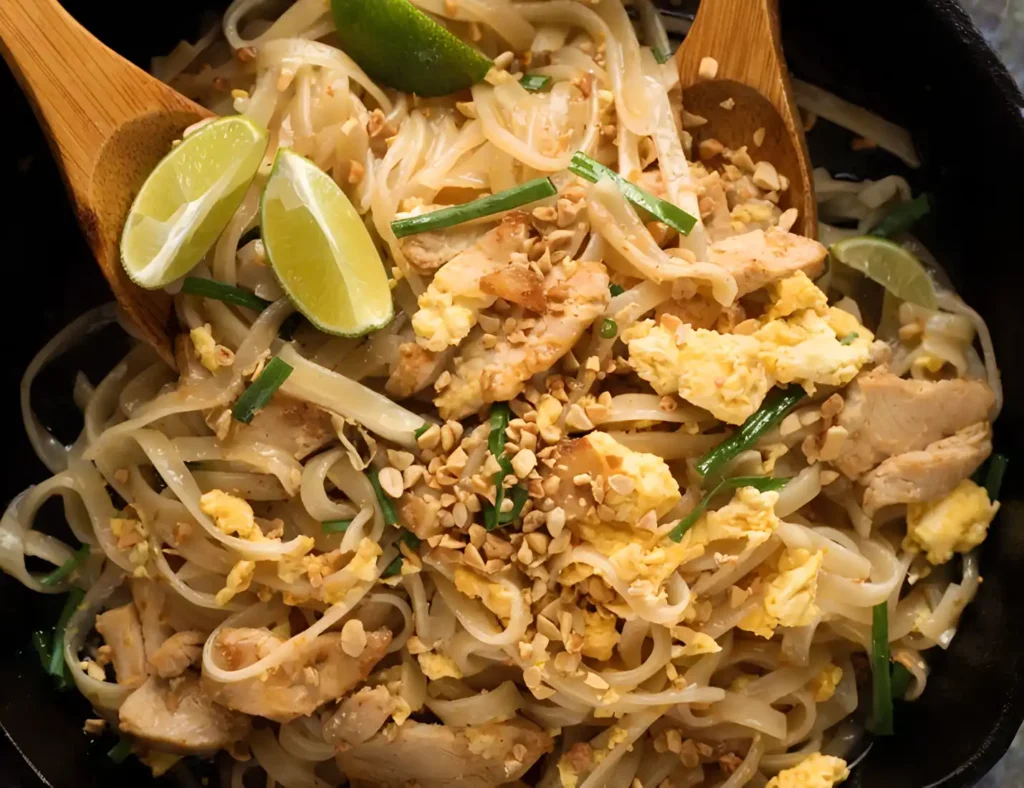
How to Avoid “The Noodle Ball”
One of the most common problems with pad thai is ending up with a sticky, clumped mess. Here is how to fix that with simple, clear steps.
Problem: Mushy noodles
Solution: Always soak the noodles in boiling water for exactly 5 minutes. Do not cook them in a pot like pasta. Boiling on the stove makes them too soft and causes them to break apart during stir fry.
Problem: Too dry texture
Solution: If the pan looks dry while cooking, especially when adding eggs, add a small splash of oil. This keeps everything moving smoothly and prevents sticking.
Problem: Not orange enough
Solution: Real pad thai is not bright orange. That color often comes from ketchup or paprika in restaurant shortcuts. Authentic flavor comes from tamarind, fish sauce, and sugar, which give a darker, richer tone instead.
Focus on timing and heat. When you control these two, your noodles stay separate, glossy, and full of flavor instead of turning into a heavy clump.
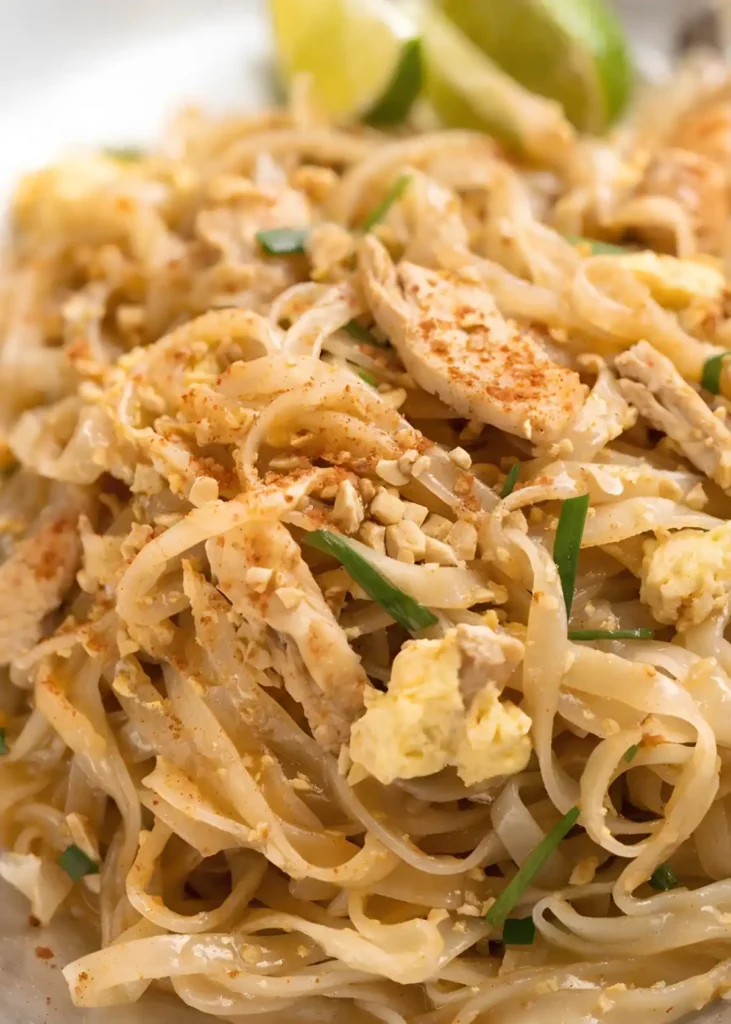
How to Serve and Reheat
Serving pad thai the right way makes a big difference. The dish should be hot, fresh, and full of contrast in texture and taste.
The essentials
Always serve with fresh lime wedges on the side. A squeeze of lime just before eating cuts through the richness and brings the whole dish to life. This step is not optional if you want the best flavor.
Optional heat
Add ground chili or cayenne pepper on top if you like spice. Keep it on the side so each person can adjust the heat to their taste.
Extra crunch
A handful of fresh bean sprouts on the side adds a crisp bite that balances the soft noodles.
Reheating tip
Pad thai tastes best fresh, but leftovers can still be good. Place the noodles in a pan or microwave-safe dish, add a small splash of water, and heat for 1 to 2 minutes. The water helps loosen the noodles and brings back some moisture so they do not dry out.
Conclusion
This pad thai recipe works because it keeps things simple while still giving you real flavor. You get soft but firm noodles, a rich sauce, and that perfect balance of sweet, sour, and salty in every bite. It cooks fast, uses easy-to-find ingredients, and avoids the common mistakes that ruin texture.
If you tried this recipe, share your thoughts in the comments and leave a star rating. Your feedback helps others and keeps the recipe improving. Feel free to share it on Pinterest or Facebook so more people can enjoy it.
What did you change or add to make it your own? Let me know below.
YOU MIGHT ALSO LIKE…
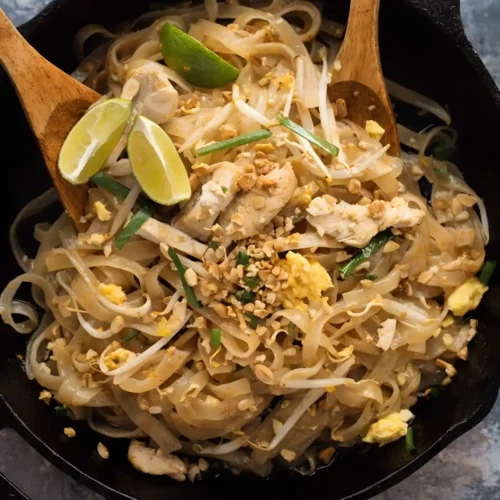
Pad Thai

Ingredients
Noodles Base
- 125 g dried rice stick noodles medium width
Pad Thai Sauce
- 1.5 tbsp tamarind puree not concentrate
- 3 tbsp brown sugar packed
- 2 tbsp fish sauce
- 1.5 tbsp oyster sauce
Stir Fry
- 2 tbsp vegetable oil or canola oil
- 0.5 unit onion thinly sliced
- 2 cloves garlic finely chopped
- 150 g chicken breast or thigh thinly sliced
- 2 unit eggs lightly beaten
- 1.5 cups bean sprouts fresh
- 0.5 cup firm tofu cut into batons
- 0.25 cup garlic chives cut into pieces
- 0.25 cup peanuts finely chopped
Serving
- 2 wedges lime
- 1 tsp ground chili optional
Instructions
- Place rice noodles in a bowl and cover with boiling water. Soak for 5 minutes, then drain and rinse briefly with cold water.
- Mix tamarind puree, brown sugar, fish sauce, and oyster sauce in a bowl until combined.
- Heat oil in a large pan over high heat until shimmering.
- Add garlic and onion, stir for about 30 seconds until fragrant.
- Add chicken and cook for 1–2 minutes until mostly done.
- Push ingredients aside, add eggs, and scramble gently before mixing in.
- Add noodles, tofu, bean sprouts, and sauce. Toss over high heat.
- Cook for 1–2 minutes until noodles are coated and glossy.
- Add garlic chives and half the peanuts. Toss briefly and turn off heat.
- Serve hot with remaining peanuts, lime wedges, and optional chili.
Notes
Nutrition Facts (Per Serving)
- Calories: 520 kcal
- Protein: 28 g
- Carbohydrates: 55 g
- Fat: 20 g
- Saturated Fat: 4 g
- Cholesterol: 190 mg
- Sodium: 900 mg
- Fiber: 3 g
- Sugar: 12 g
FAQs
What is the signature ingredient in Pad Thai?
The key ingredient is tamarind. It gives pad thai its distinct sour taste. This flavor sets it apart from other noodle dishes. Fish sauce also plays a big role by adding depth and saltiness.
What are some common Pad Thai mistakes?
Many people overcook the noodles, which makes them soft and sticky. Another mistake is cooking too much at once, which lowers heat and leads to clumping. Skipping the balance of sweet, sour, and salty also results in a flat taste.
What makes Pad Thai taste so good?
It comes down to balance. Sweet from sugar, sour from tamarind, and salty from fish sauce all work together. When cooked over high heat, the ingredients blend fast and create a rich, bold flavor.
What is the red stuff in Pad Thai?
In many restaurants, the red color comes from paprika or chili powder. Sometimes ketchup is used in quick versions. Traditional pad thai is not bright red. It has a darker tone from tamarind and sauce.
Who invented Pad Thai?
Pad thai became popular in Thailand during the 20th century. It was promoted as a national dish to support local food culture and rice noodle use.
Are Pad Thai noodles healthier than pasta?
Rice noodles are often lighter than regular pasta. They are usually gluten free, which helps people with certain diets. However, both can be part of a balanced meal depending on portion size and ingredients used.