
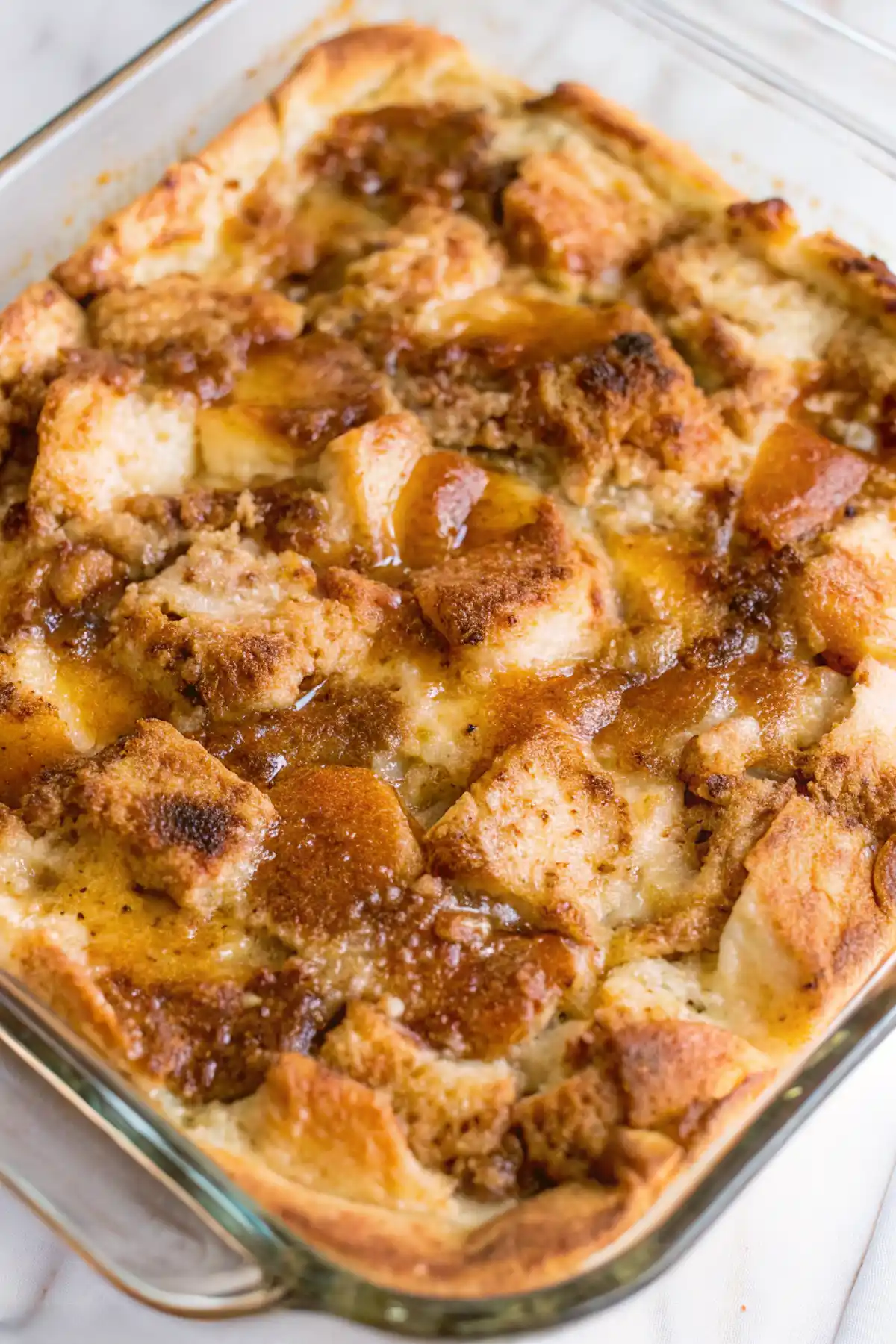
Bread pudding started as a humble dessert in England, made to stretch the life of stale bread during hard times. Families would save scraps, pour over a sweet egg custard, and bake it into something comforting.
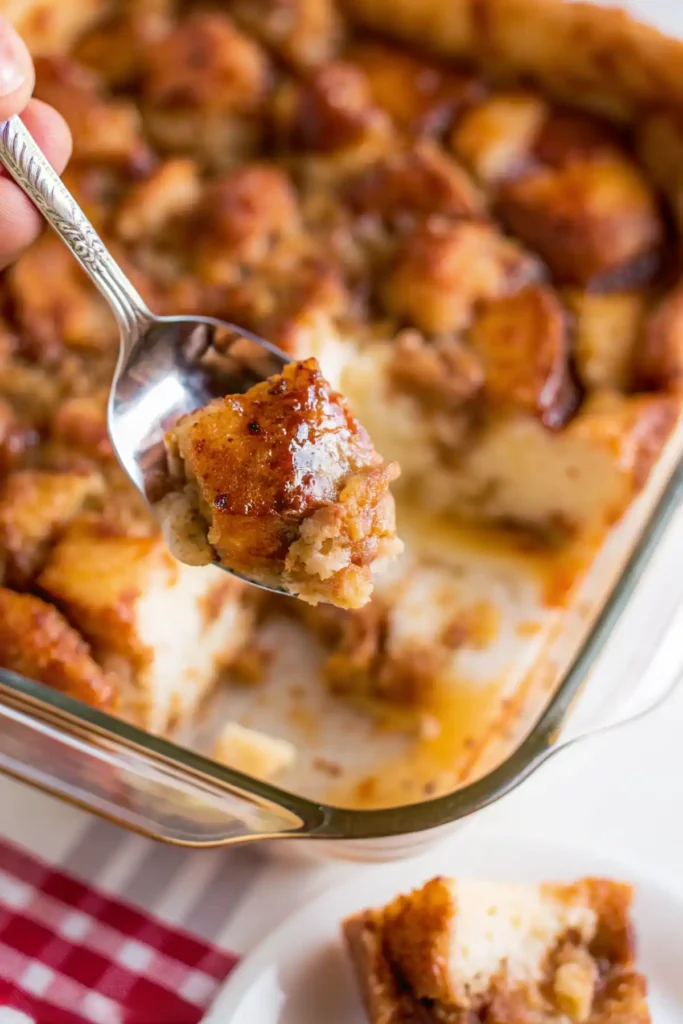
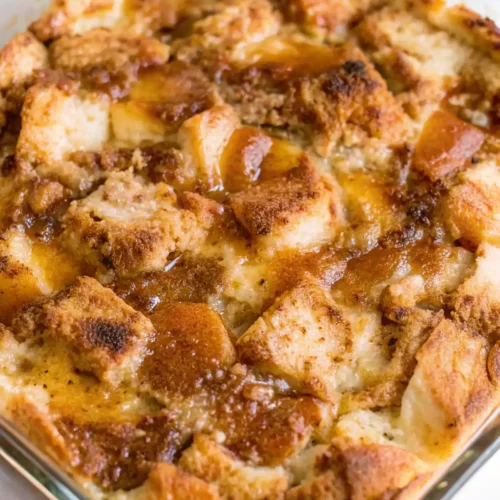
The magic of this dish is the contrast. You get golden, crisp edges on top and a soft, creamy center inside. It’s warm, filling, and never fussy.
What makes this version the best? It relies on simple ingredients you likely already have at home. No fancy tricks. Just the right method, the right bread, and a custard that bakes up perfectly every time.
Table of Contents
What Kind of Bread is Best?
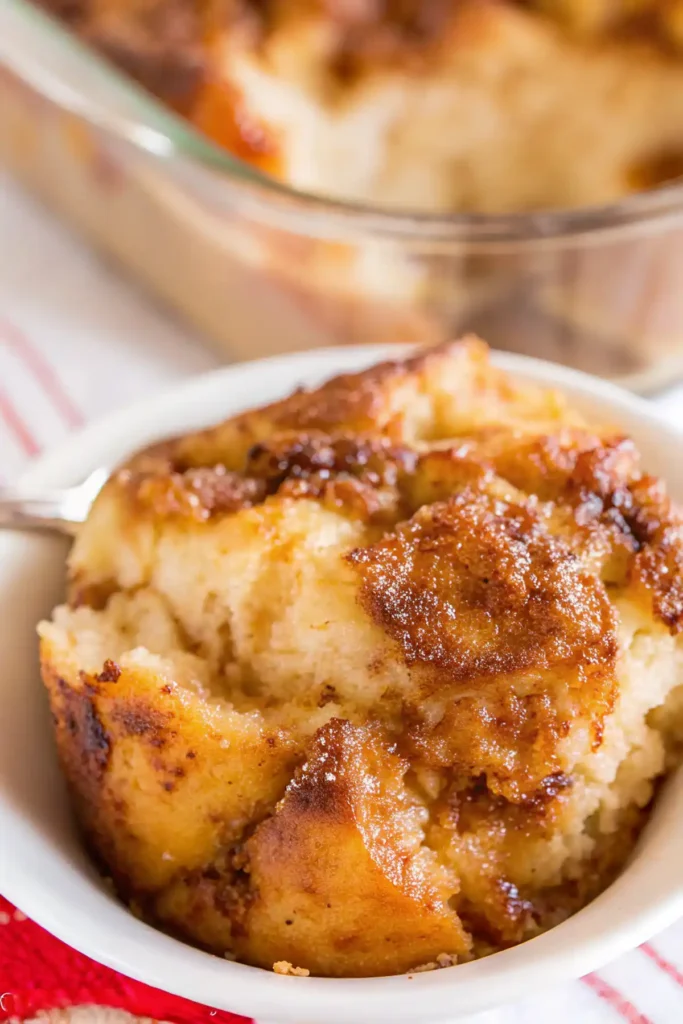
French bread is the top choice for classic bread pudding. Its crusty exterior and fluffy interior soak up the custard without turning mushy. But you can also use challah, brioche, leftover sandwich bread, hot dog buns, hamburger rolls, or even old donuts.
The key is that the bread must be stale. Fresh bread won’t absorb the custard properly, and you’ll end up with a layer of wet custard sitting at the bottom. Stale bread acts like a sponge, soaking in all the flavor.
If your bread is fresh, there’s a simple fix. Cut it into one-inch cubes and bake in the oven at 350°F for about five to ten minutes. The goal is to dry it out slightly without browning it. This step helps the custard cling to the bread instead of pooling underneath.
Ingredients Needed
For the Bread Pudding Base:
- About 4 to 5 cups of stale bread cubes or torn pieces (French bread, challah, sandwich bread, buns, rolls, toast, or even donuts)
- 3 tablespoons of butter, divided (use 1 tablespoon for greasing and 2 tablespoons melted for drizzling)
- 4 large eggs, beaten
- 2 cups of whole milk
- ¾ cup of white sugar
- 1 teaspoon of pure vanilla extract
- 1 teaspoon of ground cinnamon
- Raisins, optional
For the Creamy Vanilla Sauce (Optional):
- Use your favorite homemade vanilla sauce or check out my easy recipe
For the Brown Sugar Butter Drizzle (Optional):
- 3 tablespoons of salted butter (unsalted also works)
- 1 tablespoon of brown sugar
- 1 teaspoon of vanilla extract
- 1 to 2 tablespoons of milk or heavy cream, depending on how thin you like your drizzle
How to Make Bread Pudding
- Preheat your oven to 350°F. Grease an eight-inch square baking dish using one tablespoon of softened butter to prevent sticking.
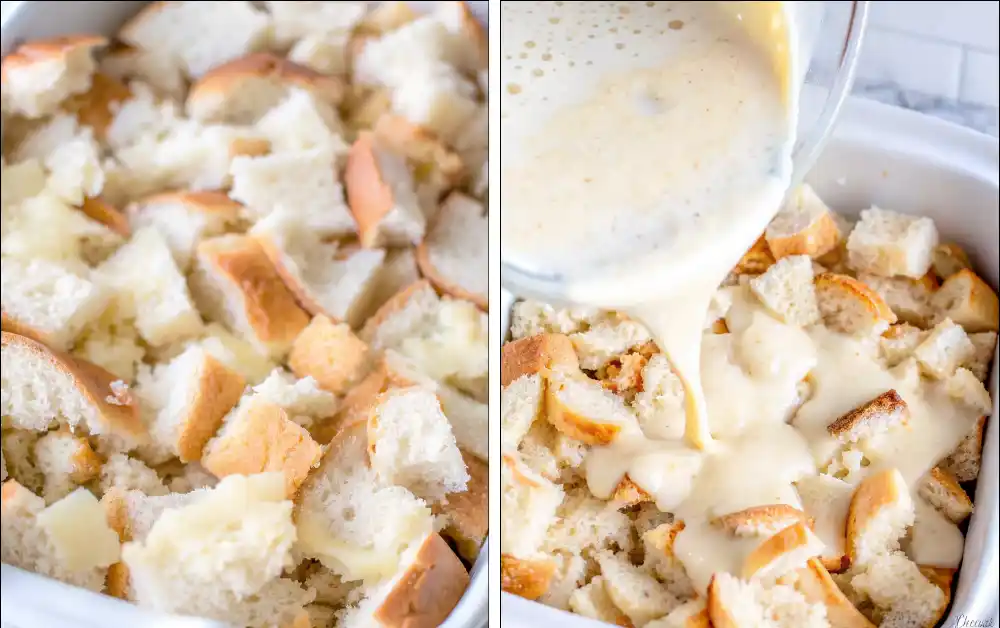
- Tear or cut your stale bread into medium chunks and place them evenly in the greased dish. Avoid crumbling it too small. Bigger pieces give better texture.
- Melt the remaining two tablespoons of butter and drizzle it over the bread. This adds richness and helps the top crisp up.
- In a mixing bowl, whisk together the eggs, milk, sugar, vanilla extract, and cinnamon until the mixture is smooth and well combined. Make sure the eggs are fully beaten before adding them in.
- Slowly pour the custard mixture over the bread. Press the pieces gently with a spoon so each one soaks in the liquid. Let it sit for 20 to 30 minutes if time allows. This step ensures even absorption.
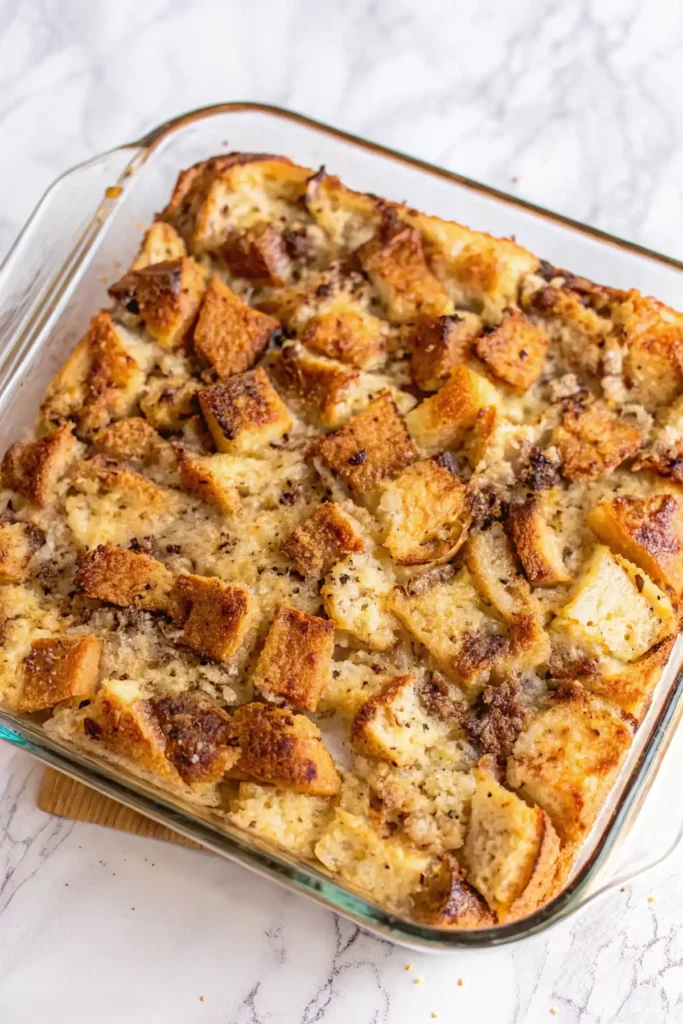
- Bake for 45 minutes or until the top is golden and springs back when lightly touched with a fork. You can also test doneness by inserting a clean knife in the center. If it comes out clean, it’s ready.
Optional Brown Sugar Butter Drizzle:
- In a small saucepan, melt three tablespoons of butter over high heat.
- Once melted, reduce to medium heat and let it cook a little longer until it starts to brown slightly for a deeper flavor.
- Turn the heat to low. Stir in the brown sugar and one to two tablespoons of milk or cream. Whisk until smooth and slightly thickened.
- Remove from heat and stir in the vanilla extract.
- Spoon over the bread pudding before serving or drizzle over individual portions for a glossy, buttery finish.
Troubleshooting and Expert Tips
How do I know it’s done?
Insert a clean knife straight into the center of the pudding. If it comes out clean or with only a little moisture, it’s ready. Another quick test is to gently press the center with a fork. If it springs back, you’re good to go.
Why is my pudding soggy?
This often happens if the bread was too fresh or didn’t soak long enough in the custard. Always use stale or oven-dried bread and give it time to absorb the liquid before baking.
Make-ahead tip
You can prepare the entire dish the night before and store it covered in the fridge. Bake it fresh the next day. If you’ve already baked it, let it cool completely, then wrap and freeze it for up to two months. Reheat in the oven until warmed through.
Conclusion
This old-fashioned bread pudding brings together simple ingredients and comfort in every bite. The top turns golden and crisp while the inside stays soft and custardy. It’s the kind of dessert that feels like home.
What makes this recipe stand out is its flexibility. You can use whatever bread you have and even switch up the sauce. Whether you enjoy it warm with a vanilla drizzle or cold the next day straight from the fridge, it always hits the spot.
If you tried this recipe, leave a comment and add a star rating. Share your version on Pinterest or Facebook so others can try it too.
What kind of bread did you use? Let us know below.
You might Also Like…
Bread Pudding

Ingredients
Bread Pudding Base
- 5 cups stale bread cubes or torn pieces French bread, challah, sandwich bread, buns, rolls, toast, or donuts
- 3 tbsp butter divided (1 tbsp for greasing, 2 tbsp melted for drizzling)
- 4 large eggs beaten
- 2 cups whole milk
- 0.75 cup white sugar
- 1 tsp vanilla extract
- 1 tsp ground cinnamon
- raisins optional
Brown Sugar Butter Drizzle (Optional)
- 3 tbsp salted butter unsalted also works
- 1 tbsp brown sugar
- 1 tsp vanilla extract
- 2 tbsp milk or heavy cream use 1–2 tbsp depending on desired thickness
Instructions
- Preheat your oven to 350°F (175°C). Grease an 8-inch square baking dish with 1 tablespoon of softened butter.
- Cut or tear stale bread into medium-sized chunks and place them evenly in the greased dish.
- Melt the remaining 2 tablespoons of butter and drizzle it over the bread.
- In a mixing bowl, whisk together eggs, milk, sugar, vanilla extract, and cinnamon until smooth.
- Pour the custard mixture over the bread. Gently press the bread to help it soak in the liquid. Let it sit for 20–30 minutes if possible.
- Bake for 45 minutes or until the top is golden and springs back when touched. Insert a knife in the center to check doneness.
- Optional Brown Sugar Butter Drizzle: Melt butter in a small saucepan over high heat. Lower to medium heat and let it brown slightly.
- Add brown sugar and milk or cream. Whisk until smooth and slightly thickened.
- Remove from heat and stir in vanilla extract. Drizzle over bread pudding before serving or on individual portions.
Notes
Nutrition Facts (Per Serving)
Serving: 1 serving (⅙ of recipe)- Calories: 316 kcal
- Carbohydrates: 43 g
- Protein: 9 g
- Fat: 12 g
- Saturated Fat: 6 g
- Cholesterol: 132 mg
- Sodium: 272 mg
- Potassium: 198 mg
- Fiber: 1 g
- Sugar: 30 g
- Vitamin A: 465 IU
- Calcium: 152 mg
- Iron: 1.5 mg
FAQs
How long should bread pudding soak?
Let the bread soak in the custard for at least 20 to 30 minutes before baking. This helps each piece absorb the liquid fully so the center turns soft and custardy instead of watery.
What is the best bread for bread pudding?
French bread is the top choice because of its firm crust and airy middle. Challah, brioche, sandwich bread, hamburger buns, and even donuts also work well. The key is that the bread should be dry or stale.
How do you know when bread pudding is done?
The top should look golden and feel firm to the touch. Insert a clean knife into the center. If it comes out clean or nearly clean, it’s ready. The pudding should also spring back when lightly pressed.
Why is my bread pudding soggy inside?
This usually happens when the bread is too fresh or if it didn’t sit in the custard long enough before baking. Always use stale bread or oven-dry your fresh pieces and give them time to soak.
Do you eat bread pudding warm or cold?
Bread pudding tastes best warm, especially when served with a sauce. That said, many people also enjoy it cold the next day. It holds its shape well once chilled.
Do you refrigerate bread pudding after baking it?
Yes. After it cools to room temperature, cover and refrigerate any leftovers. It keeps well for about three to four days. Reheat individual portions in the microwave or oven.