
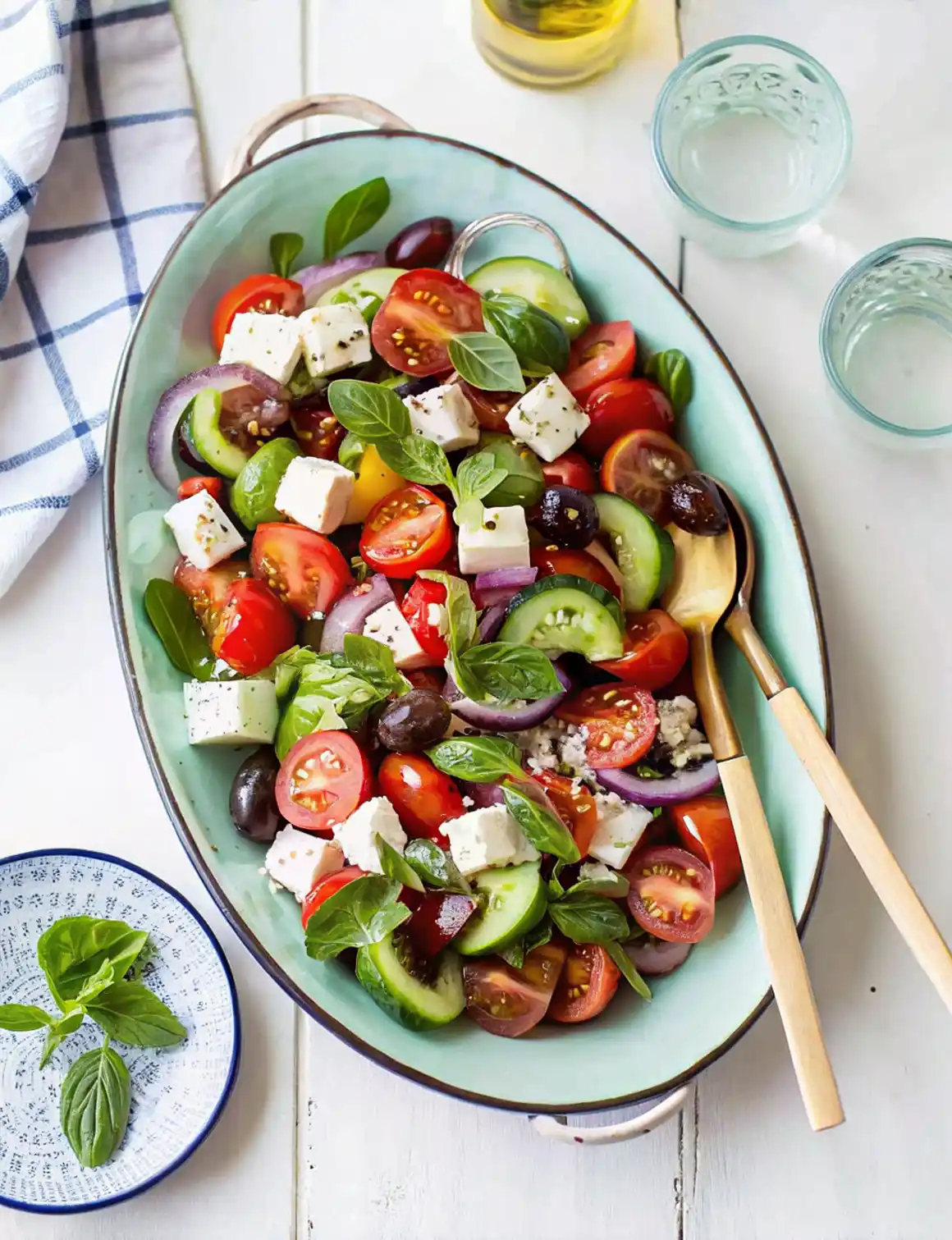
There’s nothing like a crisp Greek salad on a hot day. Summer is the perfect time to enjoy vegetables at their peak — juicy tomatoes, cool cucumbers, and crunchy peppers come together in a way that feels both refreshing and satisfying.
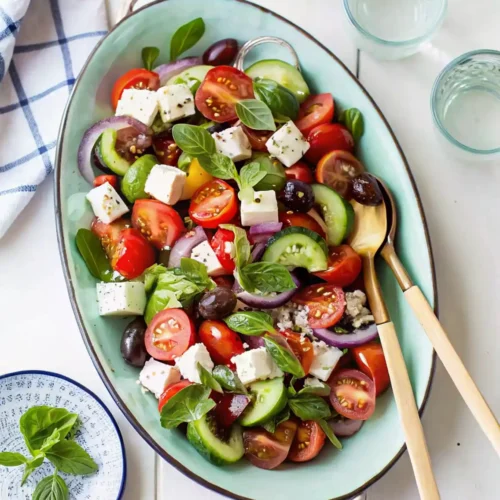
This recipe sticks to the classic idea of Greek salad by keeping greens out of the way. You get pure vegetable flavor, topped with a bold, simple dressing made from just seven pantry ingredients.
What makes this one different? A handful of fresh mint leaves added at the end lifts the entire dish and adds a cool finish that makes it unforgettable.
Table of Contents
Why You’ll Love This Greek Salad
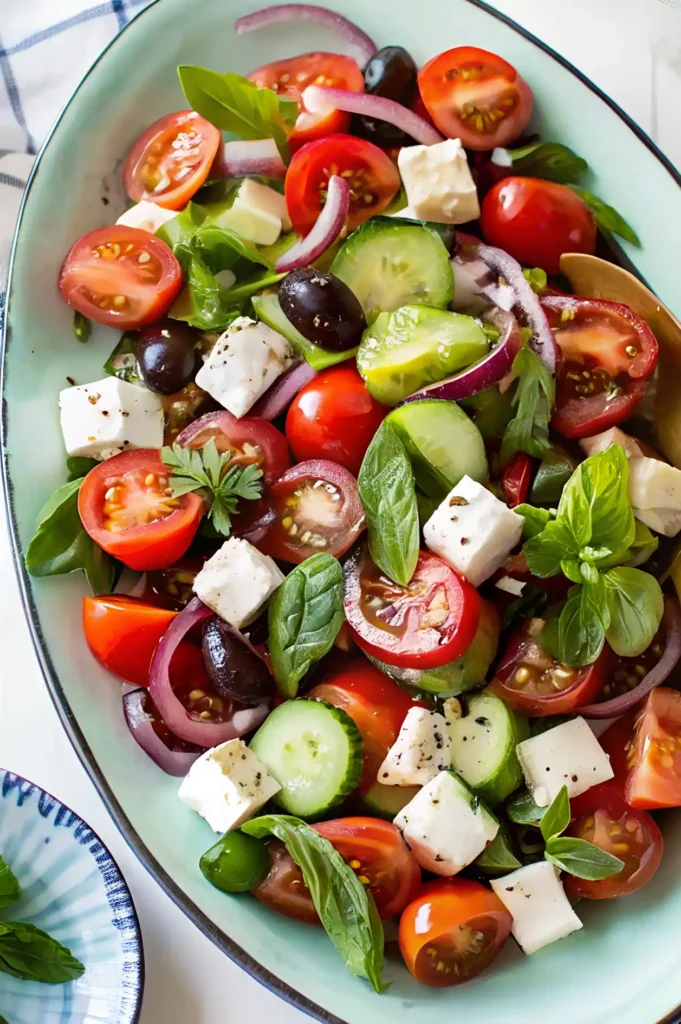
- Quick to prepare with no cooking involved
- Uses just a few simple ingredients you likely already have
- Perfect for summer barbecues, picnics, or light weeknight dinners
- Always a hit with guests thanks to its bold flavor and colorful presentation
- Refreshing, crunchy, and packed with Mediterranean charm
What sets this version apart is the balance of flavors. The saltiness of feta, the tang from the vinegar, and the cooling bite of fresh mint work together in a way that most versions miss. It’s a feel-good dish that brings comfort and freshness in every bite. Whether you’re making it for yourself or sharing it with others, it’s a salad that always leaves an impression.
Ingredients Needed
For the Dressing
- One fourth cup extra-virgin olive oil
- Three tablespoons red wine vinegar
- One garlic clove, finely minced
- Half a teaspoon dried oregano, plus more for topping
- One fourth teaspoon Dijon mustard
- One fourth teaspoon sea salt
- Freshly ground black pepper, to taste
For the Salad
- One English cucumber, sliced lengthwise, seeds removed, and cut into quarter-inch slices
- One green bell pepper, chopped into bite-sized pieces
- Two cups cherry tomatoes, halved
- Five ounces feta cheese, cut into small cubes
- One third cup red onion, thinly sliced
- One third cup Kalamata olives, pitted
- One third cup fresh mint leaves, loosely packed
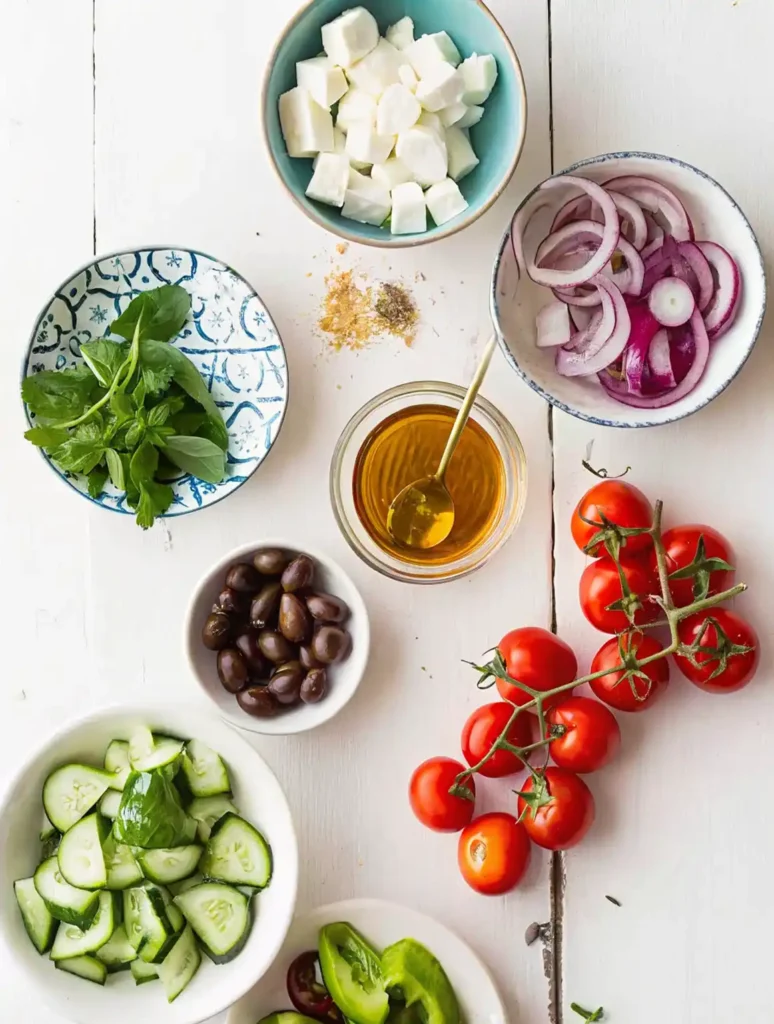
These ingredients work best when fresh. The combination of crisp vegetables, creamy feta, and briny olives brings a vibrant contrast that makes this salad so satisfying. The mint leaves add a bright, herbal finish you won’t want to skip.
How to Make Greek Salad
- Prepare the dressing
In a small mixing bowl, whisk together the olive oil, red wine vinegar, minced garlic, oregano, Dijon mustard, sea salt, and a few grinds of black pepper. Mix until everything is well combined and the dressing looks slightly thickened. This simple step creates the bold flavor base for the entire dish. - Chop and slice the vegetables
Start by cutting the cucumber lengthwise and scooping out the seeds with a spoon. Slice it into even, thin pieces. Chop the green bell pepper into bite-sized chunks. Halve the cherry tomatoes and thinly slice the red onion. Cutting the vegetables into similar sizes helps with even flavor in every bite. - Arrange the salad
Use a large serving plate or shallow bowl. Layer the cucumber, green bell pepper, cherry tomatoes, feta cubes, red onion slices, and Kalamata olives. Try to spread everything out so each ingredient is visible and easy to scoop. - Dress the salad
Drizzle the dressing evenly over the arranged vegetables. Use a large spoon or clean hands to gently toss the salad without breaking up the feta. Make sure each piece is lightly coated. - Finish with herbs
Sprinkle a little extra oregano on top, then add the fresh mint leaves as the final touch. This adds an aromatic layer and a pop of green that brings the whole dish to life. - Taste and adjust
Before serving, give it one final taste. If needed, add a pinch more salt or a few extra cracks of black pepper. Serve immediately or chill for a short time to let the flavors blend.
What to Serve with Greek Salad
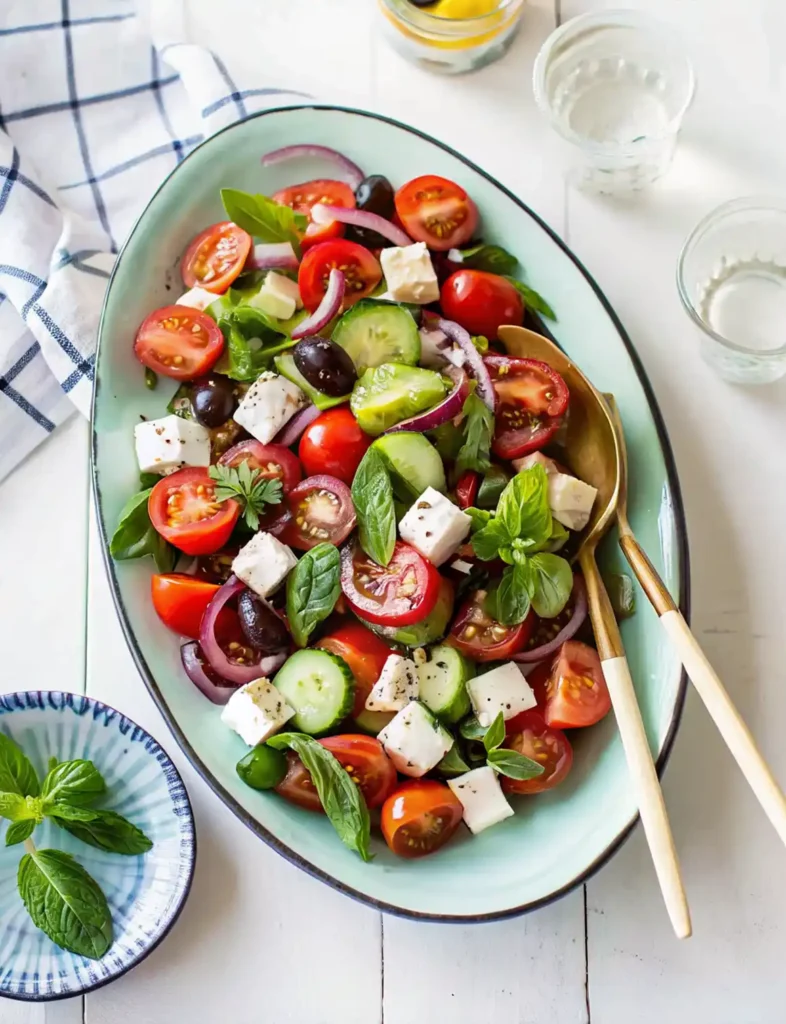
Greek salad pairs beautifully with other light, fresh summer dishes. Try it next to a slice of pesto pizza or a bowl of pesto pasta for a Mediterranean-inspired plate. Roasted vegetable pasta is another great option if you want to keep things vegetarian while still satisfying your appetite.
If you’re planning a full Greek meal, consider serving this salad alongside grilled souvlaki or lemon-herb chicken. These pairings bring out the savory notes in the salad and turn it into a complete, memorable meal.
Make It a Meal: Protein and Vegan Variations
To turn this salad into a full meal, add cooked or roasted chickpeas. Their creamy texture and mild flavor make them a great match for the briny olives and sharp feta.
For a vegan version, skip the cheese and add three fourths cup of cooked chickpeas along with one tablespoon of capers. The capers replace the salty punch from the feta and blend well with the dressing. This version stays just as flavorful and filling.
Conclusion
This Greek salad is everything you want in a summer side. It’s crisp, colorful, and packed with flavor from just a few fresh ingredients. The no-lettuce approach lets each vegetable shine, and the mint leaves take it one step further with a refreshing twist.
Whether you’re hosting friends or making a quick weeknight dinner, this recipe delivers every time. It’s easy to prepare, full of bold taste, and always a crowd favorite.
If you tried this recipe, leave a comment and a star rating below. We’d love to hear how it turned out.
Sharing is welcome too. Pin it, post it, or send it to a friend. What did you add or change? Any favorite twists? Let us know in the comments.
You may like these too…
Greek Salad

Ingredients
For the Dressing
- 0.25 cup extra-virgin olive oil
- 3 tablespoons red wine vinegar
- 1 clove garlic finely minced
- 0.5 teaspoon dried oregano plus more for topping
- 0.25 teaspoon Dijon mustard
- 0.25 teaspoon sea salt
- black pepper freshly ground, to taste
For the Salad
- 1 English cucumber seeds removed and cut into 1/4-inch slices
- 1 green bell pepper chopped into bite-sized pieces
- 2 cups cherry tomatoes halved
- 5 ounces feta cheese cut into small cubes
- 0.33 cup red onion thinly sliced
- 0.33 cup Kalamata olives pitted
- 0.33 cup fresh mint leaves loosely packed
Instructions
- Prepare the dressing: In a small mixing bowl, whisk together the olive oil, red wine vinegar, garlic, oregano, Dijon mustard, sea salt, and black pepper until well combined and slightly thickened.
- Chop and slice the vegetables: Cut cucumber lengthwise, remove seeds, and slice. Chop green bell pepper, halve cherry tomatoes, and thinly slice red onion.
- Arrange the salad: In a large serving plate or shallow bowl, layer the cucumber, bell pepper, tomatoes, feta, onion, and olives.
- Dress the salad: Drizzle the dressing evenly over the salad and toss gently to coat without breaking the feta.
- Finish with herbs: Sprinkle extra oregano and top with fresh mint leaves.
- Taste and adjust: Add salt or pepper if needed. Serve immediately or chill briefly before serving.
Notes
Nutrition Facts (Per Serving)
- Calories: 210 kcal
- Total Fat: 17g
- Saturated Fat: 5g
- Protein: 5g
- Carbohydrates: 9g
- Fiber: 2g
- Sugar: 4g
- Cholesterol: 15mg
- Sodium: 530mg
FAQs
What is in a traditional Greek salad?
A traditional Greek salad, also known as Horiatiki, includes tomatoes, cucumber, green bell pepper, red onion, Kalamata olives, and feta cheese. It is dressed with olive oil, red wine vinegar, oregano, and sometimes capers. No lettuce is used in the authentic version.
Does Greek Salad Have Lettuce?
No, classic Greek salad does not include lettuce. It focuses on chopped vegetables like tomatoes, cucumbers, and peppers, along with feta and olives. The no-lettuce version is more traditional and highlights the crunch and freshness of each ingredient.
What is Greek salad dressing made of?
Greek salad dressing typically includes extra-virgin olive oil, red wine vinegar, garlic, dried oregano, Dijon mustard, sea salt, and black pepper. This combination creates a tangy and flavorful dressing that brings out the best in the vegetables.
What to serve with a Greek salad?
Greek salad goes well with many summer dishes. It pairs nicely with pesto pizza, grilled vegetables, roasted pasta dishes, or grilled proteins like chicken souvlaki. It also works well as a side dish at barbecues and picnics.
Which cheese is best for Greek salad?
Feta cheese is the best choice for Greek salad. Use block-style feta packed in brine for the richest flavor and creamy texture. Crumbled versions can dry out quickly and lack the same depth.
How long does Greek salad last in the fridge?
Greek salad keeps well in the fridge for about two days. For the best texture, store the dressing separately and add it just before serving. If already dressed, the vegetables may release some liquid, so give it a quick stir before eating.