

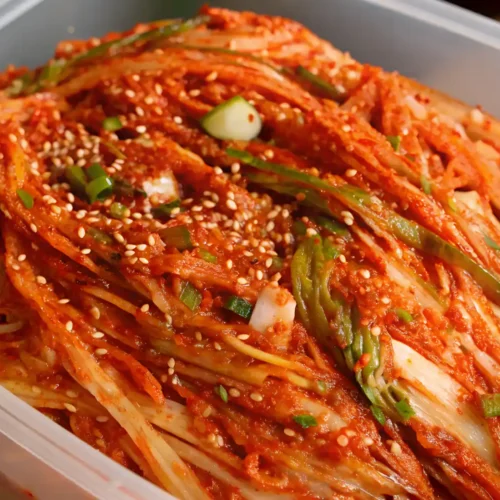
Tongbaechu-kimchi is the gold standard of Korean fermentation. It’s what most people picture when they hear the word “kimchi”—whole napa cabbage leaves seasoned and preserved the traditional way. This recipe follows the classic pogi-style, where the cabbage remains attached at the base and is seasoned leaf by leaf. It’s the method made famous by home cooks and cultural icons like Maangchi, known for preserving authentic Korean flavors.
Table of Contents
Why You’ll Love This Recipe

- Quick to learn with clear, repeatable steps that anyone can follow
- Uses simple, real ingredients found in most Asian grocery stores
- Brings deep comfort and satisfaction with every bite
- Perfect for family dinners, meal prep, or impressing guests
- Delivers unbeatable flavor from natural fermentation, not shortcuts
What sets this version apart is its focus on accuracy and outcome. Instead of vague measurements, it uses weight-based ratios so your kimchi turns out crisp and flavorful every time. This recipe also respects tradition while solving modern problems like soggy texture or bitterness. Whether you’re new to fermentation or experienced with Korean cooking, this method brings reliable results that taste like home.
Ingredients Needed
For salting the cabbage
- 6 pounds napa cabbage, about two large heads
- ½ cup kosher salt, roughly 72 grams
For the porridge base
- 2 cups water
- 2 tablespoons sweet rice flour, also called glutinous rice flour
- 2 tablespoons turbinado sugar, or use white or brown sugar
Vegetables for the filling
- 2 cups Korean radish cut into thin matchsticks, daikon works too
- 1 cup carrot matchsticks
- 7 to 8 green onions, chopped
- 1 cup Asian chives, optional, or replace with 3 extra green onions
- 1 cup water dropwort, optional but adds great aroma
Seasonings and spices
- ½ cup minced garlic, about 24 cloves
- 2 teaspoons minced ginger
- 1 medium onion, finely chopped
- ½ cup fish sauce
- ¼ cup fermented salted shrimp with its brine, finely chopped
- 2 cups Korean red pepper flakes, known as gochugaru
These ingredients will yield about 8 pounds of flavorful, traditional kimchi.
How to Make Traditional Tongbaechu-Kimchi

1. Prep and salt the cabbage
Trim any large, stiff cores from the bottom of each napa cabbage.
Cut a short slit at the base to loosen it, then use your hands to gently pull the cabbage into halves. This keeps the leaves mostly intact.
Make another slit in each half, stopping about two inches above the stem. This keeps the leaves connected while letting them open up.
Briefly soak each half in water to moisten the leaves. Then, lift each leaf and sprinkle salt between the layers, focusing more salt near the thicker stem areas.
Place all cabbage halves into a large basin. Let them rest for two hours. Every thirty minutes, flip each one and pour some salty water over the top to help the brining.
After two hours, rinse the cabbage under cold running water several times. This removes excess salt and any dirt.
Split the halves into quarters along the slits. Trim off any remaining core, give them one final rinse, and let them drain in a colander or over a clean basin.
2. Make the porridge base
While the cabbage is salting, combine water and sweet rice flour in a small saucepan.
Stir well and cook over medium heat for about ten minutes until bubbles form.
Add the sugar and stir for another minute. Remove from heat and let the mixture cool completely.
3. Build the seasoning paste
Pour the cooled porridge into a large mixing bowl.
Add the garlic, ginger, onion, fish sauce, fermented shrimp, and red pepper flakes.
Stir everything until it becomes a smooth paste with an even color.
Mix in the radish, carrots, green onions, and any optional greens like Asian chives or water dropwort.
4. Assemble the kimchi

Place a cabbage quarter in a large mixing bowl or over a tray.
Spread the seasoning paste carefully between every leaf. Make sure the mixture reaches deep into the layers.
Once coated, fold the quarter into a small bundle by wrapping the outer leaves around it.
Place each finished bundle into your container. Use glass, BPA-free plastic, or traditional onggi jars.
5. Begin fermentation
You can eat the kimchi right away, but for full flavor, let it sit at room temperature for one to two days.
It will begin to smell sour and release bubbles as it ferments.
Press the top of the kimchi down with a clean spoon to submerge it and release trapped air.
If using a sealed jar, open it once a day to let gases escape.
6. Store properly
Once the kimchi starts to ferment, move it to the fridge.
Cold storage slows fermentation and helps preserve the texture and flavor.
The longer it sits, the more tangy and complex it becomes. Use clean utensils when scooping to keep it fresh.

Troubleshooting and Expert Tips
Rinse thoroughly to avoid excess salt
If your kimchi tastes too salty, the likely issue is under-rinsing. After the salting step, rinse each cabbage quarter at least three times under cold water. Let them drain well so the paste sticks properly.
Understanding surface mold or white film
If you notice a white film on the surface, it’s usually harmless yeast, not mold. Gently press down on the kimchi to submerge everything again. This removes trapped air and keeps the surface clean.
Use the cabbage bend test
Before adding the seasoning paste, check if your cabbage is ready. Try bending a thick leaf near the stem. It should feel limp and flexible without snapping. If it breaks, it needs more time in the salt. If it bends easily, you’re good to go.
How to Use Your Traditional Kimchi
Fresh or fermented, both ways work
Right after making it, kimchi has a crisp, fresh taste with a light saltiness and bold chili flavor. After a few days at room temperature or weeks in the fridge, it becomes tangy, complex, and more aromatic. Choose based on your preference.
Best recipe ideas for aged kimchi
Well-fermented kimchi works great in cooked dishes. Try it in kimchi-jjigae, a warming stew with tofu and pork or anchovy broth. You can also use it in kimchi fried rice, perfect for leftovers and packed with flavor. Add a fried egg on top for a comforting meal.
Storage and Fermentation Mastery
Pick the right container
Use glass jars, BPA-free plastic containers, or traditional onggi pots. Each option has its pros, but all should seal well to limit air exposure. Make sure containers are cleaned and fully dry before use.
Start at room temperature
Let your fresh kimchi sit out for one to two days so fermentation can begin. A warmer room will speed up the process while cooler environments will slow it. When you see small bubbles or smell a light tang, it’s ready for the fridge.
Remember to press and release
Fermenting kimchi builds up gas. Use a clean spoon to press down the contents daily so cabbage stays submerged. If you use a jar with a lid, open it once a day to release built-up pressure.
Move to cold storage to slow things down
After fermentation starts, refrigerate your kimchi to extend its shelf life. Cold temperatures slow bacterial activity, keeping the flavor balanced for weeks or even months. The longer it sits, the more sour and soft it becomes. Taste regularly to find your sweet spot.
Conclusion
This traditional tongbaechu-kimchi recipe brings together bold flavor, reliable technique, and deep cultural roots. It balances spicy, sour, and umami in a way that few side dishes can match. Using precise measurements and clear steps, it helps you create consistent results every time.
Whether you’re making kimchi for the first time or improving your method, this guide gives you everything you need to succeed. From salting the cabbage to storing the final jar, each part is practical and tested.
If you tried this recipe, please leave a comment and a star rating below. Your feedback helps others and builds a stronger cooking community.
Feel free to share your kimchi photos on Pinterest or Facebook. Tried something different or used unique ingredients? Let us know what twist you added.
You Might Also Like…
Kimchi Recipe

Ingredients
For salting the cabbage
- 6 pounds napa cabbage about two large heads
- 0.5 cup kosher salt roughly 72 grams
For the porridge base
- 2 cups water
- 2 tablespoons sweet rice flour also called glutinous rice flour
- 2 tablespoons turbinado sugar or use white or brown sugar
Vegetables for the filling
- 2 cups Korean radish cut into thin matchsticks, daikon works too
- 1 cup carrot matchsticks
- 8 green onions chopped
- 1 cup Asian chives optional, or replace with 3 extra green onions
- 1 cup water dropwort optional but adds great aroma
Seasonings and spices
- 0.5 cup minced garlic about 24 cloves
- 2 teaspoons minced ginger
- 1 medium onion finely chopped
- 0.5 cup fish sauce
- 0.25 cup fermented salted shrimp with its brine, finely chopped
- 2 cups Korean red pepper flakes known as gochugaru
Instructions
- 1. Prep and salt the cabbage: Cut and separate the napa cabbage as directed, sprinkle salt between the leaves, and let sit for two hours, flipping every 30 minutes. Rinse thoroughly and let drain.
- 2. Make the porridge base: Combine water and sweet rice flour in a saucepan. Cook over medium heat until it bubbles. Add sugar, stir, then cool completely.
- 3. Build the seasoning paste: In a large bowl, mix cooled porridge with garlic, ginger, onion, fish sauce, shrimp, and gochugaru. Add vegetables and greens.
- 4. Assemble the kimchi: Spread paste between each leaf of a cabbage quarter, then fold into a bundle. Pack into containers tightly.
- 5. Begin fermentation: Leave at room temperature for 1–2 days. Press daily to submerge cabbage. Burp sealed jars to release gas.
- 6. Store properly: Move kimchi to the fridge once it begins to ferment. Use clean utensils to serve and enjoy as it matures.
Notes
Nutrition Facts (Per Serving)
- Calories: 30
- Total Fat: 0g
- Saturated Fat: 0g
- Cholesterol: 5mg
- Sodium: 450mg
- Total Carbohydrates: 5g
- Dietary Fiber: 2g
- Sugars: 1g
- Protein: 2g
- Vitamin A: 35% DV
- Vitamin C: 20% DV
- Calcium: 4% DV
- Iron: 2% DV
FAQ
How is true kimchi made?
True kimchi starts with salting napa cabbage, then coating each leaf with a paste made from garlic, ginger, fermented seafood, and gochugaru. After packing it tightly into containers, it is left to ferment at room temperature before moving to cold storage.
What exactly is kimchi made of?
Traditional kimchi includes napa cabbage, Korean radish, garlic, ginger, fish sauce, fermented shrimp, Korean chili flakes, and green onions. Some versions also use chives, carrots, or water dropwort for added flavor.
How long to soak cabbage in salt?
Let cabbage soak in salt for about two hours. Flip it every thirty minutes and rinse well afterward. The leaves should feel soft and bend easily without breaking.
How long to let kimchi ferment?
Leave kimchi at room temperature for one to two days to start fermentation. After that, transfer it to the refrigerator where it will continue to ferment slowly. The flavor deepens over time.
Can any cabbage be used for kimchi?
Napa cabbage is the most traditional and works best due to its tender leaves and natural sweetness. Other cabbages may turn tough or lose their structure during fermentation.
What are the common mistakes when making kimchi?
Over-salting, under-rinsing, or using iodized salt can ruin texture. Not submerging the kimchi fully may lead to surface yeast. Using vague measurements also leads to inconsistency. Follow exact ratios and press the kimchi daily to keep it fresh.