
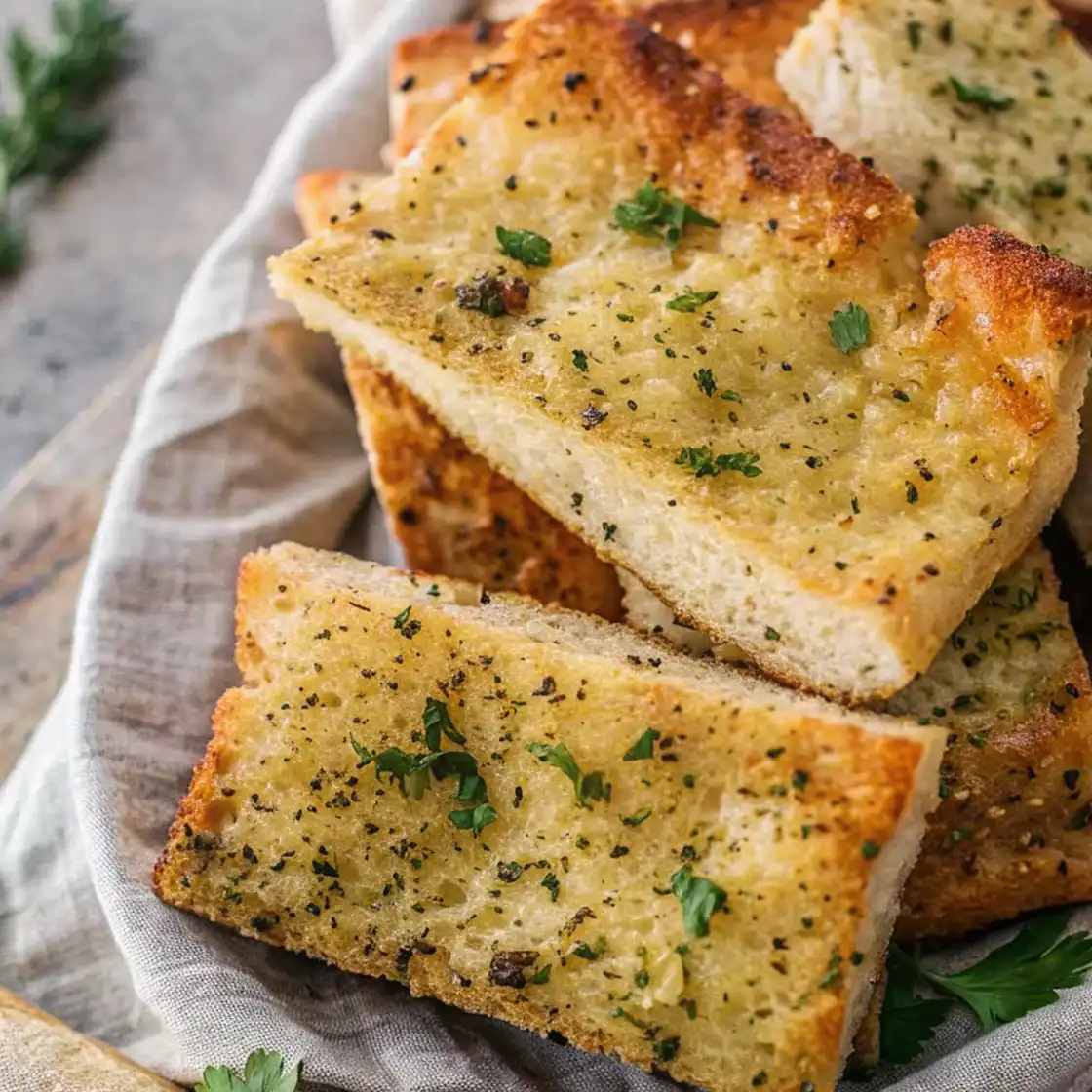
Frozen garlic bread doesn’t even come close. Once you try this fresh, homemade version, there’s no going back.
We’ve perfected the classic with crispy golden edges and a soft, buttery center that melts in your mouth. Each bite delivers bold, fresh garlic flavor thanks to a simple technique that anyone can master.
It’s the perfect side dish for pastas, soups, or grilled meats and can easily be made cheesy if you’re craving that extra richness.
Table of Contents
Why This Garlic Bread Is The Best
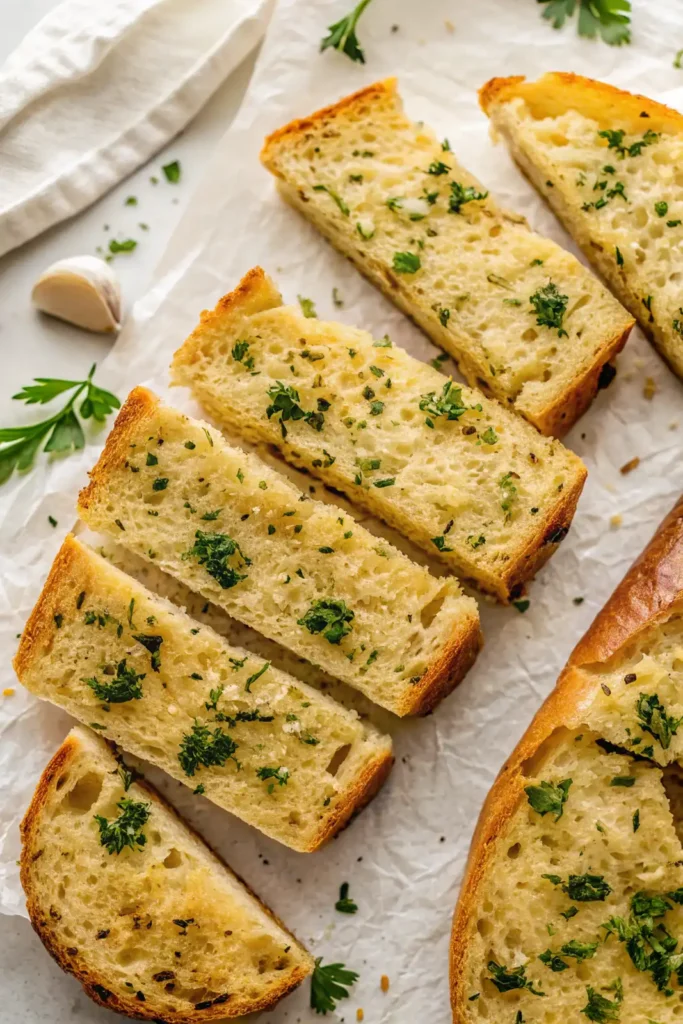
The Softened Butter Technique
Using softened butter instead of melted makes all the difference. It creates a thick, creamy paste that clings to the bread, soaking in slowly during baking. This keeps the center soft and rich without turning the top greasy or soggy.
Pure, Fresh Flavor
We use only fresh garlic and chopped parsley for clean, bold flavor. Fresh garlic gives each bite a sharp, aromatic punch, while parsley adds brightness that powdered versions simply can’t match.
The Perfect Texture
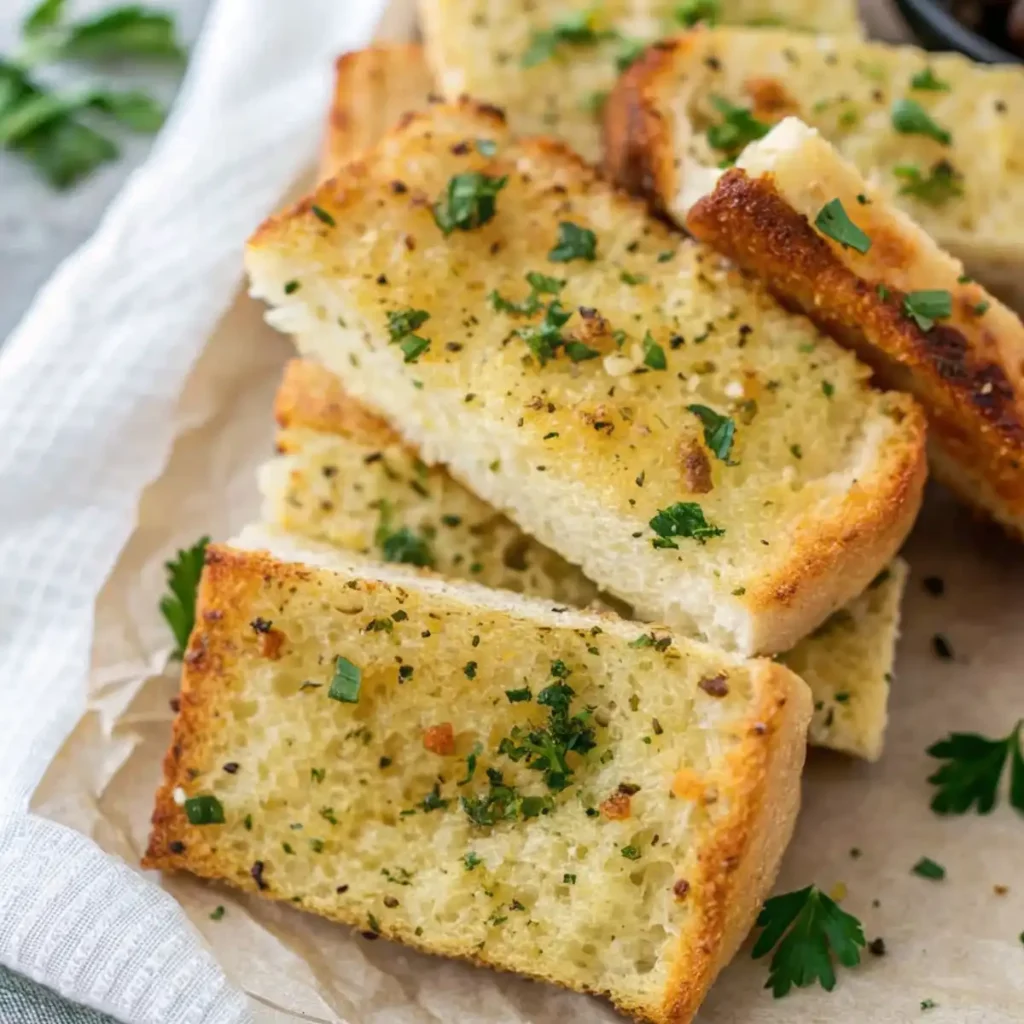
Our method delivers a soft, warm interior with a golden, crisp top that crackles lightly with each bite. It’s the contrast that makes it irresistible.
The Ultimate Base Recipe
This is the garlic bread recipe you’ll come back to again and again. It’s perfect as-is but also works great as a base for cheesy versions or herb-packed variations. Think of it as the reliable classic that’s ready for your favorite twists.
Ingredients Needed
For the Bread Base
- One pound Italian loaf or French loaf
Choose a loaf that’s sturdy enough to hold toppings but soft enough to soak up the garlic butter.
For the Garlic Butter Spread
- Half cup unsalted butter, softened
Salted butter works too, just adjust added salt accordingly. - Four garlic cloves, finely minced
- One tablespoon fresh parsley, finely chopped
- One eighth teaspoon sea salt
Optional Cheese Toppings
- One quarter cup freshly grated Parmesan cheese
- Half cup shredded mozzarella cheese
For Garnish
- Extra chopped parsley
- Fresh chives if desired for added color and mild onion flavor
The Best Bread for Garlic Bread
Recommended Choice: French or Italian Loaf
These loaves strike the perfect balance. They’re soft enough to absorb the buttery garlic spread but strong enough to support layers of cheese without falling apart. Their wide surface gives you more room for toppings and their light texture toasts beautifully.
Other Bread Options
Baguette
Ideal if you prefer a crispier, more traditional garlic bread. The thinner shape gives you more crunch and less softness. Use thinner spreads and less cheese to avoid overflow.
Ciabatta
Rustic and full of holes that soak in flavor. Ciabatta works great if you like chewy, textured bread with lots of buttery pockets. Just note it may take slightly longer to crisp up in the oven.
How to Make Garlic Bread
Step 1: Prep the Oven
Preheat your oven to 425 degrees Fahrenheit. Line a large baking sheet with parchment paper or foil for easy cleanup.
Step 2: Slice the Bread
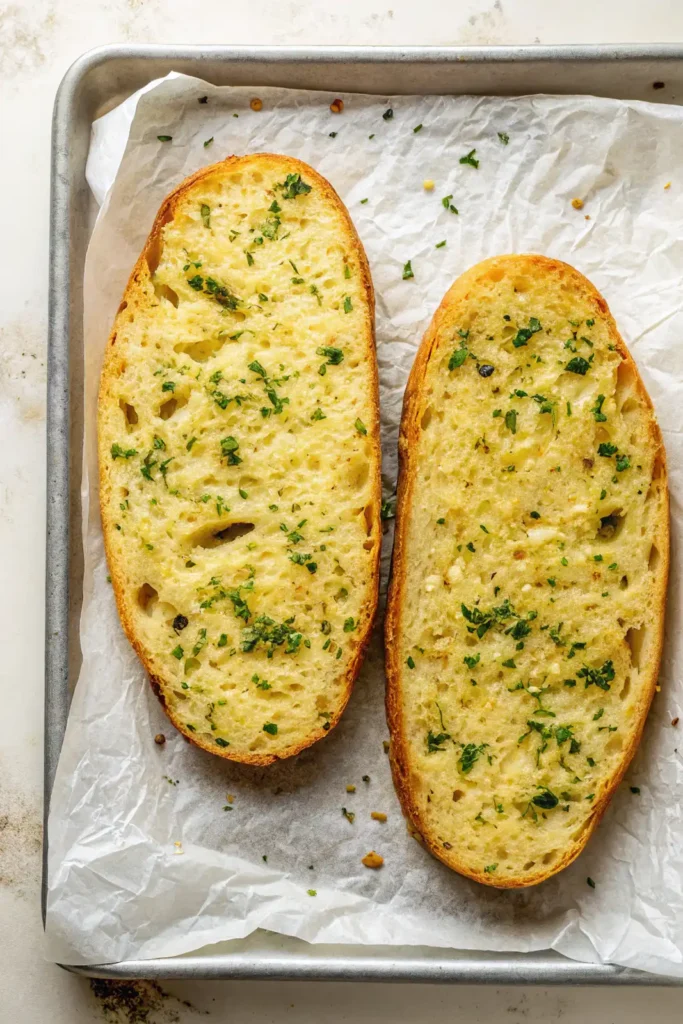
Cut the loaf in half lengthwise. Place both halves on the baking sheet with the cut sides facing up.
Step 3: Make the Garlic Butter
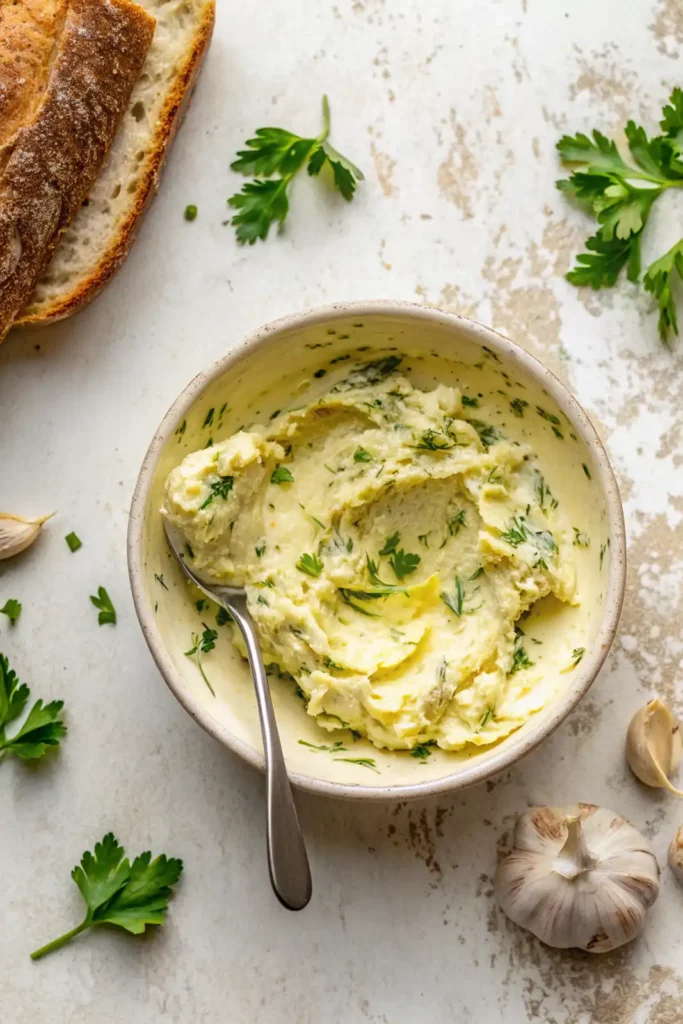
In a medium bowl, combine the softened butter, minced garlic, chopped parsley, and sea salt. Mix until fully blended and smooth.
Step 4: Spread the Mixture
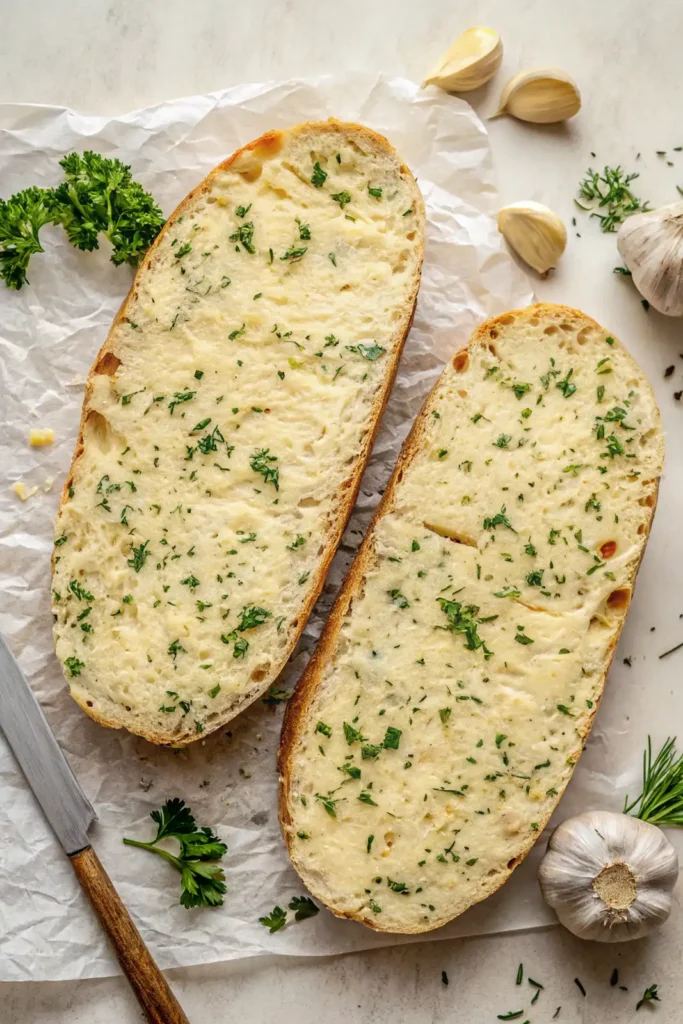
Use a butter knife or spatula to spread the garlic butter evenly across the cut sides of the bread. Make sure it covers all edges for full flavor.
Step 5: Bake the Bread
Place the baking sheet in the oven. Bake for 10 to 15 minutes until the edges are lightly golden and the butter has melted into the bread.
Step 6: Add Cheese (Optional)
If using cheese, sprinkle it on top during the last two minutes of baking. Let it melt just until bubbly and stretchy.
Step 7: Crisp It Up
For extra crunch, bake an additional three to five minutes. Watch closely to avoid burning. Pull it when the top turns golden and the edges look crisp.
Let it cool for a minute before slicing and serving.
What to Serve With Garlic Bread
This garlic bread is the perfect side dish for almost any meal. It pairs beautifully with pasta dishes like spaghetti, fettuccine alfredo, or baked ziti.
It also complements soups such as tomato basil, creamy pumpkin, or hearty lentil.
For a more filling dinner, serve it alongside grilled chicken, pan-seared steak, or roasted vegetables.
Want more ideas? Check out our full collection of pasta recipes, soup favorites, and easy meat dishes that go great with this garlic bread.
How to Store, Freeze, and Reheat
Storing Leftovers
Keep leftover garlic bread in an airtight container at room temperature for up to two days. For longer storage, place it in the fridge and use within four days.
Freezing Garlic Bread
Unbaked Method
Assemble the bread with the garlic butter spread but do not bake it. Wrap each half tightly in plastic wrap and then again in foil. Store in the freezer for up to three months.
Baked Method
If you’ve already baked the bread, let it cool completely. Wrap and freeze as you would with the unbaked version. It’s a great way to save leftovers for another day.
Reheating Garlic Bread
From the Fridge
Preheat your oven to 350 degrees Fahrenheit. Place the bread on a baking sheet and heat for five to eight minutes until warmed through.
From the Freezer
No need to thaw. Unwrap and place the bread in a preheated oven at 350 degrees Fahrenheit. Bake for ten to fifteen minutes until hot and crisp.
Using an Air Fryer
For quick reheating, place slices in an air fryer at 350 degrees Fahrenheit for about three to five minutes. It brings back the crispiness without drying it out.
Easy Garlic Bread Variations
Spicy Garlic Bread
For a little heat, add half a teaspoon of red pepper flakes to the garlic butter mix. It gives the bread a warm kick without overpowering the garlic flavor.
Different Cheeses
Try swapping in provolone for extra stretch or use Asiago if you want a sharper, more complex taste. You can even combine two or three cheeses for a layered flavor.
Different Herbs
Fresh herbs change the flavor in subtle ways. Stir in chopped basil for a slightly sweet note or add oregano for a bold, earthy finish. Thyme and rosemary also work well if you want something more aromatic.
Helpful Notes
Softened Butter is Key
Always use butter that’s soft, not melted. Softened butter spreads evenly and soaks into the bread as it bakes. Melted butter tends to sit on the surface, which can lead to a greasy texture and soggy top.
Mince Garlic Finely
Use a garlic press or mash the garlic with a pinch of salt to form a paste. This avoids harsh chunks and helps spread the garlic flavor evenly without any sharp bites of raw garlic.
Use the Broiler
For that perfect golden top, turn on the broiler during the final minute or two. It crisps up the surface fast without drying out the center. Warning: Do not walk away from the broiler. It goes from golden to burnt in seconds.
Grate Your Own Cheese
If you’re adding cheese, grate it fresh from a block. Pre-shredded cheese often contains anti-caking agents that prevent smooth melting. Freshly grated Parmesan or mozzarella melts better and tastes richer.
Conclusion
Perfect garlic bread doesn’t need fancy ingredients. The real secret lies in using simple, fresh elements and smart techniques. Softened butter, fresh garlic, and a quick hit under the broiler create that unbeatable mix of soft, buttery center and crispy golden top.
If you tried this garlic bread, leave a comment below and give it a star rating. We’d love to hear how it turned out for you.
Sharing is caring, so don’t forget to post your garlic bread photos on Pinterest or Facebook.
What’s your favorite twist on garlic bread? Add your own variations in the comments and inspire others to try something new.
More bread recipes to try:
Garlic Bread Recipe

Ingredients
For the Bread Base
- 1 lb Italian or French loaf Choose a loaf sturdy enough to hold toppings but soft enough to soak up butter
For the Garlic Butter Spread
- 0.5 cup unsalted butter, softened Salted butter works too—adjust added salt accordingly
- 4 cloves garlic, finely minced
- 1 tbsp fresh parsley, finely chopped
- 0.125 tsp sea salt
Optional Cheese Toppings
- 0.25 cup freshly grated Parmesan cheese
- 0.5 cup shredded mozzarella cheese
For Garnish
- extra chopped parsley for garnish
- fresh chives optional, for color and mild onion flavor
Instructions
- Preheat your oven to 425°F (220°C). Line a large baking sheet with parchment paper or foil for easy cleanup.
- Cut the loaf in half lengthwise. Place both halves on the baking sheet with the cut sides facing up.
- In a medium bowl, combine the softened butter, minced garlic, chopped parsley, and sea salt. Mix until fully blended and smooth.
- Use a butter knife or spatula to spread the garlic butter evenly across the cut sides of the bread. Make sure it covers all edges for full flavor.
- Bake for 10–15 minutes until the edges are lightly golden and the butter has melted into the bread.
- If using cheese, sprinkle it on top during the last two minutes of baking. Let it melt until bubbly and stretchy.
- For extra crunch, bake an additional 3–5 minutes. Watch closely to avoid burning. Remove when the top is golden and edges are crisp. Cool slightly before slicing and serving.
Notes
Nutrition Facts (Per Serving)
- Calories: 287 (14%)
- Carbohydrates: 25g (8%)
- Protein: 4g (8%)
- Fat: 18g (28%)
- Saturated Fat: 11g (69%)
- Cholesterol: 44g (15%)
- Sodium: 502mg (22%)
- Potassium: 61mg (2%)
- Fiber: 1g (4%)
- Vitamin A: 520IU (10%)
- Vitamin C: 0.5mg (1%)
- Calcium: 47mg (5%)
- Iron: 1.5mg (8%)
FAQs
What goes with garlic bread?
Garlic bread pairs well with pasta, soup, salad, or grilled meats. It’s especially good alongside spaghetti, lasagna, tomato soup, or chicken dishes.
Is garlic bread healthy?
Garlic bread is a comfort food, so it’s more indulgent than health-focused. You can make it lighter by using whole grain bread, less butter, or skipping the cheese.
How to make garlic bread with cheese?
After spreading the garlic butter mixture, top the bread with shredded mozzarella or grated Parmesan. Bake until the cheese is melted and bubbly.
What’s the secret to the best garlic bread?
The “secret” is technique. First, use softened butter instead of melted to make a spreadable paste. Second, use only fresh garlic for strong flavor. Third, finish it under the broiler to get a perfectly crisp top.
Is garlic bread better with fresh or dried garlic?
For a classic, bright, and powerful flavor, fresh garlic is always better. This recipe relies on that fresh flavor.
What are some common mistakes when making garlic bread?
Using melted butter can make it greasy. Skipping salt or fresh herbs can lead to bland flavor. Overbaking dries it out, and underbaking leaves it soggy. Always taste your butter mix before spreading, and don’t forget to watch closely under the broiler.