
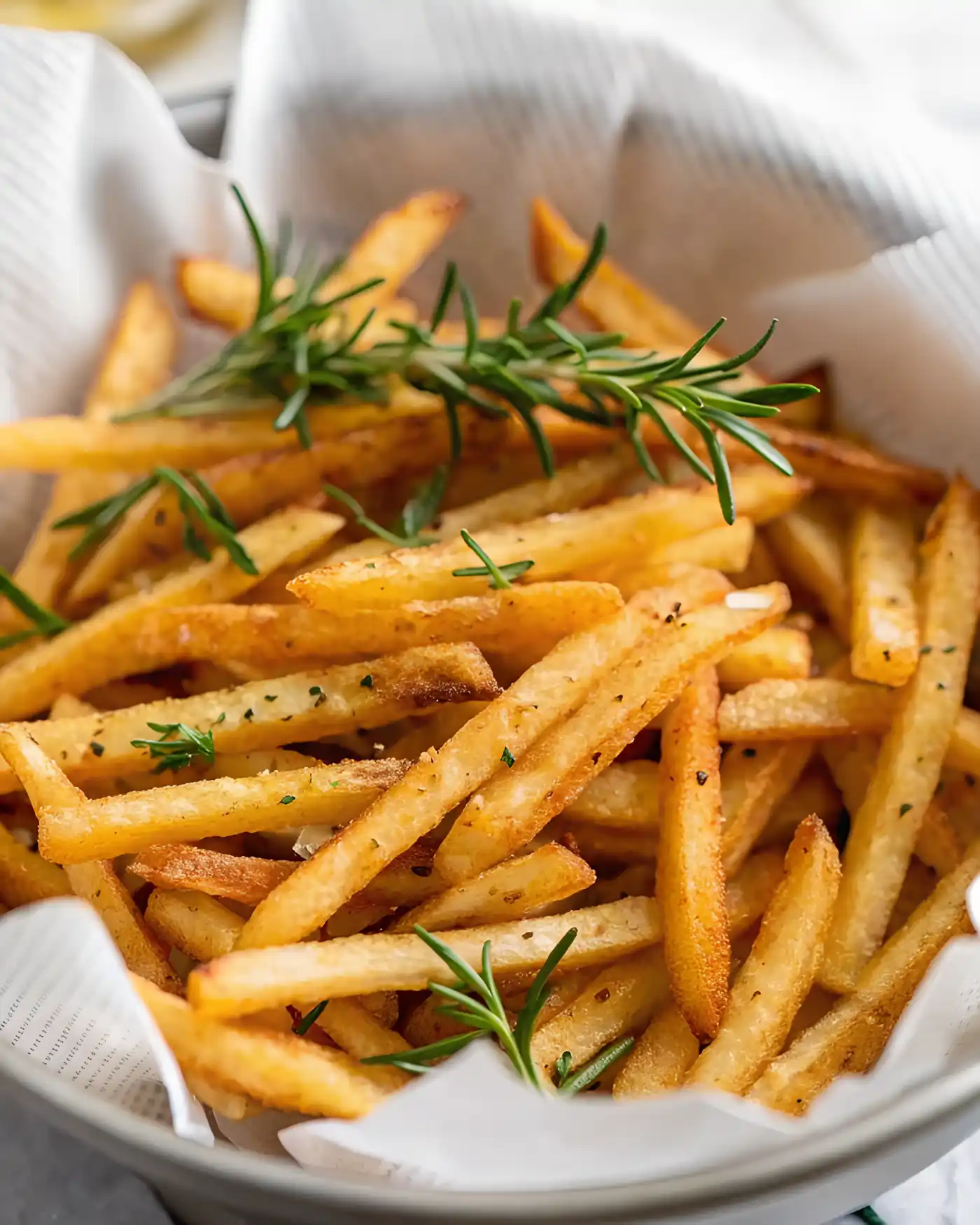
You deserve French fries that stay crispy long after they hit the plate. But most homemade versions go soft before the meal even starts. Even the popular “soak and double-fry” technique often disappoints.
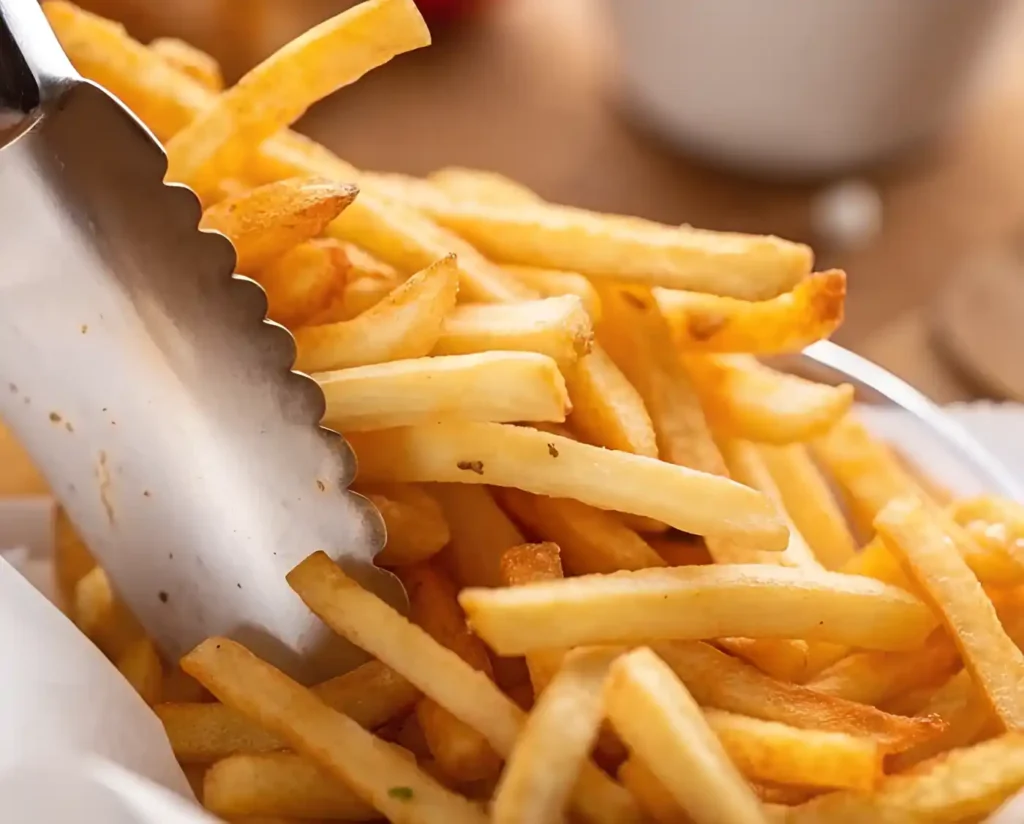
Here’s the fix: a smarter method built on science, not guesswork. Inspired by Kenji López-Alt’s testing, this version uses two simple but powerful tweaks. First, a serrated knife gives each fry more crunch points. Second, simmering the potatoes in a vinegar-salt solution locks in their structure.
The result? Golden fries that hold their crunch even when cold.
Table of Contents
Ingredients Needed
For the base:
- 1 kilogram or 2 pounds of floury potatoes, such as Sebago in Australia, Russet or Idaho in the US, Maris Piper or King Edward in the UK
Tip: These are high-starch varieties that give the best fluff-to-crunch ratio - 2 tablespoons of white vinegar
Helps the potatoes hold their shape during boiling - 1 tablespoon of cooking salt or kosher salt
Used in the simmering water for seasoning and structure - 1 liter or 1 quart of canola or vegetable oil
Neutral in flavor and good for high-heat frying
For seasoning (choose one):
- Table salt or sea salt flakes
- Shaker-style fries seasoning
- Crushed rosemary mixed with salt
- Nori salt (upcoming option for a savory umami kick)
Use fresh ingredients and avoid waxy potatoes, which can lead to soggy results.
How to Make Homemade French Fries
Before you start:
Set aside about 1 hour total. This includes cutting, simmering, drying, frying, and cooling time.
Step by Step Instructions
- Peel and cut the potatoes
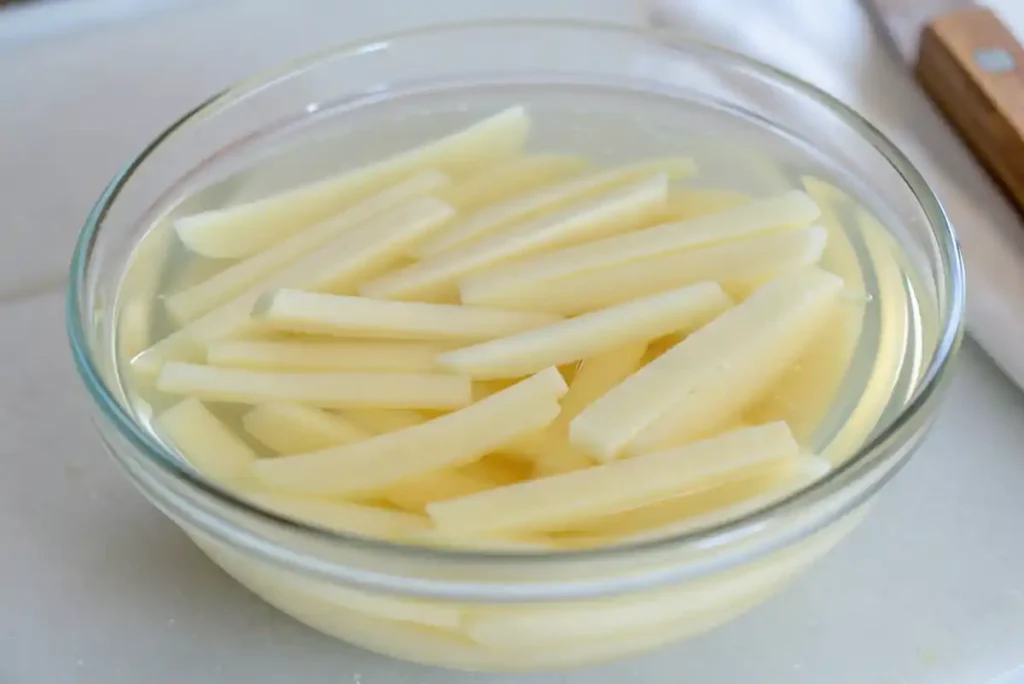
Peel all potatoes. Cut them into 6 millimeter or one quarter inch sticks using a serrated knife. The rough edges increase surface area, which leads to more crunch later. - Hold in water while cutting
Place the cut fries into a large bowl of plain water as you work. This stops browning. There is no need for a long soak at this stage. - Quick rinse
Transfer the fries to a colander. Rinse under cold tap water for 15 to 20 seconds. This removes loose surface starch that can cause sticking. - Simmer with vinegar and salt
Add the fries to a large pot with 2 liters or 2 quarts of cold water. Add the vinegar and the salt. Bring to a boil on high heat. Once boiling, lower the heat so the surface gently ripples. Avoid strong bubbling.
Cook for 10 minutes. The fries should look slightly softened but still hold their shape. Lift them out carefully with a slotted spoon into a colander. Do not pour the pot since the fries can break. - Steam dry for 5 minutes
Spread the fries on two trays lined with clean tea towels. Leave them uncovered for 5 minutes. Steam escaping from the surface helps remove moisture, which supports crisping later. - Prepare the oil and pot
Pour about 3 centimeters or 1.2 inches of oil into a sturdy pot that is at least 10 centimeters or 4 inches tall. The space above the oil matters for safety. You need at least 7 centimeters or 3 inches from oil to the rim to reduce splatter risk. - Divide into batches
Split the fries into three equal batches. Smaller batches keep the oil hot and cook the fries evenly.
Fry One
- Heat the oil
Heat the oil to 205 degrees Celsius or 400 degrees Fahrenheit over medium high heat. - Add fries in stages
Lower one third of the first batch into the oil using a slotted spoon. Wait 10 seconds. Add the second third. Wait another 10 seconds. Add the rest of the batch. This pause limits oil overflow and sticking. - Fry briefly
Fry for 50 seconds. Move the fries once or twice so they do not clump. They should look pale and floppy, not browned. - Drain
Remove the fries and spread them in a single layer on trays lined with paper towels. - Repeat Fry One
Bring the oil back to temperature, then repeat with batches two and three.
Cool Down
- Rest the fries
Let all fries cool for 30 minutes. This step allows moisture to escape and sets up the final crunch.
Fry Two
- Prep for draining
Line a large bowl with paper towels. This makes tossing and draining easier. - Final fry
Heat the oil again to 205 degrees Celsius or 400 degrees Fahrenheit. Fry half the fries for about 4 minutes, stirring twice, until golden and crisp. Transfer to the lined bowl. Repeat with the remaining fries. - Season and serve
Sprinkle with your chosen salt or seasoning. Toss gently and serve right away.
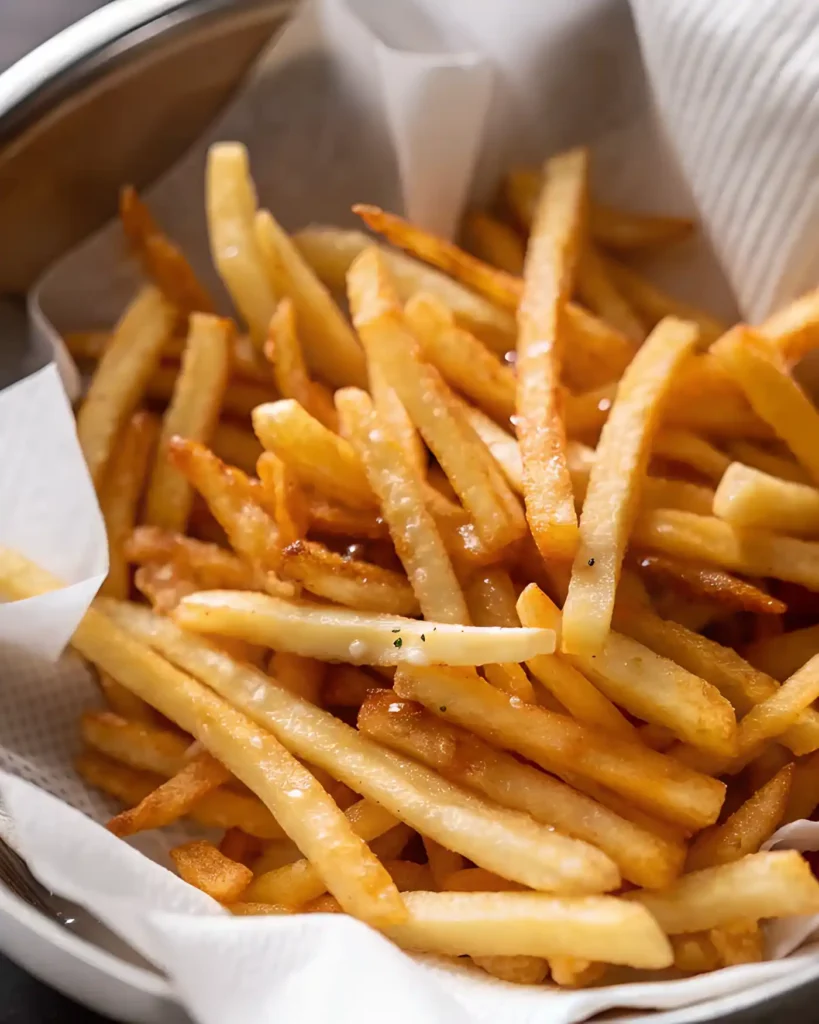
These fries stay crisp even after they cool. For large batches or future meals, see the make ahead tip in the next section.
Pro-Tips for Success
Make ahead with confidence
You can stop after the first fry, let the fries cool completely, then freeze them in a single layer on a tray. Once frozen, transfer to a container or bag. When ready to eat, perform the second fry directly from frozen. This gives you crispy fries on demand without starting from scratch.
Reuse oil smartly
Neutral oils like canola or vegetable can be reused three to four times. Let the oil cool fully, then strain it through a fine mesh sieve or cheesecloth to remove any particles. Store it in a clean, airtight container away from heat or light. Always check for any burnt smell or cloudiness before using it again.
Conclusion
These homemade French fries deliver on the promise. They stay crispy even after cooling, thanks to two small but powerful changes. Using a serrated knife boosts surface crunch. Simmering in vinegar water helps the inside stay fluffy without falling apart.
You get fries that taste just like your favorite restaurant version but made fresh at home. No limp leftovers, no guesswork.
If you tried this recipe, leave a star rating and share your thoughts in the comments. Did you test a new seasoning? Maybe a different fat? Let us know below. And if you loved it, share the recipe with friends on Facebook or save it to Pinterest.
If you want a rich, cheesy dip to serve alongside these fries, this Queso Dip Recipe is an easy and crowd‑pleasing choice.
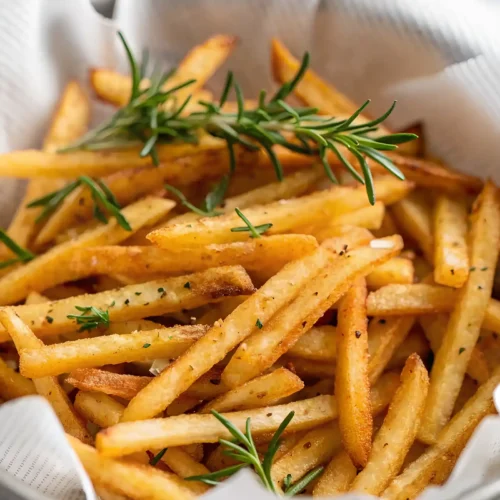
Homemade French Fries

Ingredients
Base
- 1 kilogram floury potatoes e.g., Sebago, Russet, Maris Piper, or King Edward
- 2 tablespoons white vinegar used in the boiling water
- 1 tablespoon cooking salt or kosher salt, for boiling
- 1 liter canola or vegetable oil for frying
Seasoning (choose one)
- to taste table salt or sea salt flakes
- to taste shaker-style fries seasoning
- to taste crushed rosemary mixed with salt
- to taste nori salt for a savory umami kick
Instructions
- Peel all potatoes and cut them into 6 mm (¼ inch) sticks using a serrated knife to create rough edges for better crunch.
- Place the cut fries into a large bowl of plain water to prevent browning while cutting.
- Transfer fries to a colander and rinse under cold water for 15–20 seconds to remove excess starch.
- Place fries in a large pot with 2 liters of cold water. Add vinegar and salt. Bring to boil, then reduce to a gentle simmer. Cook for 10 minutes until just softened.
- Carefully lift fries out with a slotted spoon and spread on trays lined with tea towels. Let steam-dry for 5 minutes.
- Pour 3 cm (1.2 inches) of oil into a deep, sturdy pot. Leave at least 7 cm (3 inches) space above the oil for safety.
- Divide fries into three equal batches for consistent cooking.
- Heat oil to 205°C (400°F). For the first fry, lower one third of a batch into the oil, pausing 10 seconds between additions. Fry for 50 seconds, stirring once or twice. Remove and drain on paper towels.
- Repeat first fry with the remaining batches, allowing the oil to return to temperature between each.
- Let all fries cool at room temperature for 30 minutes to reduce interior moisture.
- Heat oil again to 205°C (400°F). Fry half the cooled fries for about 4 minutes until golden and crispy. Drain and repeat with the second half.
- Season with your preferred option and serve immediately. Enjoy!
Notes
Nutrition Facts (Per Serving)
- Calories: 320
- Total Fat: 15g
- Saturated Fat: 1.5g
- Cholesterol: 0mg
- Sodium: 500mg
- Total Carbohydrates: 42g
- Dietary Fiber: 3g
- Sugars: 1g
- Protein: 4g
- Potassium: 620mg
FAQs
How are French fries made?
French fries start with peeled, high-starch potatoes cut into sticks. The process usually involves soaking or rinsing to reduce surface starch, followed by two rounds of frying. The first fry cooks the inside, and the second creates a golden, crispy shell. Seasoning is added at the end for flavor.
Are French fries fried twice?
Yes, the best French fries are fried twice. The first fry is at a lower temperature to cook the interior. After cooling, the second fry at a higher temperature makes the outside crisp. This double-step method is key for fries that are both fluffy and crunchy.
What’s the secret to restaurant fries?
The secret lies in the details. Most restaurants use high-starch potatoes, a vinegar soak or simmer, and a double-fry method. They also fry in stable fats like beef tallow, which adds flavor. Keeping the oil hot and the batches small makes a big difference too.
Are French fries healthy?
French fries are high in carbohydrates and calories, especially when deep-fried. That said, making them at home allows you to control the oil, cut size, and portion. Baking or air frying can be lighter alternatives, though the texture will differ.
What is the origin of the name “fries”?
The term “fries” is short for “French fries,” but the origin is debated. Some say American soldiers coined the term during World War I after eating fried potatoes in Belgium. Because French was the local language, they called them “French fries.”
Why are McDonald’s fries so good?
McDonald’s uses a specific blend of potato varieties and adds a touch of beef flavoring. Their process includes blanching, freezing, and double-frying. They also use dextrose for color and acid solutions to control texture. The consistent cut and salt level help lock in that signature taste.