
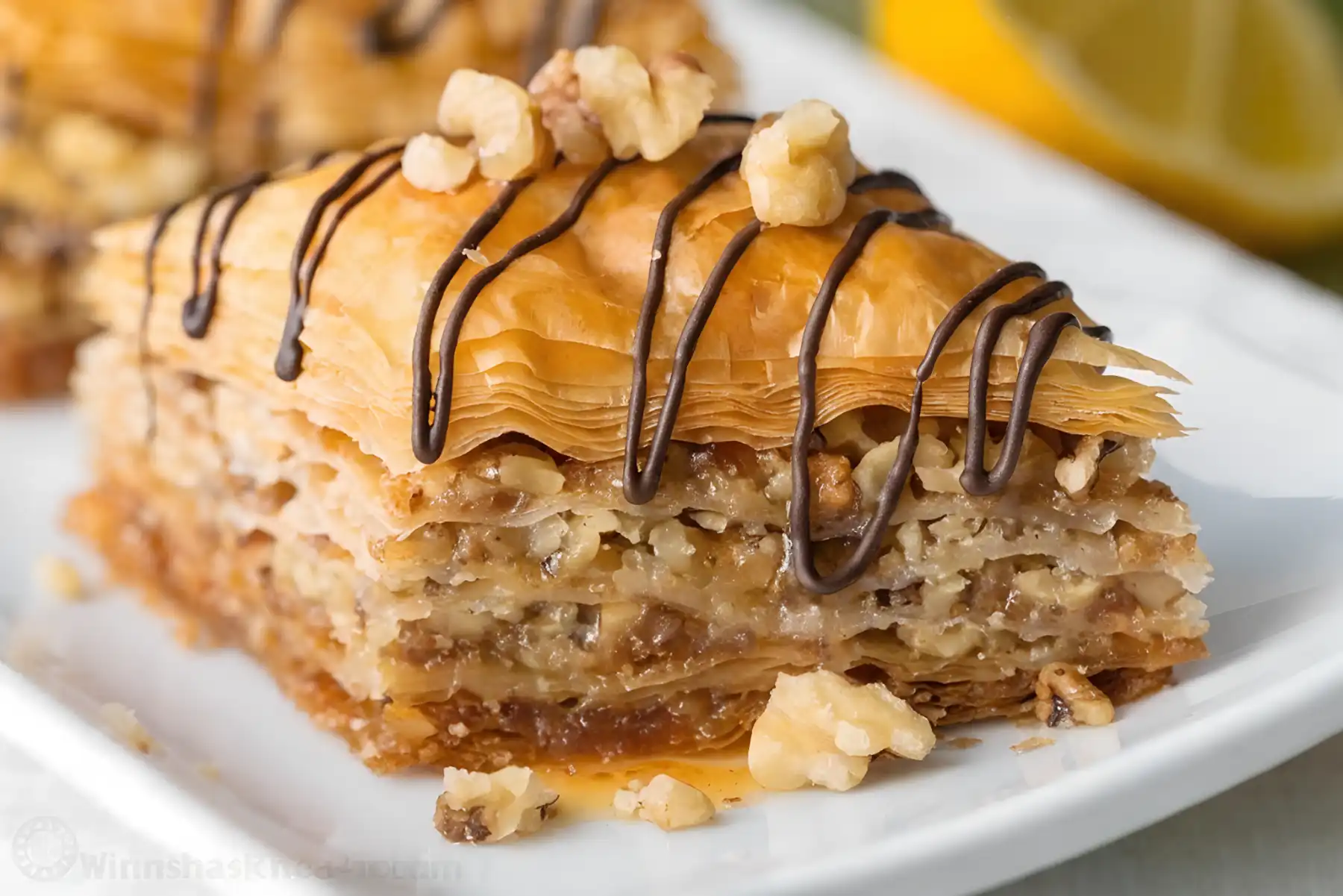
Baklava may look complex at first glance, but it is truly simpler than you think. I remember feeling nervous the first time I worked with phyllo dough, yet once I learned how to handle it gently, the process felt calm and almost relaxing. This Baklava Recipe creates beautifully flaky, buttery, and crisp layers that shatter lightly with each bite. The sweet nut filling pairs with a hint of mellow lemony flavor from the honey syrup, which keeps the dessert rich but not heavy. Even better, this is a make ahead and freezer friendly treat, perfect for busy holiday baking or special gatherings.
Table of Contents
Why You’ll Love This Recipe
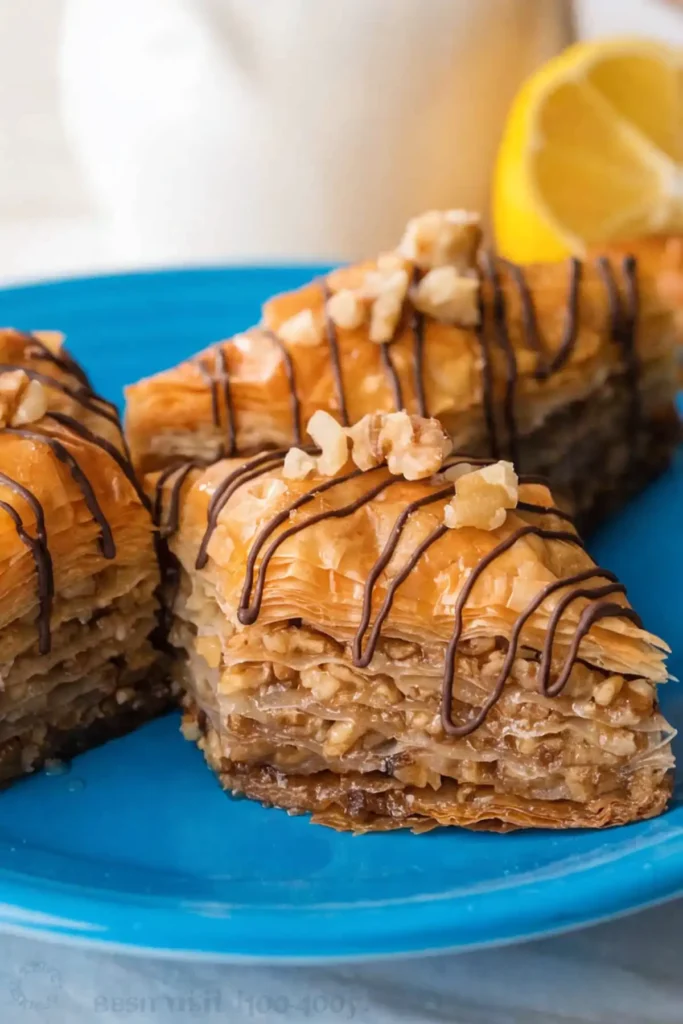
- Simple ingredients you can find in any grocery store, yet the final result tastes bakery quality.
- Clear step by step method that shows exactly how to make baklava without fear of tearing the phyllo.
- Balanced sweetness from honey and lemon juice, so it tastes rich but not overly sugary.
- Perfect for holidays, dinner parties, or gifting since it holds its texture for days.
- A true crowd pleaser that looks impressive on any dessert table.
This version stands out because it focuses on texture and timing. The cold syrup meets the hot pastry, creating that crisp finish and signature sizzle sound. The nut filling stays flavorful without turning dense. When you serve this, guests often assume it came from a specialty bakery. Watching someone take that first crunchy bite is deeply satisfying and worth every layer you brushed with butter.
Ingredients Needed
For the Pastry Layers
- 16 ounces phyllo dough, fully thawed according to package directions. Let it rest in the fridge overnight, then sit at room temperature for about 1 hour before using so it bends easily without cracking.
- 1 1/4 cups unsalted butter, melted. This equals about 10 ounces or 2 1/2 sticks. Melt gently and keep warm so it brushes on smoothly.
For the Nut Filling
- 1 pound walnuts, finely chopped, about 4 1/4 cups before processing. Chop until fine but not powdery so the filling stays textured.
- 1 teaspoon ground cinnamon for warmth and depth.
For the Honey Lemon Syrup
- 1 cup granulated sugar
- 3/4 cup water
- 1/2 cup honey for natural sweetness and rich flavor
- 2 tablespoons fresh lemon juice, from about half a lemon, to add that mellow citrus note
Optional Garnish
- Melted chocolate chips for a light drizzle
- Extra chopped walnuts for sprinkling on top
Each ingredient plays a clear role. Butter creates those crisp layers. Nuts give body and flavor. The syrup soaks in and ties everything together with sweetness and a gentle lemon finish.
How to Make Baklava
- Thaw and prepare the phyllo dough
Thaw the phyllo according to the package instructions. The best method is to place it in the refrigerator overnight, then leave it on the counter for 1 hour before assembling. This step prevents cracking. Keep the sheets covered with a damp towel at all times. The towel should be lightly damp, not wet. Phyllo dries quickly and can tear if exposed to air. - Trim the dough to fit your pan
Use a sharp knife to trim the stack so it fits a 13 by 9 inch baking dish. Trim one stack at a time and return unused sheets under the damp towel. Even if the edges are not perfect, the top layers will hide small imperfections. - Prepare the baking pan
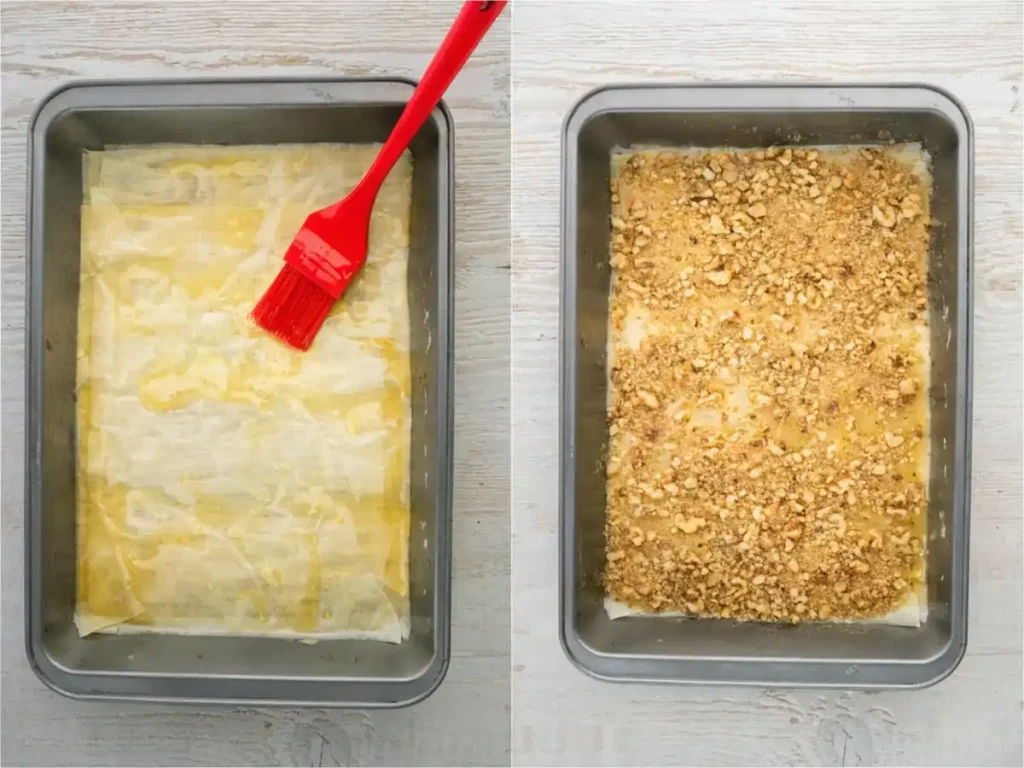
Brush the bottom and sides of a 13 by 9 inch non stick baking pan generously with melted butter. If you want easier cleanup and cleaner cuts later, line the bottom with parchment paper before buttering. - Make the honey lemon syrup first
In a medium saucepan, combine sugar, honey, water, and lemon juice. Bring the mixture to a boil over medium high heat while stirring until the sugar dissolves. Once boiling, reduce to medium low and let it boil gently for 4 minutes without stirring. The syrup should look slightly thick but still pour easily. Remove from heat and let it cool completely. Cold syrup poured over hot pastry keeps the layers crisp. - Prepare the nut filling
Pulse the walnuts in a food processor about 10 times until finely chopped. Do not grind into a paste. You want small pieces for texture. Transfer to a bowl and stir in the cinnamon until evenly mixed. - Preheat the oven
Preheat your oven to 325 degrees Fahrenheit before assembling the layers. Starting with a fully heated oven helps the butter create crisp sheets. - Build the base layers
Place one sheet of phyllo into the buttered pan. Brush the top lightly with melted butter. Add another sheet and brush again. Repeat until you have 10 buttered layers. Press gently to remove air pockets. Spread about one fifth of the nut mixture evenly over the top. Use roughly 3 quarters of a cup per nut layer to keep it even. - Continue layering
Add 5 more sheets of phyllo, brushing each with butter before placing the next. Sprinkle another portion of nuts evenly across the surface. Repeat this process four times. You will alternate 5 buttered sheets with nuts each time. Finish with a final top layer of 10 buttered sheets. Brush the very top generously with butter to promote even browning.
- Cut before baking
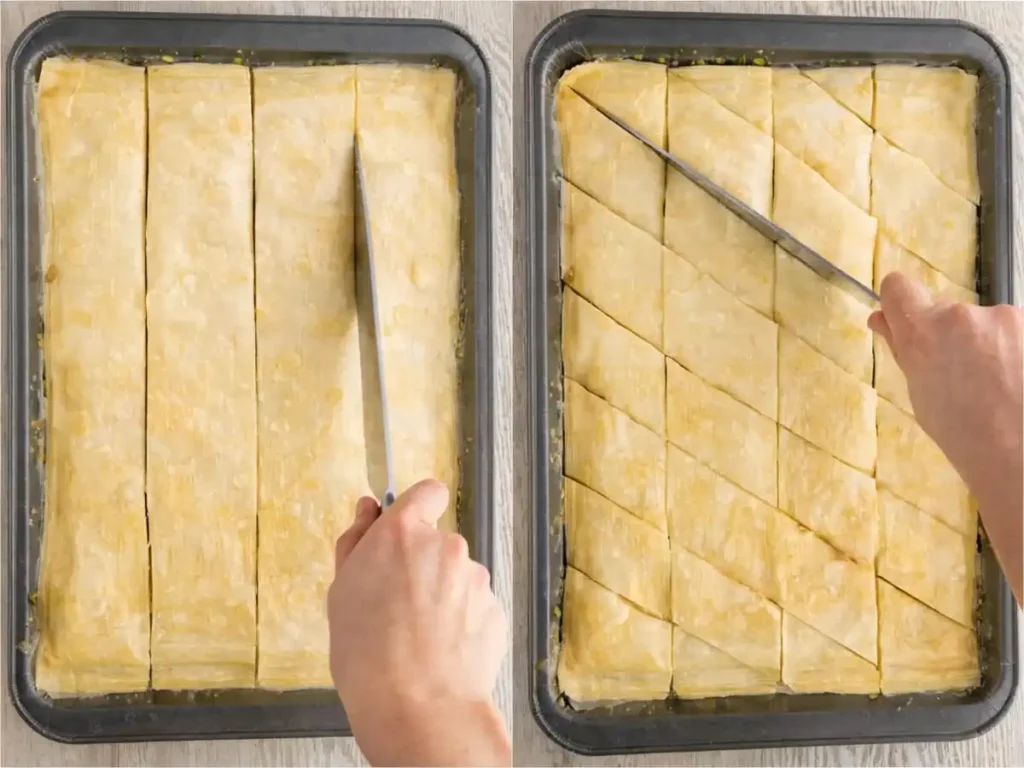
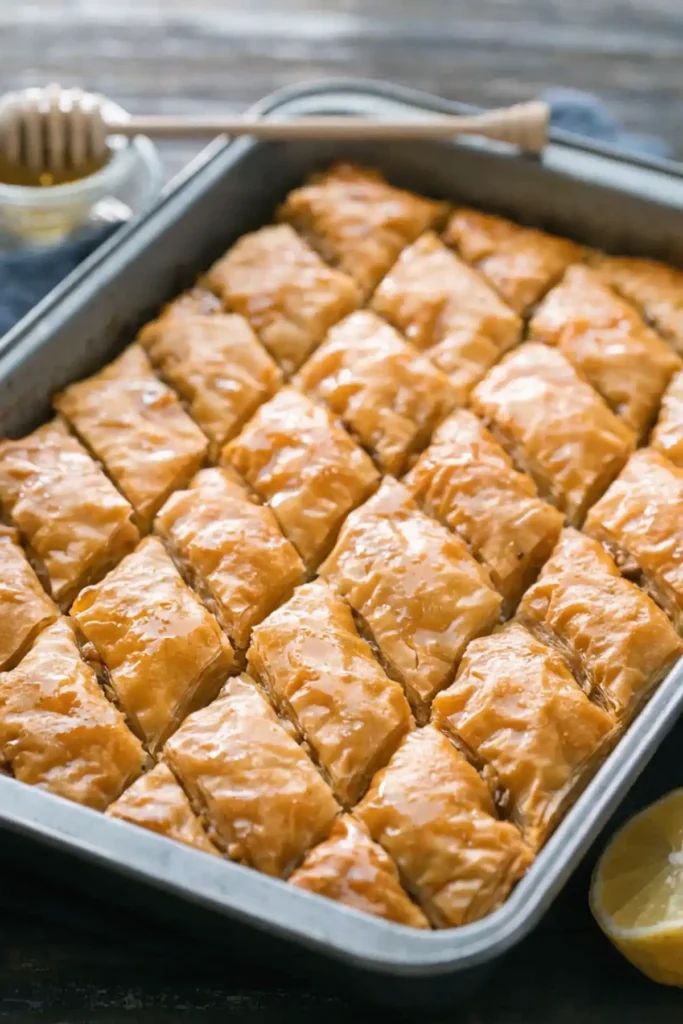
Using a sharp knife, cut the pastry into strips about 1 1/2 inches wide. Then cut diagonally across the strips to form diamond shapes. Cutting before baking prevents the top layers from shattering later and allows syrup to flow into every crevice. - Bake until golden
Place the pan in the preheated oven and bake for about 1 hour and 15 minutes. The top should turn deep golden brown and feel crisp to the touch. If the top browns too quickly, loosely place foil over it during the final minutes. - Add the syrup and listen for the sizzle
As soon as you remove the baklava from the oven, slowly spoon the cooled syrup evenly over the hot pastry. You should hear a gentle sizzle. That sound means the temperature contrast is correct. Pour gradually so each cut line absorbs syrup without flooding the surface. - Rest before serving
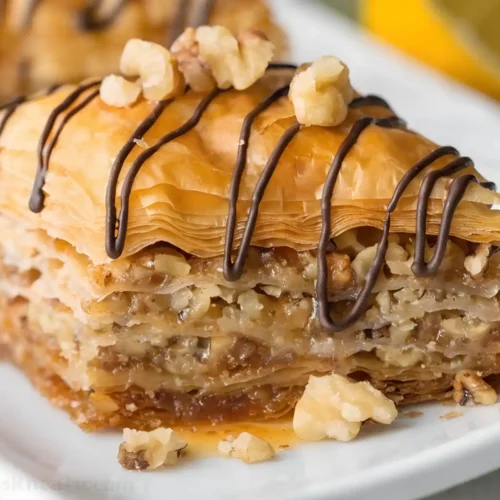
Let the baklava cool completely at room temperature, uncovered, for 4 to 6 hours or overnight. This resting time allows the syrup to soak through every layer while keeping the top crisp. Garnish with melted chocolate and extra chopped walnuts if desired.
Why Is My Baklava Soggy?
Soggy baklava usually comes down to three main causes.
1. The Syrup Was Too Warm
The most common mistake is pouring warm syrup over warm pastry. The key to crisp layers is temperature contrast. Always pour cooled syrup over hot baklava straight from the oven. That quick sizzle sound tells you the layers will stay crisp instead of turning soft.
2. The Wrong Pan Shape
Pans with deeply angled or curved corners allow syrup to pool in the edges. When syrup collects in one spot, those pieces absorb too much liquid. A straight sided 13 by 9 inch pan gives more even distribution.
3. Not Enough Butter Between Layers
Butter separates each sheet of phyllo. If you skimp on it, the layers can stick together and turn dense. Light brushing on every sheet helps create flaky texture and keeps the pastry from peeling or collapsing.
If your baklava turns slightly soft on the bottom, do not worry. It will still taste rich and flavorful. Crisp top layers and balanced syrup are what matter most.
Storage and Serving
Cooling Time
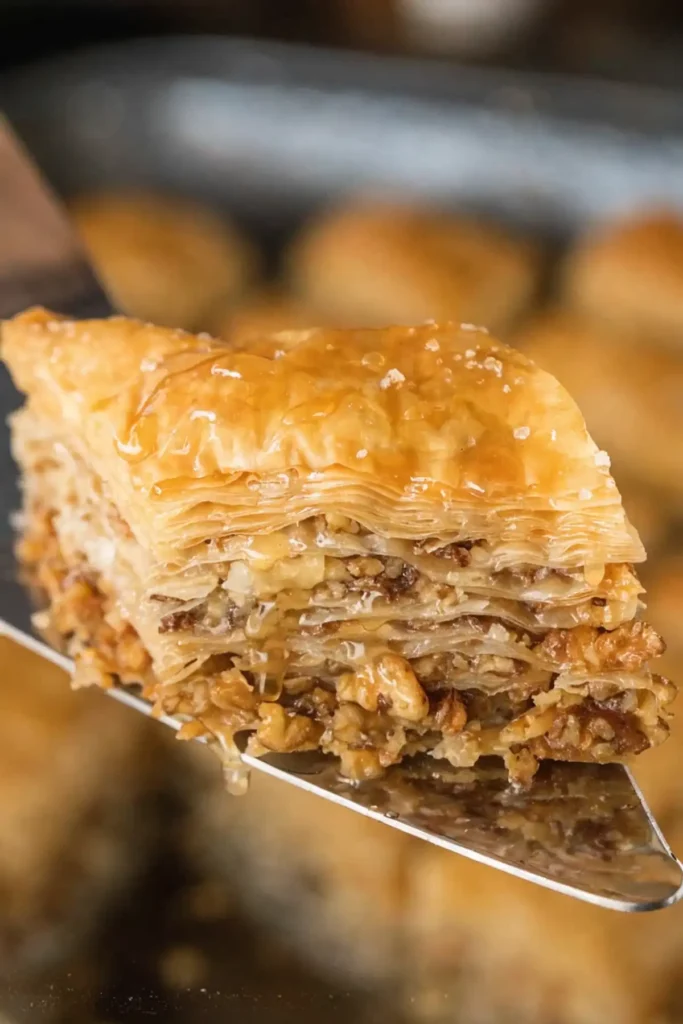
After pouring the syrup, let the baklava rest uncovered at room temperature for 4 to 6 hours or overnight. This resting period allows the syrup to move through every layer. The top stays crisp while the inner layers soften slightly and become rich and tender. Cutting too early can cause the layers to shift or feel overly sticky.
Shelf Life
Store baklava at room temperature, lightly covered with a clean tea towel or loosely tented foil. It stays fresh for up to one week. Avoid sealing it in an airtight container right away, as trapped moisture can soften the top layers.
For longer storage, you can freeze baked and cooled baklava in a well wrapped container for up to 3 months. Thaw at room temperature without reheating to keep the texture intact.
Serve at room temperature for the best flavor and texture. The honey and walnut notes become more pronounced after the first day, which makes this dessert ideal for preparing ahead of special gatherings.
Conclusion
This Best Baklava Recipe proves that making homemade baklava is far easier than it looks. With crisp, buttery layers, a fragrant walnut filling, and that signature honey lemon syrup poured over hot pastry, the result is deeply satisfying. The texture stays flaky, the sweetness feels balanced, and the flavor improves the next day. It is also make ahead and freezer friendly, which makes it perfect for holidays and special events.
If you tried this recipe, I would love to hear how it turned out. Please leave a comment below and share a star rating to help other readers. Did you add pistachios or drizzle chocolate on top? Share your twist. You can also save this recipe on Pinterest or share it on Facebook so friends and family can enjoy it too.
YOU MIGHT ALSO LIKE…
Baklava Recipe

Ingredients
Pastry Layers
- 16 oz phyllo dough, thawed Thawed overnight in refrigerator and rested 1 hour at room temperature
- 1 ¼ cups unsalted butter, melted Keep warm for brushing
Nut Filling
- 1 lb walnuts, finely chopped Chop finely but not into paste
- 1 tsp ground cinnamon
Honey Lemon Syrup
- 1 cup granulated sugar
- ¾ cup water
- ½ cup honey
- 2 tbsp fresh lemon juice From about half a lemon
Optional Garnish
- ¼ cup melted chocolate chips For drizzling
- 2 tbsp extra chopped walnuts For garnish
Instructions
- Thaw phyllo dough overnight in the refrigerator. Let sit at room temperature for 1 hour before using. Keep covered with a lightly damp towel while working.
- Trim phyllo sheets to fit a 13×9 inch baking pan. Keep unused sheets covered.
- Brush the baking pan with melted butter. Line with parchment if desired and brush again.
- In a saucepan, combine sugar, water, honey, and lemon juice. Bring to a boil, then reduce heat and simmer 4 minutes. Cool completely.
- Pulse walnuts until finely chopped. Mix with cinnamon.
- Preheat oven to 325°F (163°C).
- Layer 10 sheets of phyllo in the pan, brushing each with melted butter. Spread one-fifth of the nut mixture evenly over the top.
- Add 5 buttered sheets, then another portion of nuts. Repeat layering four times. Finish with 10 buttered sheets on top.
- Cut into strips and diagonally into diamond shapes before baking.
- Bake for 1 hour and 15 minutes until deep golden brown and crisp.
- Immediately spoon cooled syrup evenly over hot baklava. Listen for a gentle sizzle.
- Let rest uncovered at room temperature for 4 to 6 hours or overnight before serving. Garnish if desired.
Notes
Nutrition Facts
Baklava RecipeAmount per Serving
- Calories: 255
- Fat: 18 g, 28%
- Saturated Fat: 6 g, 38%
- Cholesterol: 20 mg, 7%
- Sodium: 74 mg, 3%
- Potassium: 83 mg, 2%
- Carbohydrates: 21 g, 7%
- Fiber: 1 g, 4%
- Sugar: 11 g, 12%
- Protein: 3 g, 6%
- Vitamin A: 240 IU, 5%
- Vitamin C: 0.6 mg, 1%
- Calcium: 20 mg, 2%
- Iron: 1 mg, 6%
FAQs
What exactly is a baklava?
Baklava is a layered pastry made with thin sheets of phyllo dough, chopped nuts, melted butter, and sweet syrup. It is baked until golden and then soaked with honey syrup. The result is crisp on top, tender inside, and rich with nut flavor. It is popular in Greek, Turkish, Middle Eastern, and Mediterranean kitchens.
What are the ingredients of baklava?
Traditional baklava includes phyllo dough, melted butter, finely chopped nuts such as walnuts or pistachios, sugar, water, honey, and lemon juice. Some versions add warm spices like cinnamon or cloves. The layers are brushed with butter, filled with nuts, baked, and finished with syrup.
Which baklava is better, Greek or Turkish?
Both styles are delicious, but they differ slightly. Greek baklava often uses walnuts and cinnamon with a honey lemon syrup. Turkish baklava commonly uses pistachios and a lighter sugar syrup without strong spice. The better choice depends on your taste preference. If you enjoy warm spice notes, Greek style may suit you. If you prefer a cleaner, nut forward sweetness, Turkish style may be your favorite.
What is the green stuff in baklava?
The green color usually comes from finely ground pistachios. High quality pistachios have a bright natural green tone. Some bakeries sprinkle crushed pistachios on top for garnish, while others use them as the main filling.
What are common baklava mistakes?
Common mistakes include letting phyllo dry out, using syrup that is too hot, not brushing enough butter between layers, and skipping the pre baking cut. Another issue is pouring syrup too quickly, which can flood the pastry. Keeping the dough covered with a damp towel and pouring cooled syrup over hot pastry prevents most texture problems.
Why is baklava so expensive?
Baklava requires many sheets of phyllo, a large amount of butter, and a generous quantity of nuts. Nuts, especially pistachios and walnuts, can be costly. The layering process also takes time and care. The price reflects both the ingredients and the labor involved in creating those crisp, delicate layers.