
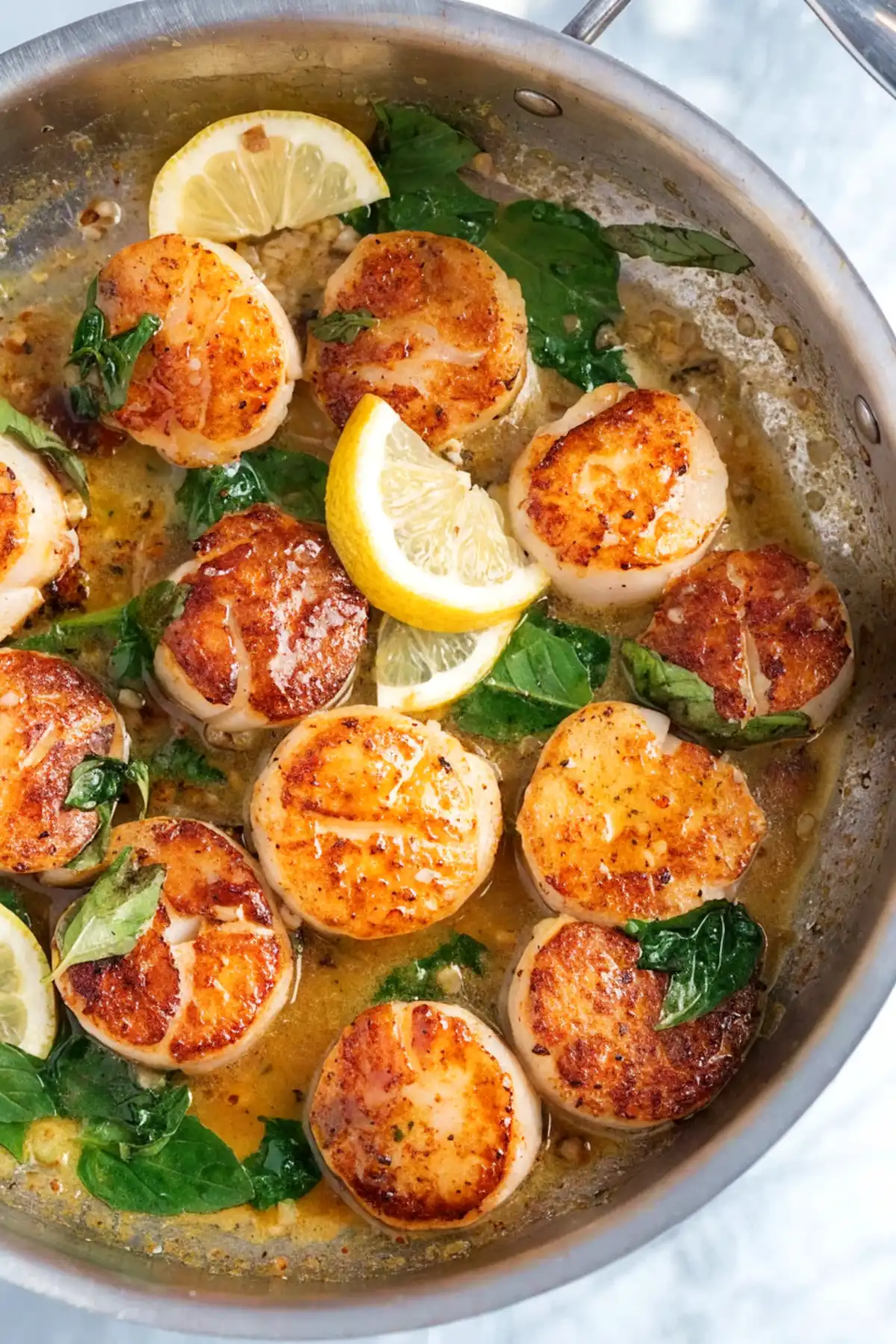
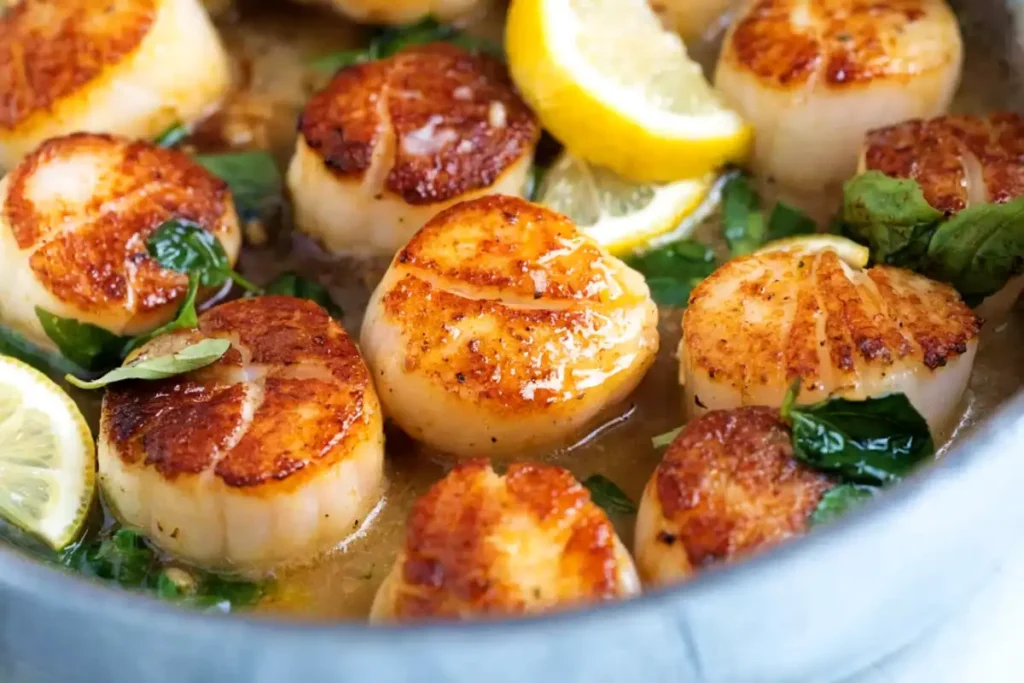
I still remember the first time I nailed this pan-seared scallops recipe at home. The crust was golden, the center stayed soft, and the flavor felt like something from a high-end restaurant. Most people struggle with scallops because they overcook them or skip small but key steps. This guide fixes that. You will learn how to get a perfect sear, rich butter flavor, and a clean, fresh finish in minutes. No guesswork, just clear steps that work every time.
Table of Contents
Why You’ll Love This Recipe
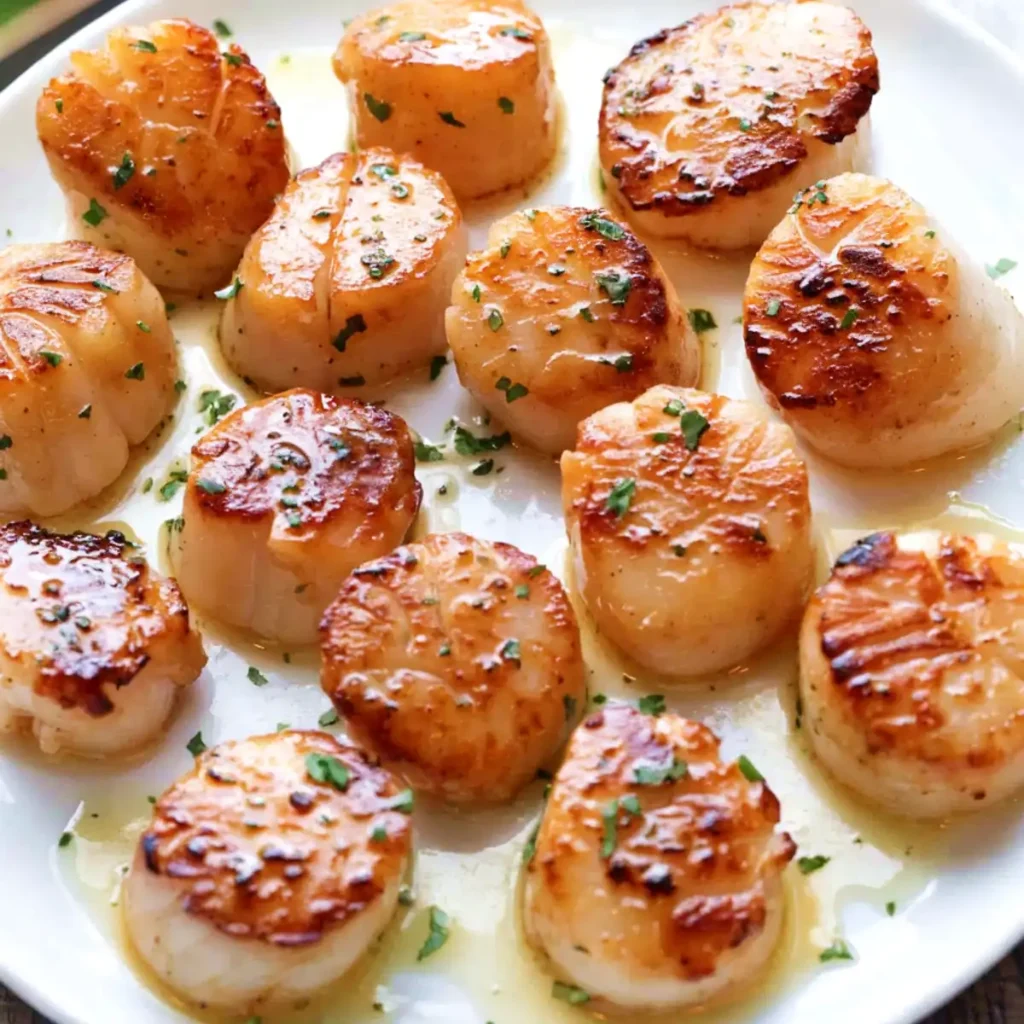
- Quick and simple: You can cook perfect scallops in about 10 minutes from start to finish.
- Minimal ingredients: You only need a few fresh items to get rich, bold flavor.
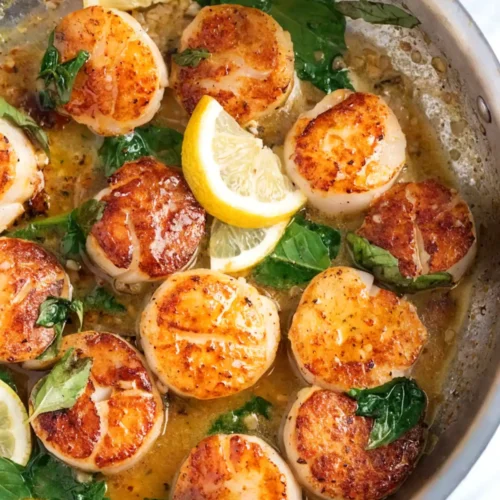
- Restaurant-style result: You get a golden crust with a soft, tender center every time.
- Foolproof method: Clear steps remove the guesswork, even if it is your first time cooking scallops.
- Perfect for special meals: This dish feels fancy but is easy enough for a weeknight dinner.
- Balanced flavor: The garlic, butter, basil, and lemon create a fresh and rich taste in every bite.
This scallop recipe stands out because it focuses on heat control and timing. These two details make the difference between soft, juicy scallops and tough, rubbery ones.
Ingredients Needed
For the scallops
- 12 large sea scallops, about 1.25 to 1.5 pounds, side muscle removed if still attached
- 2 teaspoons all purpose flour, optional, helps create a light crust
- Salt, to taste
- Fresh ground black pepper, to taste
- 2 tablespoons avocado oil or vegetable oil, chosen for high heat cooking
For the garlic basil butter
- 1.5 tablespoons butter, unsalted works best for control
- 2 garlic cloves, finely minced for even flavor
- 1 cup fresh basil leaves, loosely packed for a bright finish
- 3 to 4 lemon slices, thinly cut to add fresh acidity
Each ingredient plays a clear role. Dry scallops help form a crisp crust, while the butter, garlic, and basil build a rich and fresh flavor that balances the dish.
How to Make This Scallop Recipe
1. Prep the scallops
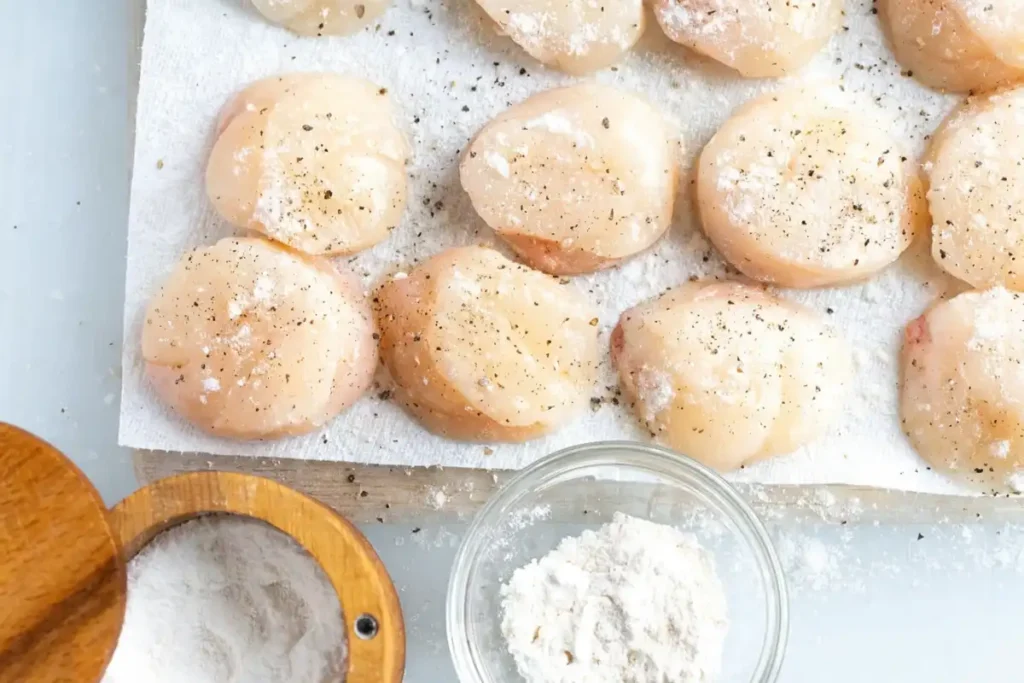
Start by placing the scallops on a paper towel. Pat them very dry on all sides. This step is key because moisture blocks a good crust. Lightly dust one side with a small amount of flour if you want a slightly crisp finish. Season that same side with salt and fresh black pepper.
2. Heat the pan properly
Place a wide skillet on medium high heat. Let it heat for a minute, then add the oil. Wait until the oil looks shiny and fluid. This tells you the pan is hot enough to sear, not steam.
3. Place scallops in the pan
Gently set the scallops into the pan with the seasoned side facing down. Leave space between each piece. Do not move them. Let them cook undisturbed for about 2 minutes until a deep golden crust forms.
4. Season the second side
While the first side cooks, lightly dust the top side with a bit of flour if using. Add salt and pepper. This keeps flavor even on both sides.
5. Flip with care
Turn each scallop gently. If one sticks, give it a few more seconds. It will release once the crust forms. A slight side to side motion can help without tearing the surface.
6. Add butter and garlic
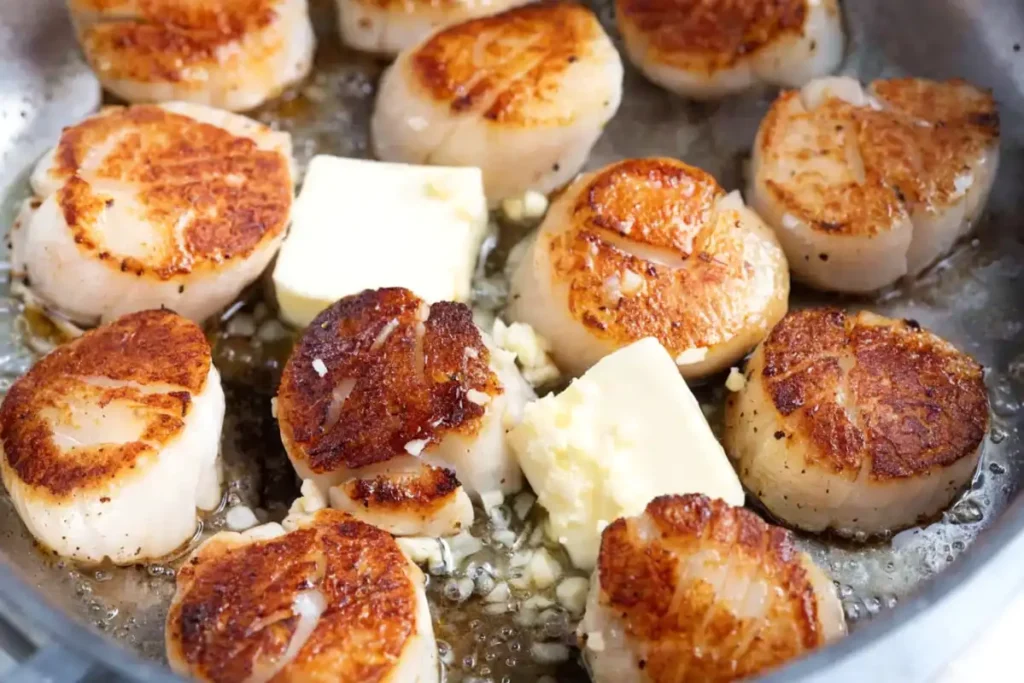
Lower the heat slightly. Add the butter and minced garlic to the pan. As the butter melts, tilt the pan and spoon it over the scallops. This builds rich flavor and keeps them moist.
7. Finish cooking
Cook for another 1 to 2 minutes. The scallops should feel slightly firm on the outside but still soft in the center. Remove the pan from heat right away to avoid overcooking.
8. Add fresh finish and serve
Stir in the basil leaves and lemon slices while the pan is still warm. The heat will release their aroma without overcooking them. Serve immediately for the best texture and flavor.
Why Are My Scallops Rubbery?
Rubbery scallops usually come from a few common mistakes. The good news is that each one is easy to fix once you know what to watch for.
Overcooking
Scallops cook very fast. If you leave them in the pan too long, they turn firm and chewy. They should still look slightly soft in the center when you remove them from heat. Keep in mind they continue to cook for a short time after leaving the pan.
Crowding the pan
If you place too many scallops at once, the pan temperature drops. Instead of searing, they release water and start to steam. This prevents that golden crust and leads to a rubbery texture. Always leave space between each scallop or cook in batches.
Not drying them well
Wet scallops will not sear properly. Excess moisture creates steam, which affects both texture and flavor. Always pat them dry with paper towels before cooking.
Low heat at the start
If the pan is not hot enough, the scallops will cook slowly and lose their natural juices. A hot pan creates a quick crust while keeping the inside tender.
Fix these points, and your scallops will turn out soft, juicy, and perfectly cooked every time.
Serving and Pairing Suggestions
The right side dish can turn this scallop recipe into a full, satisfying meal. You can go rich and comforting or keep things light and fresh depending on your mood.
Starchy sides for a hearty plate
- Creamy polenta that soaks up the garlic butter sauce
- Mushroom risotto for a deep, savory match
- Smooth mashed potatoes that balance the crisp scallops
- Saffron rice for a subtle aroma and color
Lighter options for a fresh feel
- Zucchini noodles for a low carb choice
- Roasted asparagus with a slight crunch
- Mashed cauliflower for a soft and mild side
Wine pairing idea
A dry white wine works best with scallops. A glass of Sauvignon Blanc or Chardonnay pairs well with the butter, garlic, and lemon flavors. You can also add a splash of the same wine to the pan while cooking to build extra depth in the sauce.
Mix and match based on the occasion. This dish can feel light and fresh or rich and comforting with just a simple change on the side.
Storage and Reheating Tips
How to store scallops
Place any leftover scallops in an airtight container. Keep them in the coldest part of your fridge. They stay fresh for up to 3 days. Make sure they cool down before sealing to avoid extra moisture inside the container.
Best way to reheat
Skip the microwave. It heats unevenly and can make scallops tough. Instead, warm a skillet over medium heat. Add a small amount of butter, then place the scallops in the pan. Heat them for 1 to 2 minutes on each side until just warmed through. This helps keep their soft texture and rich flavor.
Extra tip
Do not overheat during reheating. Just warm them gently. Too much heat will make them dry and chewy very fast.
Conclusion
This scallop recipe gives you everything you need for a perfect result at home. You get a golden crust, a soft center, and a rich garlic butter finish without stress. The steps are simple, the cooking time is short, and the flavor feels special enough for any occasion. Once you understand the heat and timing, it becomes easy to repeat with confidence.
If you tried this recipe, share your experience in the comments and leave a star rating. Your feedback helps others and keeps the recipe useful. You can also share it on Pinterest or Facebook to save it for later.
Did you try a different herb or side dish with your scallops? Let others know what worked for you.
YOU MIGHT ALSO LIKE…
Pan Seared Scallops

Ingredients
Scallops
- 12 large sea scallops side muscle removed
- 2 teaspoons all purpose flour optional
- to taste salt
- to taste black pepper
- 2 tablespoons avocado oil or vegetable oil
Garlic Basil Butter
- 1.5 tablespoons butter unsalted
- 2 cloves garlic finely minced
- 1 cup fresh basil leaves loosely packed
- 3-4 slices lemon thinly cut
Instructions
- Pat the scallops very dry using paper towels. Lightly dust one side with flour if desired, then season with salt and black pepper.
- Heat a large skillet over medium-high heat. Add the oil and wait until it becomes hot and shimmering.
- Place scallops in the pan with the seasoned side down. Leave space between each and cook undisturbed for about 2 minutes until a golden crust forms.
- Lightly season the top side of each scallop with salt and pepper while the first side cooks.
- Flip the scallops gently once they release easily from the pan.
- Reduce heat slightly and add butter and minced garlic. Spoon the melted butter over the scallops continuously.
- Cook for another 1 to 2 minutes until the outside is firm and the center remains tender. Remove from heat immediately.
- Add fresh basil and lemon slices to the warm pan. Toss gently and serve immediately.
Notes
Nutrition Facts (Per Serving)
- Serving Size: 3 scallops
- Calories: 267
- Total Fat: 12.6g
- Saturated Fat: 3.7g
- Cholesterol: 69.5mg
- Sodium: 1236.8mg
- Carbohydrates: 9.6g
- Dietary Fiber: 0.2g
- Total Sugars: 0.2g
- Protein: 29.6g
FAQs
How do you avoid rubbery scallops?
Cook them for a short time over high heat. Remove them while the center is still slightly soft. They will continue to cook after leaving the pan. Also, make sure the pan is hot before adding them and do not overcrowd it.
What are the common mistakes when cooking scallops?
The most common issues include not drying them well, using low heat, overcrowding the pan, and overcooking. Each of these prevents a proper crust and leads to poor texture.
Is it better to cook scallops in butter or oil?
Start with oil because it handles high heat better. Then add butter near the end for flavor. This method gives you a good crust without burning the butter.
How do I know when scallops are done?
Look for a golden crust on the outside and a slightly soft center. They should feel firm on the surface but still tender when pressed. This usually takes about 2 to 4 minutes total.
What to eat with scallops for dinner?
You can pair scallops with creamy polenta, risotto, mashed potatoes, or lighter sides like roasted asparagus or zucchini noodles. A fresh side helps balance the rich butter sauce.
Should I soak scallops before cooking?
No, soaking adds extra moisture. Moisture prevents a good sear. Instead, pat them dry with paper towels before cooking for the best result.