
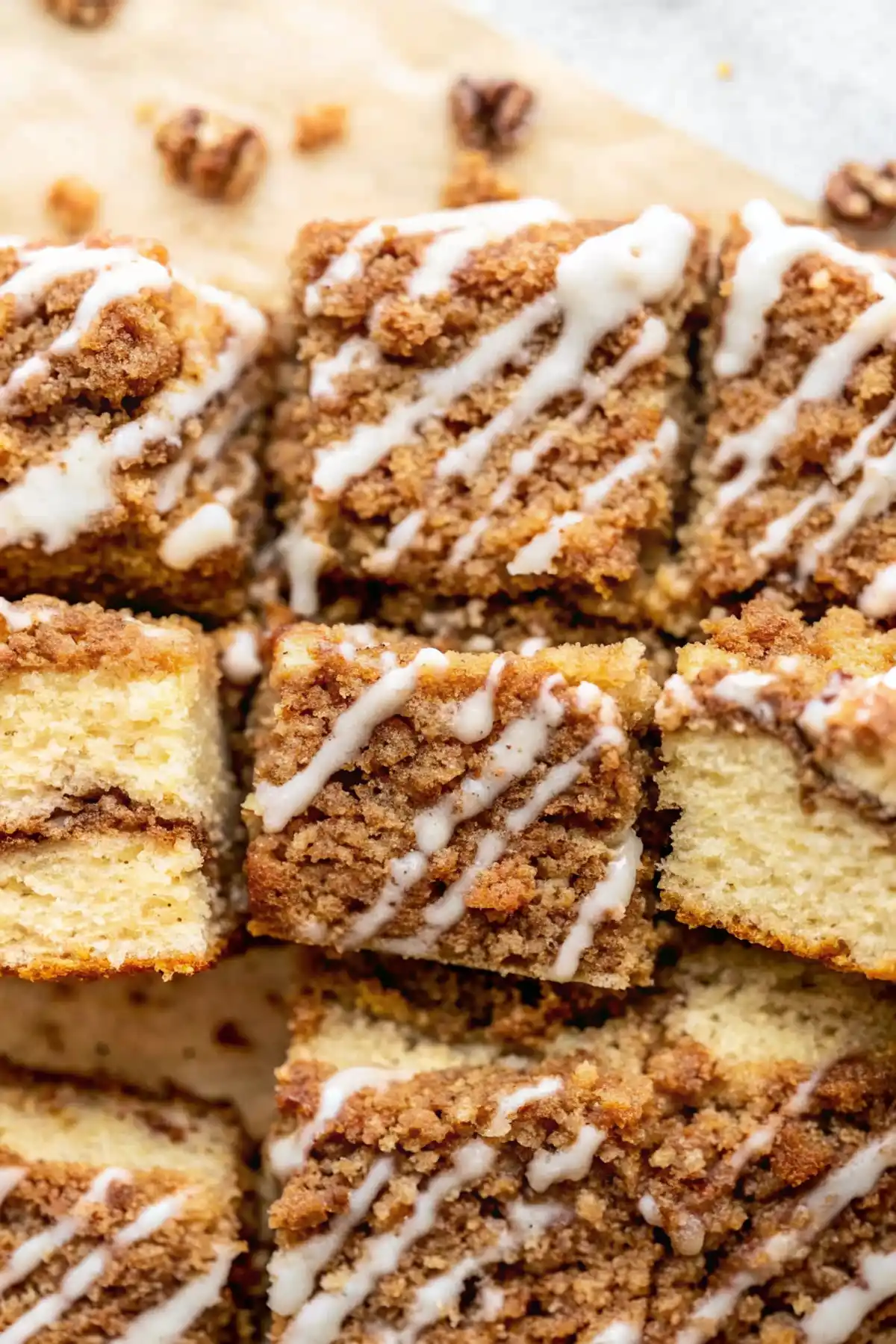
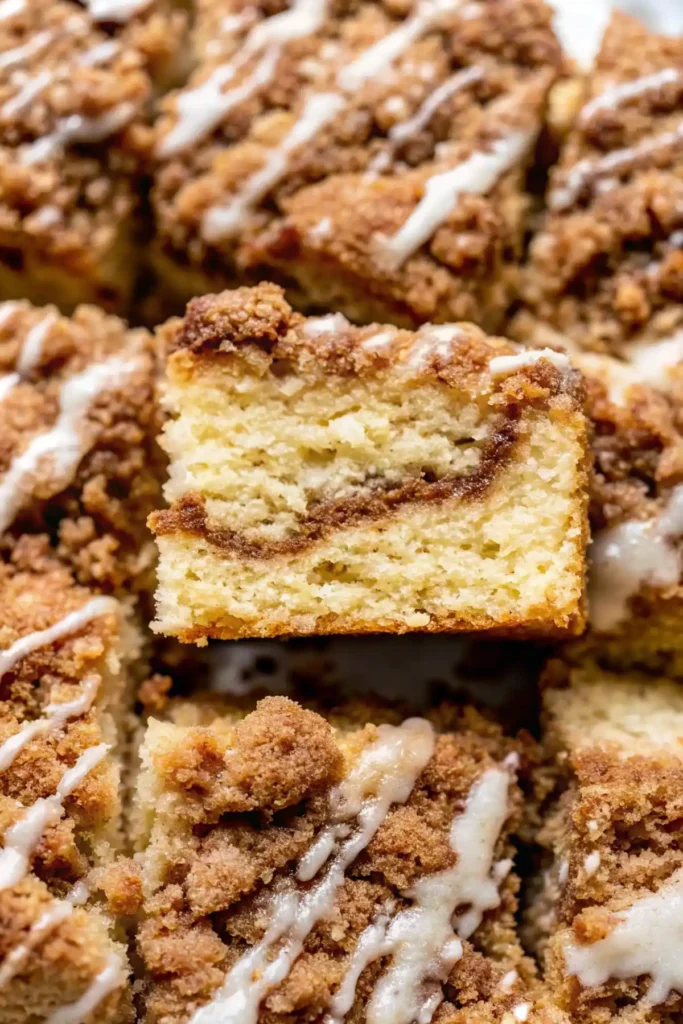
This coffee cake delivers something most don’t: a double layer of crumb. One part of the buttery cinnamon mixture runs through the center, while the rest blankets the top for a thick, bakery-style finish.
The texture hits that perfect balance. It’s moist but not overly dense, soft yet sturdy enough to slice cleanly. Whether you serve it warm for breakfast or later in the day with coffee or tea, it holds its own.
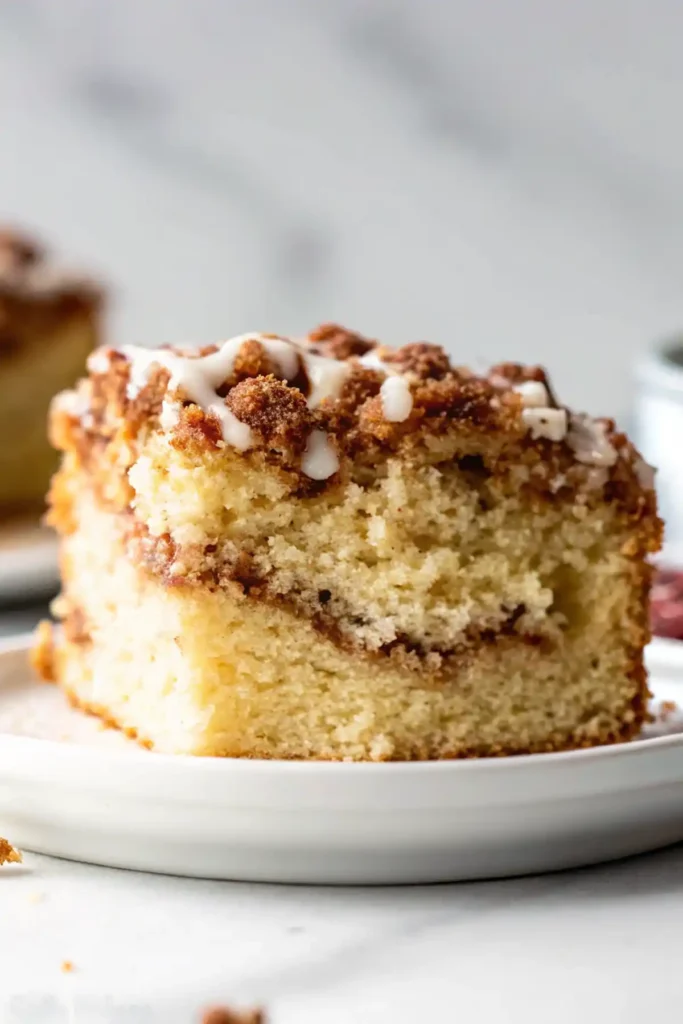
Table of Contents
The Secret to a Moist Breakfast Cake
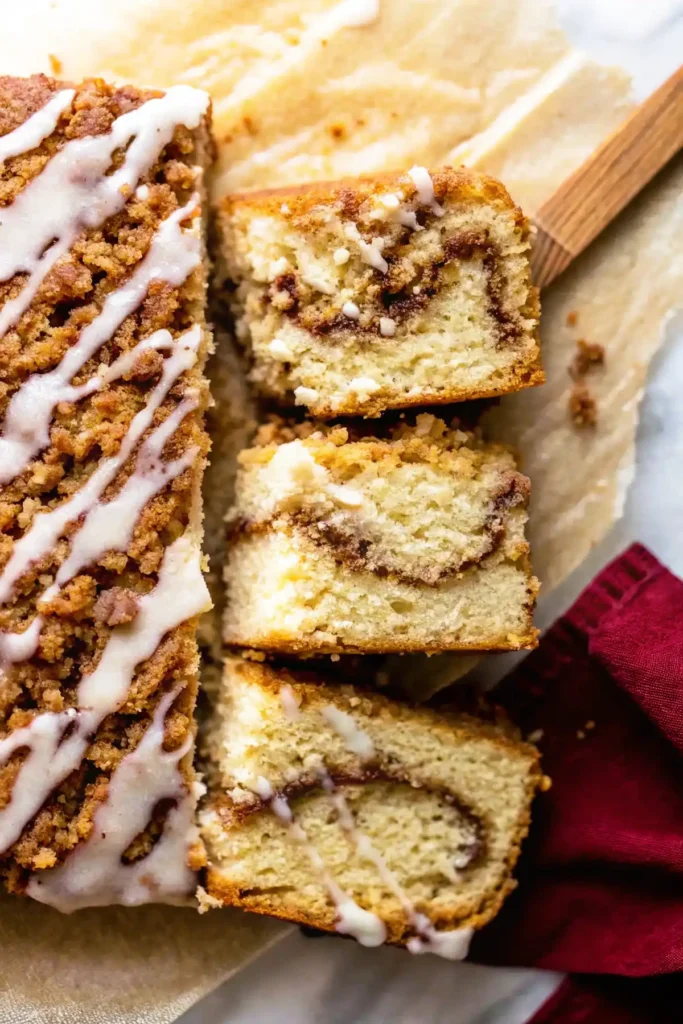
The real reason this coffee cake stays soft comes down to full-fat sour cream. It adds richness without weighing the crumb down. The result feels bakery-style, tender, and light instead of tight or heavy. Lower-fat options often fall short because they lack enough fat to protect the batter as it bakes.
Ingredients Needed
Here’s a breakdown of everything you need, grouped by component for clarity. Use room temperature ingredients for the best mixing and texture.
For the Cinnamon Crumb Mixture
- Two-thirds cup packed brown sugar (light or dark works)
- Three-fourths cup all-purpose flour, spooned and leveled
- Two and a half teaspoons ground cinnamon
- Six tablespoons unsalted butter, cold and cut into cubes
For the Cake Base
- One and one-third cups all-purpose flour, spooned and leveled
- One teaspoon baking powder
- One-fourth teaspoon baking soda
- One-fourth teaspoon salt
- Half cup unsalted butter, softened
- Three-fourths cup granulated sugar
- Two large eggs, at room temperature
- Two teaspoons pure vanilla extract
- Half cup full-fat sour cream, at room temperature
- Two tablespoons milk, any kind
For the Optional Vanilla Icing
- One cup sifted confectioners’ sugar
- Half teaspoon pure vanilla extract
- Two tablespoons milk or heavy cream
This ingredient list keeps things simple while delivering big flavor and soft texture.
How to Make Coffee Cake
Follow these steps for the perfect layered crumb cake. Read through before starting so nothing catches you off guard.
Step 1: Preheat and Prep
Set your oven to 350°F or 177°C. Line an 8-inch square baking pan with parchment paper and lightly grease it. If you skip the parchment, make sure to grease the pan thoroughly.
Step 2: Make the Crumb Mixture
In a medium bowl, mix brown sugar, flour, and cinnamon. Add cold butter cubes. Use a pastry cutter, two forks, or your hands to work the butter in until the mixture forms small clumps. Some larger bits are fine. You should have a little over two cups of crumb. Place it in the fridge while you prep the batter.
Step 3: Prepare the Dry Ingredients
In a large bowl, whisk flour, baking powder, baking soda, and salt. Set this aside.
Step 4: Cream Butter and Sugar
In another large bowl, beat softened butter and granulated sugar using a hand or stand mixer on high speed. Mix for about three minutes until it looks light and creamy. Scrape the bowl down to catch any clumps.
Step 5: Add Eggs and Flavor
Drop in the eggs and vanilla. Beat on medium-high speed until everything blends smoothly. Mix in the sour cream. The batter may look a little lumpy, and that’s totally normal.
Step 6: Combine Wet and Dry
With your mixer on low, slowly add the dry mixture into the wet bowl. Mix until just combined. Add the milk last and mix again gently. The batter will feel thick. You should end up with around two and a half cups.
Step 7: Layer the Batter and Crumb
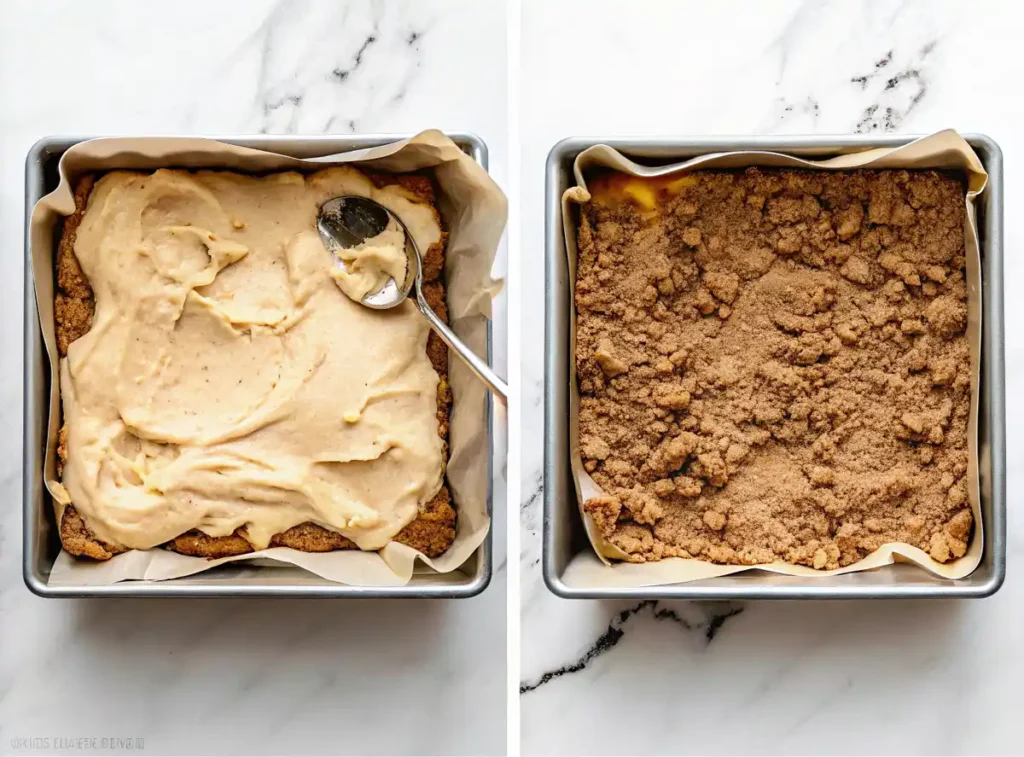
Spread half the batter into your prepared pan. Use a spatula to smooth it out. Sprinkle about one cup of the crumb mixture evenly on top. Spoon the rest of the batter over the crumb layer. It may be tricky since the batter is thick, so take your time. Use a spoon or offset spatula and gently press it over. Top with the rest of the crumb mixture.
Step 8: Bake
Place the pan in the oven and bake for 35 to 40 minutes. To test for doneness, insert a toothpick in the center. If it comes out clean, it’s ready. Let the cake cool in the pan on a wire rack for 15 minutes.
Step 9: Make the Icing
Whisk the confectioners’ sugar, vanilla, and milk or cream together until smooth. Drizzle it over the slightly warm cake.
Step 10: Slice and Serve
Use the parchment overhang to lift the cake from the pan. If you didn’t use parchment, slice it directly in the pan. Serve warm or at room temperature.
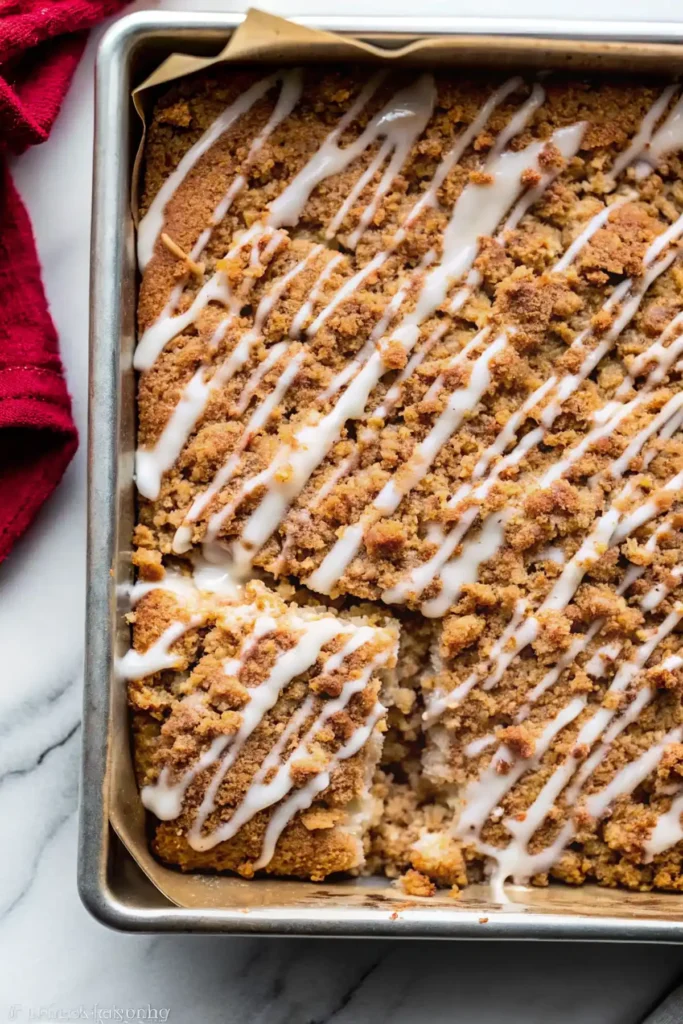
Keep leftovers tightly covered. The texture stays perfect for several days.
Pan Size Variations and Conversions
You can adapt this recipe to fit different pans depending on how many people you are serving or what you have on hand. Here’s how to adjust without ruining the texture or bake time.
Standard Size
Use an 8-inch square pan for best results. This gives the right height and crumb ratio.
Round Option
A 9-inch round pan works well and needs about the same baking time.
Loaf Style
Try a 9 by 5-inch loaf pan if you want sliceable pieces. Bake for around 40 minutes.
For a Crowd
Use a 9 by 13-inch pan for parties or gatherings. Multiply the recipe by one and a half. Expect a bake time of about 45 minutes. Keep an eye on the center for doneness.
Storage and Reheating Tips
Room Temperature
Once the cake cools completely, cover it tightly with foil or plastic wrap. You can leave it at room temperature for up to three days without losing moisture.
Refrigerator
For longer storage, place the covered cake in the fridge. It stays fresh for up to one week.
Reheating
To bring back that just-baked warmth, microwave individual slices for about ten to fifteen seconds. If reheating a larger portion, cover it with foil and warm it in a low oven at 300°F for ten minutes. This keeps the crumb soft and the topping crisp.
Helpful Notes
- Don’t skip the sour cream. It creates the soft texture that sets this cake apart from dry versions.
- Use cold butter for the crumb mixture. This helps create distinct chunks rather than a sandy texture.
- Thick batter is a good sign. It means the crumb layer in the middle will hold without sinking or mixing.
- If spreading the top layer feels hard, drop spoonfuls of batter gently over the crumb layer and then smooth it slowly. Use an offset spatula or the back of a spoon.
- Avoid overmixing the batter. Stir just until the flour disappears. Overworking it can lead to a tough cake.
- Try adding chopped nuts like pecans or walnuts to the crumb topping for a little crunch.
- Want a flavored twist? Add a pinch of nutmeg or swap vanilla for almond extract.
- Serve with coffee, tea, or even warm milk. This cake holds up as a morning treat or an afternoon snack.
Conclusion
This coffee cake is more than just a sweet treat. With its thick double crumb layer, soft center, and balanced sweetness, it’s the kind of recipe you’ll want to keep in your rotation. The sour cream and touch of milk work together to create that perfect moist bite without being heavy.
Tried this recipe? Let us know how it turned out in the comments. A star rating really helps others find and trust the recipe.
If you loved it, share it with friends or save it on Pinterest and Facebook.
What twist did you add? Extra cinnamon, a sprinkle of nuts, or a drizzle of caramel? Share your version below.
You Might Also Like…
Moist Coffee Cake

Ingredients
Cinnamon Crumb Mixture
- ⅔ cup packed brown sugar light or dark
- ¾ cup all-purpose flour
- 2.5 teaspoons ground cinnamon
- 6 tablespoons unsalted butter cold and cut into cubes
Cake Base
- 1 ⅓ cups all-purpose flour
- 1 teaspoon baking powder
- ¼ teaspoon baking soda
- ¼ teaspoon salt
- ½ cup unsalted butter softened
- ¾ cup granulated sugar
- 2 large eggs at room temperature
- 2 teaspoons pure vanilla extract
- ½ cup full-fat sour cream at room temperature
- 2 tablespoons milk any kind
Optional Vanilla Icing
- 1 cup confectioners’ sugar sifted
- ½ teaspoon pure vanilla extract
- 2 tablespoons milk or heavy cream
Instructions
- Preheat the oven to 350°F (177°C). Line an 8-inch square baking pan with parchment paper and lightly grease it.
- In a medium bowl, mix brown sugar, flour, and cinnamon. Add cold butter cubes and use a pastry cutter or hands to form clumps. Chill in the fridge.
- In a large bowl, whisk together the flour, baking powder, baking soda, and salt. Set aside.
- In another bowl, beat the softened butter and granulated sugar on high for about 3 minutes until light and creamy.
- Add eggs and vanilla extract. Beat until smooth. Mix in sour cream. It may look slightly lumpy.
- With mixer on low, gradually add dry ingredients to wet. Mix just until combined. Add milk and gently mix again.
- Spread half the batter into prepared pan. Top with 1 cup of crumb mixture. Add remaining batter and spread gently. Top with remaining crumb.
- Bake for 35–40 minutes. Check with a toothpick in the center. Cool for 15 minutes on a wire rack.
- Mix icing ingredients until smooth. Drizzle over warm cake.
- Lift cake from pan using parchment, slice, and serve warm or at room temperature.
Notes
Nutrition Facts (Per Serving)
- Calories: 370
- Total Fat: 18g
- Saturated Fat: 11g
- Cholesterol: 75mg
- Sodium: 180mg
- Total Carbohydrates: 46g
- Dietary Fiber: 1g
- Sugars: 25g
- Protein: 5g
FAQ
Why is it called coffee cake if it doesn’t have coffee?
The name comes from how it’s traditionally served, not what’s inside. Coffee cake was made to pair well with a cup of coffee. It’s a snack cake often enjoyed during breakfast or brunch.
What’s the difference between coffee cake and regular cake?
Regular cakes are often frosted and served as desserts. Coffee cakes usually have a crumb topping instead of frosting and lean toward a denser, buttery texture with warm spices like cinnamon. They are made for snacking, not celebrating.
Why is coffee cake so moist?
Full-fat sour cream is the key. It adds moisture without thinning the batter. A small amount of milk also helps loosen the batter just enough to spread easily while keeping the crumb tender.
Do coffee cakes taste like coffee?
No, most coffee cakes don’t contain coffee as an ingredient. They are meant to be enjoyed with coffee, not flavored like it. The flavor comes from cinnamon, brown sugar, and buttery cake.
Is coffee cake always cinnamon?
Cinnamon is the most common flavor in coffee cakes, but not the only one. Some versions include fruits like blueberries, nuts like pecans, or flavorings like almond extract. Cinnamon just happens to be the classic choice.
Can you freeze coffee cake?
Yes. Once fully cooled, wrap slices in plastic and place them in an airtight container or freezer bag. They freeze well for up to three months. To enjoy again, thaw at room temperature or warm briefly in the microwave.