
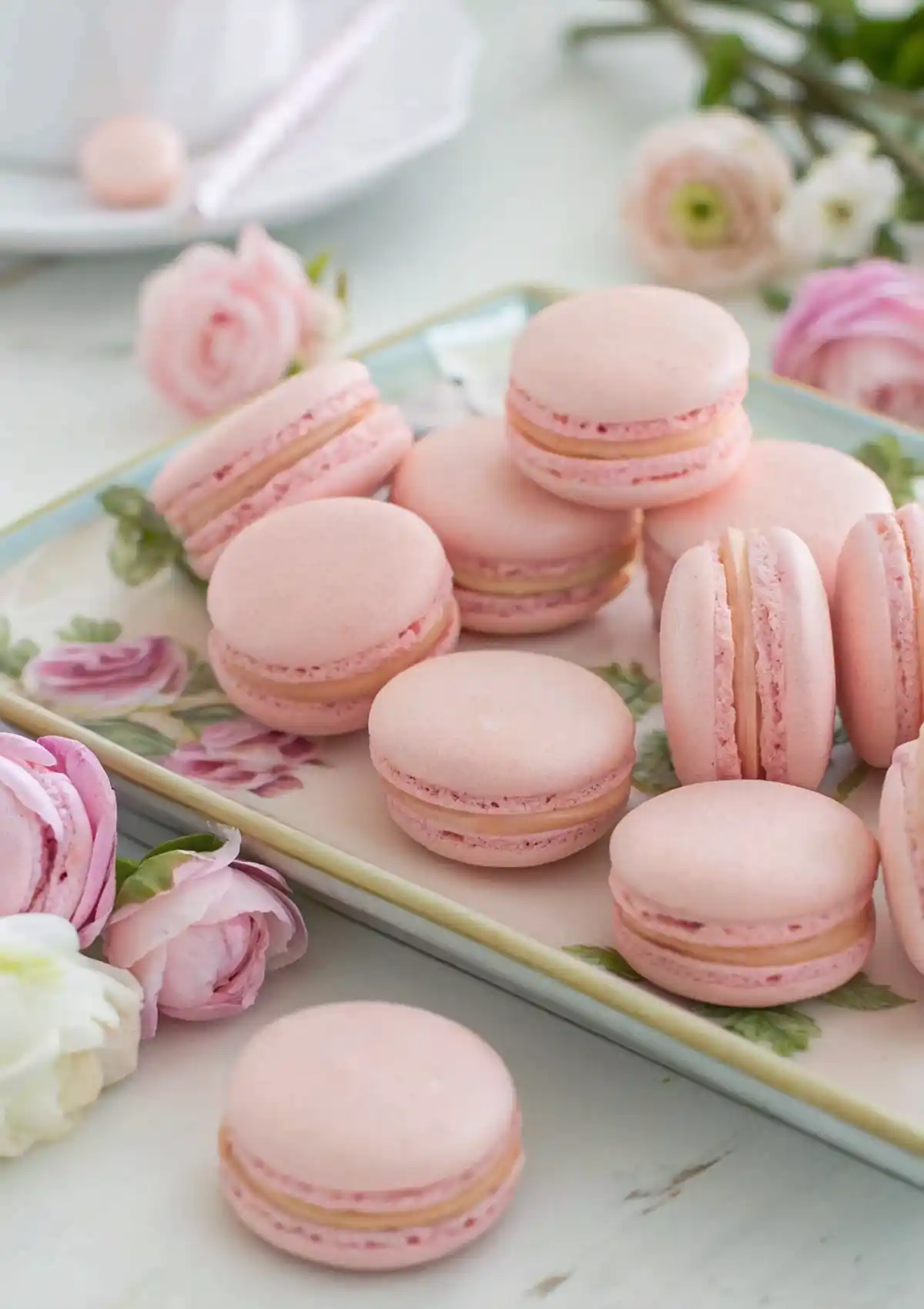
If you’ve ever wanted to make macarons but felt intimidated, you’re not alone. These delicate French cookies have a reputation for being tricky. But this guide strips away the confusion and makes success achievable. Whether you’re baking for a special event or just want to try something new, this macaron recipe gives you the tools to get it right. It’s built on real kitchen experience, not just theory, so every step has been tested to help you avoid common mistakes and create those smooth tops, crisp shells, and chewy centers macarons are known for.
Table of Contents
Why You’ll Love This Recipe
• Quick to learn and surprisingly doable even if you’re new to baking
• Uses simple, easy-to-find ingredients without cutting corners
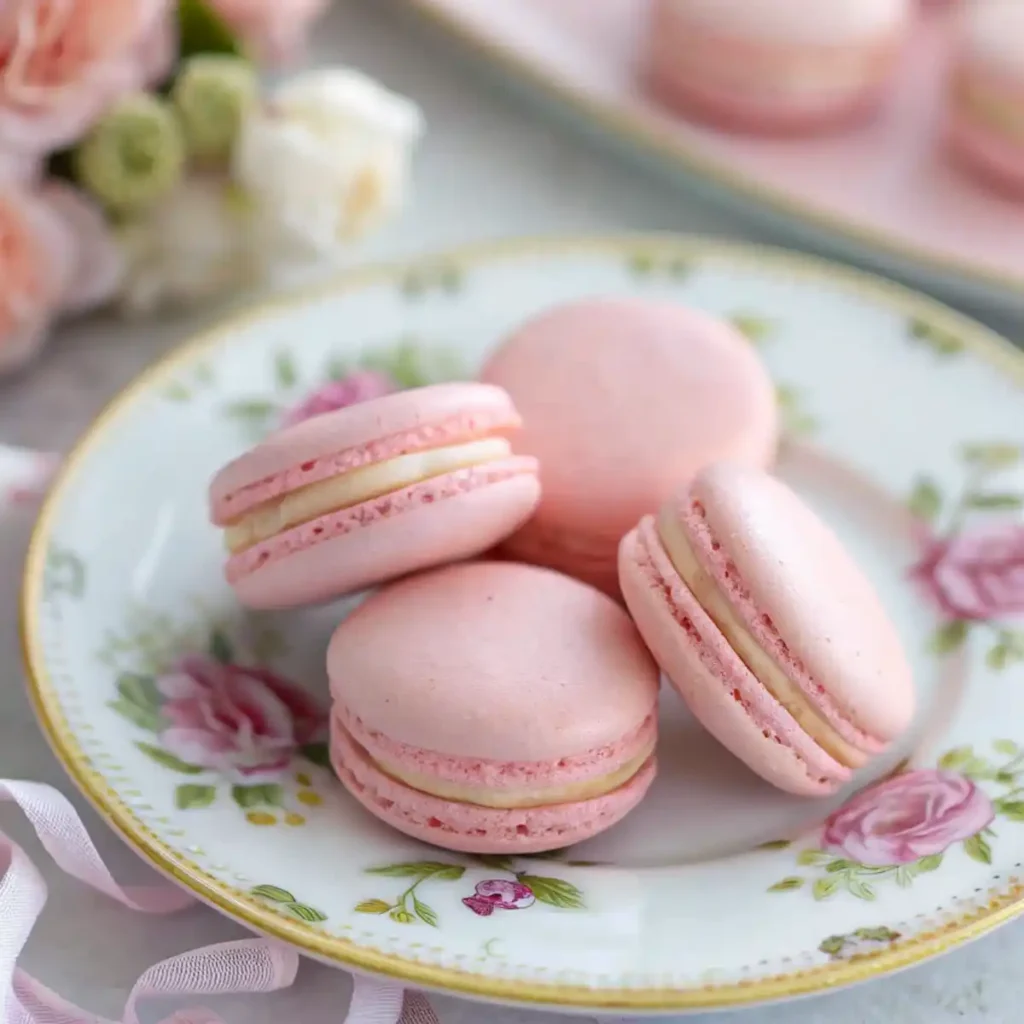
• Results in that perfect combination of a crisp shell with a soft, chewy center
• A crowd favorite that impresses guests every time
• Step-by-step instructions built from personal experience, not just textbook techniques
• Includes real troubleshooting tips based on what actually goes wrong in home kitchens
• The French buttercream filling adds a rich, creamy finish that feels luxurious without being too sweet
This recipe stands out because it blends clarity with technique. Instead of just listing what to do, it tells you why it matters.
Ingredients Needed
For the Shells
• 100 grams egg whites, from about 3 large eggs, brought to room temperature
• 140 grams almond flour, finely ground and sifted for smooth shells
• 90 grams granulated sugar, added gradually to build stable meringue
• 130 grams powdered sugar, sifted to avoid lumps
• 1 teaspoon vanilla extract, for a subtle background flavor
• 1/4 teaspoon cream of tartar, helps stabilize the egg whites during whipping
For the French Buttercream Filling
• 226 grams unsalted butter, softened to room temperature
• 5 large egg yolks, saved from the shell preparation
• 100 grams granulated sugar, to make a cooked syrup
• 1 teaspoon vanilla extract, added for rich flavor
• 3 tablespoons water, combined with sugar to make the syrup
• 1 pinch of salt, balances the sweetness and rounds out the flavor
Each ingredient here plays a clear role in the process. Use a kitchen scale for accuracy. Even small shifts in amounts can change how the batter behaves or how the shells bake.
How to Make Macarons
- Prep your tools and ingredients
Line baking trays with parchment paper or silicone mats. Set your egg whites out in advance to bring them fully to room temperature. Sift the almond flour and powdered sugar together into a bowl. This helps prevent lumpy batter and leads to smooth tops. - Whip the meringue
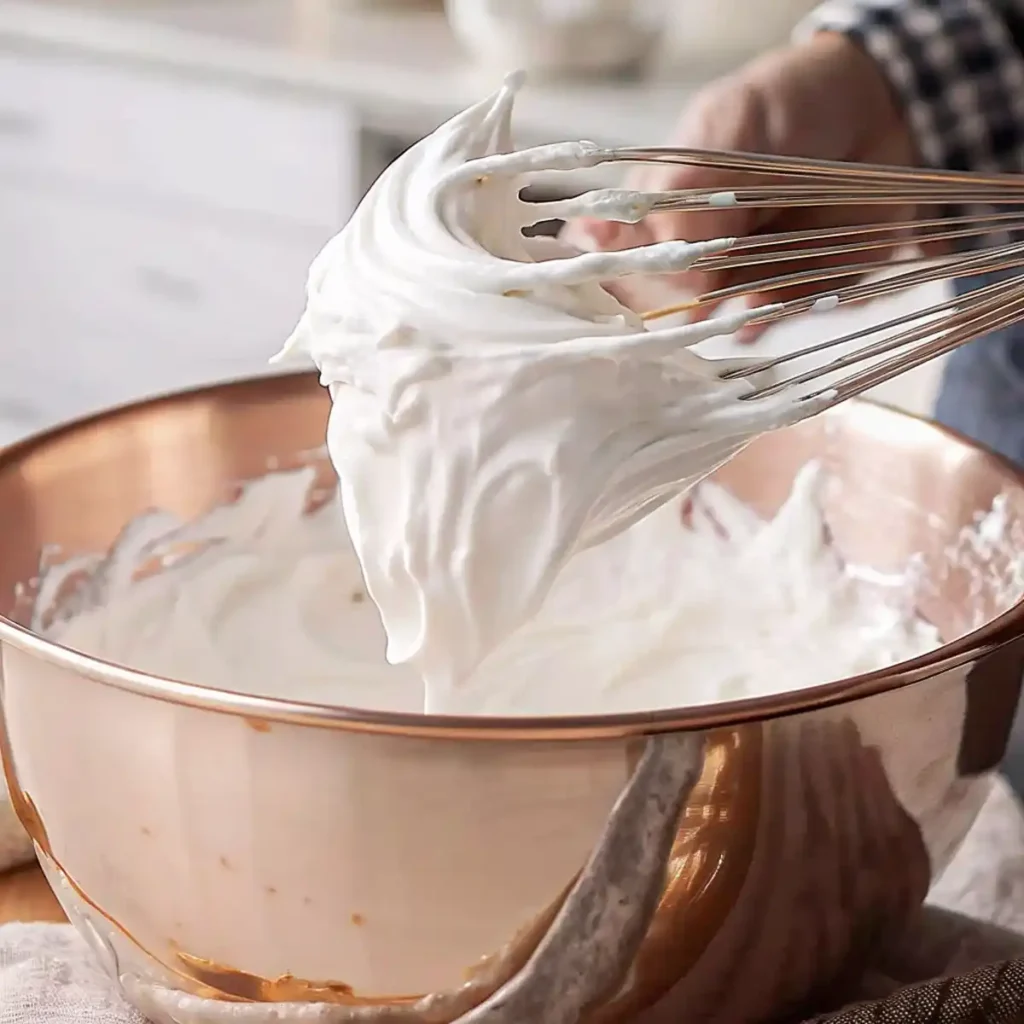
Pour the egg whites into a spotless mixing bowl. Start whisking on medium speed. Once the mixture turns foamy, sprinkle in the cream of tartar. Gradually add the granulated sugar a little at a time. Increase speed and whip until stiff, glossy peaks form. The meringue should hold its shape without collapsing. Add vanilla and food coloring if using, and mix just until combined. - Fold in dry ingredients
Add one-third of the sifted almond flour and powdered sugar mixture to the meringue. Fold gently with a spatula, turning the bowl as you go. Add the rest in two parts. Stop folding once the batter flows slowly like lava and you can draw a figure eight without the ribbon breaking. This stage is called macaronage. - Pipe the batter
Spoon the batter into a piping bag fitted with a round tip. Pipe small circles onto your lined trays, spacing them evenly. Tap the tray firmly against the counter several times to pop air bubbles. If bubbles remain, use a toothpick to smooth them out. - Let them rest
Leave the trays uncovered at room temperature until the tops are no longer sticky to the touch. This usually takes 30 to 40 minutes but may vary depending on humidity. Resting helps form the thin shell that leads to those signature macaron feet during baking. - Bake the shells
Preheat your oven to 300°F or 150°C. Place the trays in the center of the oven. Bake for 12 to 15 minutes, rotating halfway through for even baking. The shells should rise to form feet and not wiggle when gently touched. Let them cool completely on the tray before removing. - Make the French buttercream
In a small saucepan, combine the sugar and water. Heat gently while stirring until the sugar dissolves. Increase to medium heat and cook until the syrup reaches 240°F. Meanwhile, beat the egg yolks in a stand mixer until they look pale and thick. Slowly drizzle the hot syrup into the yolks while mixing on low speed. Once all the syrup is in, turn the speed up and continue mixing until the bowl feels cool. Add softened butter one piece at a time, waiting for each to fully mix in. Finish with vanilla and a pinch of salt. Beat until smooth and creamy. - Assemble the macarons
Match shell pairs by size. Pipe a small amount of buttercream onto the flat side of one shell, then top with its pair to make a sandwich. Repeat with the remaining shells. - Mature the macarons
Place the filled macarons in an airtight container and refrigerate for at least 24 hours. This resting time allows the filling to soften the shells and bring out the best texture. For even better results, let them mature for up to 3 days. Bring to room temperature before serving.
Baking and Quality Control
Precision matters
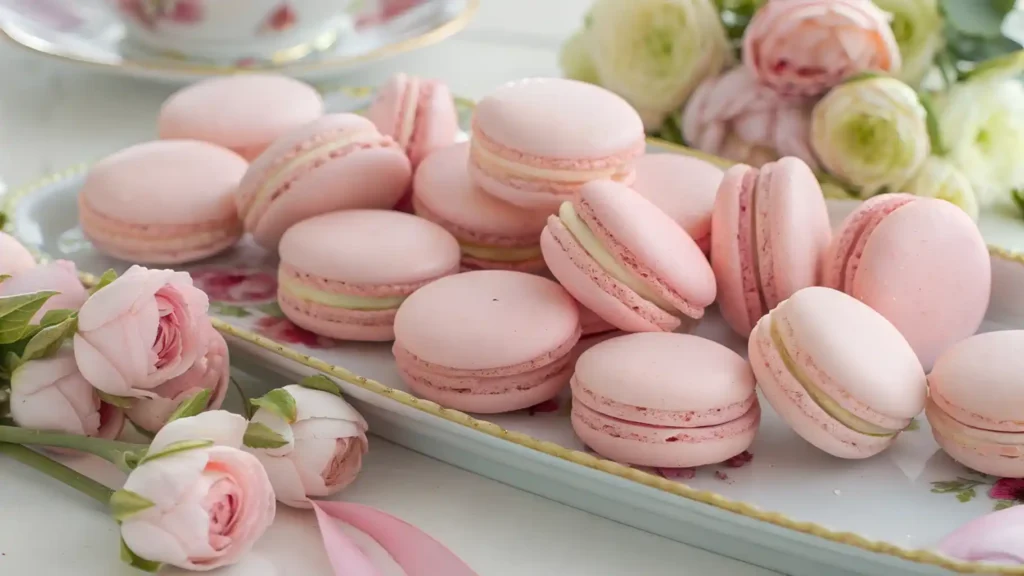
Set your oven to exactly 300°F or 150°C. Use an oven thermometer if possible since many home ovens run too hot or too cold. Bake each tray for 12 to 15 minutes. Rotate halfway through to avoid uneven rising or browning. The shells should develop ruffled feet and smooth tops without cracking.
The wobble test
To check if they’re done, gently touch the top of a macaron and try to nudge it side to side. If it moves easily, it needs more time. A baked macaron should stay firm and not shift. This simple test helps you avoid pulling them out too early or overbaking.
Fixing dry or too-crisp shells
If the shells end up too crunchy after baking, lightly brush the bottom side with a bit of milk using a clean pastry brush. Do this before adding the filling. The extra moisture helps the shells rehydrate during the resting phase in the fridge, giving them the soft texture macarons are known for.
The Creamy Custard Filling (French Buttercream)
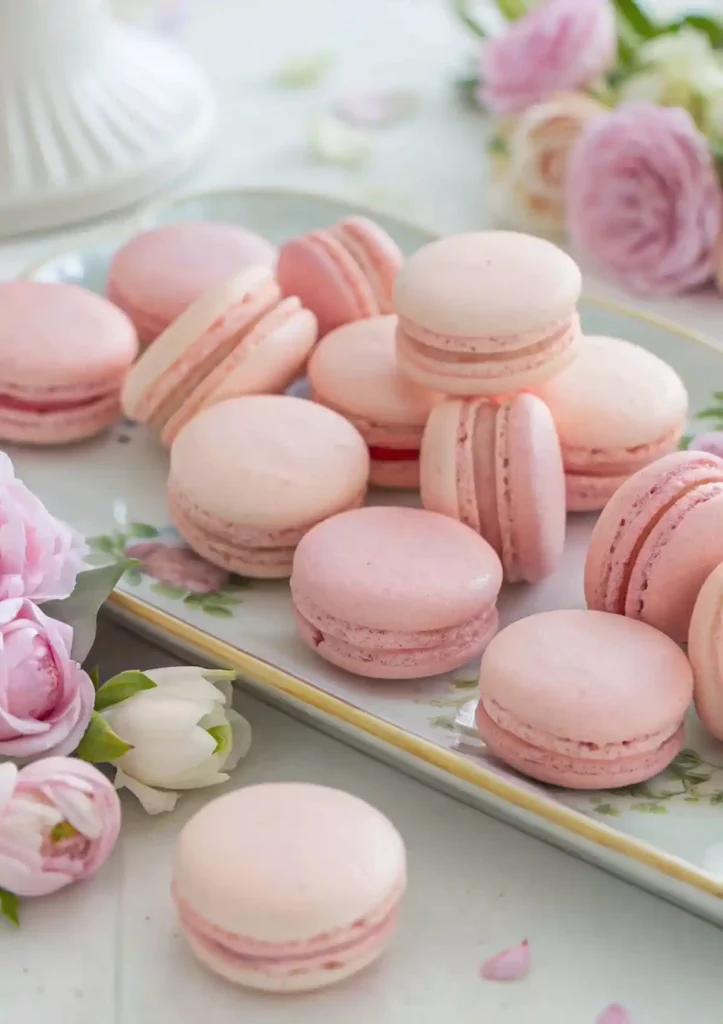
Put your yolks to work
After using the egg whites for the macaron shells, you’ll have five egg yolks left. Instead of tossing them, use them to create a smooth and rich French buttercream. This custard-style filling brings a velvety texture that pairs perfectly with crisp macaron shells.
Master the syrup method
In a small saucepan, combine granulated sugar and water. Stir gently over low heat until the sugar dissolves completely. Raise the heat and bring the mixture to a boil. Use a candy thermometer to track the temperature. When the syrup reaches 240°F, remove it from the heat.
Work with precision and patience
While the syrup is heating, beat the egg yolks in a stand mixer on high speed until they look pale and airy. With the mixer on low, slowly drizzle the hot syrup into the yolks. Go slowly so the eggs don’t scramble. Once all the syrup is added, increase the speed and beat until the bowl feels cool to the touch. This may take several minutes.
Finish with butter and flavor
Add softened unsalted butter in small pieces, letting each piece blend in fully before adding the next. Mix until smooth. Add vanilla and a pinch of salt. You can also tint the buttercream with gel food coloring if you want a pop of color between the shells. The result is a rich, silky filling that spreads easily and sets well during chilling.
Storage and the Maturation Phase
Why macarons need time
Freshly assembled macarons might taste too crisp or dry. That’s normal. The real magic happens after a short rest in the fridge. Letting them sit for at least 24 hours allows the filling to soften the shells from the inside. This transforms the texture into the signature melt-in-your-mouth bite macarons are known for.
Best way to store
Place the filled macarons in a single layer inside an airtight container. Use parchment paper between layers if you need to stack them. Store the container in the fridge for one to three days. This resting time helps the flavors blend and the shells relax.
Serving tip
Before serving, let the macarons come back to room temperature. This takes about 20 to 30 minutes. The texture and flavor are much better when they’re not cold. Avoid leaving them out too long, though, as they can dry out.
Conclusion
Making macarons might seem like a challenge, but with clear steps and the right tips, it becomes something you can truly enjoy. This recipe takes the guesswork out and replaces it with real results. From crisp shells to creamy centers, every part is designed to help you succeed without needing a professional kitchen.
What makes this recipe stand out is its balance of structure and softness. It respects the tradition of French macarons while giving you a way to make them at home without stress. Plus, the buttercream filling uses up your yolks and adds a rich, smooth finish that complements the shells perfectly.
If you tried this recipe, leave a comment and give it a star rating. Your feedback helps others and keeps the recipe growing. Share your batch on Pinterest or Facebook and let others see what you made.
What flavor would you try next time? Let us know below.
You Might Also Like…
Macarons Recipe

Ingredients
Shells
- 100 g egg whites from about 3 large eggs, at room temperature
- 140 g almond flour finely ground and sifted
- 90 g granulated sugar added gradually to build stable meringue
- 130 g powdered sugar sifted to avoid lumps
- 1 tsp vanilla extract
- 0.25 tsp cream of tartar
French Buttercream Filling
- 226 g unsalted butter softened to room temperature
- 5 egg yolks from large eggs
- 100 g granulated sugar for syrup
- 1 tsp vanilla extract
- 3 tbsp water for sugar syrup
- 1 pinch salt to balance flavor
Instructions
- Line baking trays with parchment or silicone mats. Let egg whites come to room temperature. Sift almond flour and powdered sugar together.
- Whip egg whites in a clean bowl until foamy. Add cream of tartar, then slowly add granulated sugar. Beat until stiff, glossy peaks form. Add vanilla.
- Fold in sifted almond flour and powdered sugar in thirds. Mix gently until the batter flows like lava and forms a figure eight.
- Pipe the batter onto trays using a piping bag with a round tip. Tap trays to release air bubbles. Use a toothpick for remaining bubbles.
- Let piped shells rest uncovered until dry to the touch (about 30–40 minutes).
- Bake at 150°C (300°F) for 12–15 minutes, rotating trays halfway. Shells should have feet and not move when touched. Cool completely.
- Make the buttercream: heat sugar and water to 240°F. Beat egg yolks until pale. Slowly pour in hot syrup while mixing. Beat until cool, then add butter piece by piece. Finish with vanilla and salt.
- Match shells by size. Pipe buttercream onto one side and sandwich with the matching half.
- Store in an airtight container and refrigerate for at least 24 hours before serving. Let come to room temp before eating.
Notes
Serving Size: 11g
Calories: 63 kcal
Carbohydrates: 6g
Protein: 0.8g
Fat: 1.9g
Saturated Fat: 0.7g
Cholesterol: 0.7mg
Sodium: 18mg
Potassium: 30mg
Fiber: 0.5g
Sugar: 5.2g
Calcium: 10mg
Iron: 0.4mg
FAQs
What is the difference between a macaron and a macaroon?
A macaron is a delicate French cookie made with almond flour, egg whites, and sugar, filled with buttercream or ganache. A macaroon, on the other hand, is a chewy coconut cookie often dipped in chocolate. The two are completely different in texture, ingredients, and taste.
What is the “lava” stage or the “figure 8” test?
The lava stage is when your macaron batter flows slowly and evenly off the spatula, resembling lava. To check it, lift some batter and let it fall into the bowl. If you can draw the shape of the number eight without the stream breaking, it’s ready for piping.
How long should macarons dry before they go in the oven?
Let the piped shells rest at room temperature until a thin skin forms on top. This usually takes 30 to 40 minutes. When gently touched, the tops should not stick to your finger. Drying helps create feet and prevents cracks during baking.
Why do macarons need to “mature” in the fridge?
Maturing in the fridge allows the filling to soften the inside of the shells. This creates the ideal texture with a slightly chewy center and crisp exterior. It also helps the flavors blend and deepen over time.
What are the most common reasons macarons crack or fail to develop “feet”?
Cracks often come from under-mixing or baking too soon without letting the skin form. No feet usually means the batter was too runny, or the oven temperature was too low. Using a kitchen scale and resting the shells are both key steps to avoid these problems.