
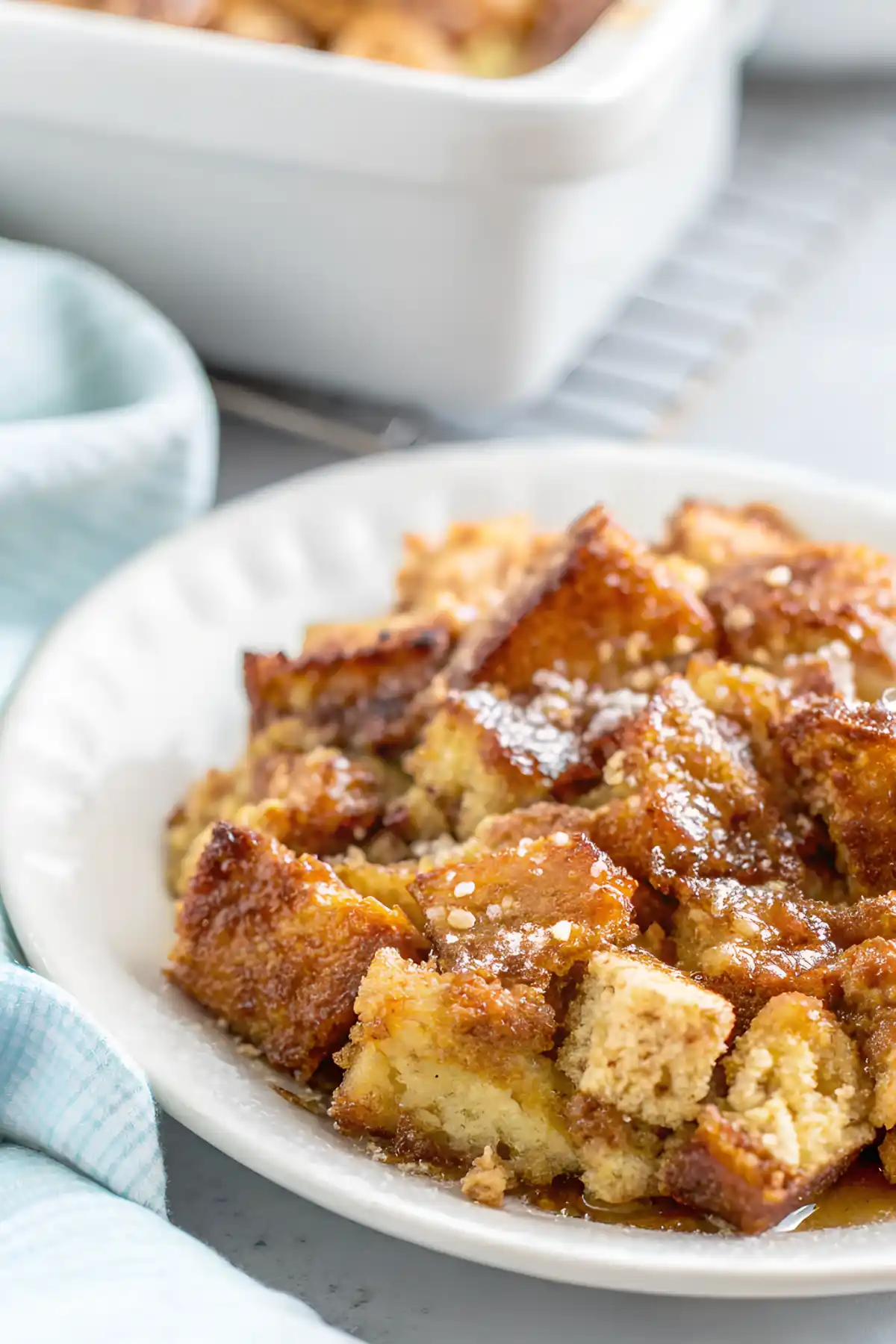
French toast casserole is the kind of breakfast that solves real problems. You want something warm, filling, and simple, but you do not want to stand at the stove all morning. This recipe was made for that moment. It comes together fast, feeds a group, and tastes like a special treat without extra work. Whether you are planning a holiday morning or a relaxed weekend, this dish gives you rich flavor, soft texture, and a golden top with very little effort.
Table of Contents
Why This Recipe Works
The swoon worthy bottom layer
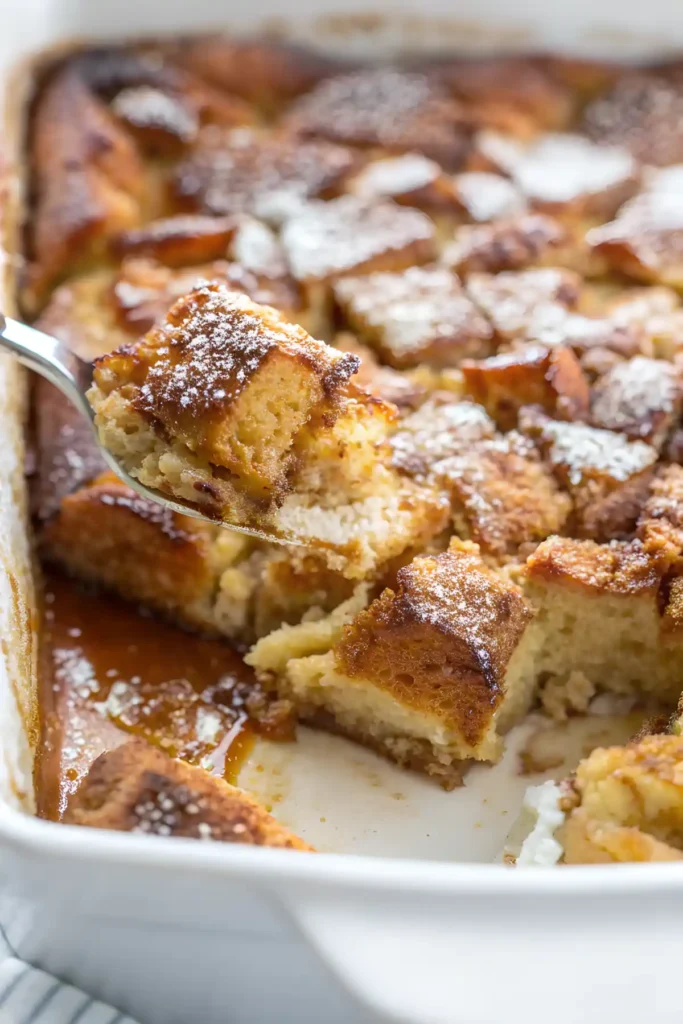
This recipe starts where most casseroles do not. Butter and brown sugar melt together and settle at the bottom of the pan. As it bakes, that layer turns into a soft caramel base. The bread absorbs just enough of it to create rich flavor without becoming heavy.
Make ahead magic for busy mornings
This dish fits perfectly into packed holiday schedules. You can prep everything the night before, place it in the fridge, and bake it when you wake up. Christmas morning feels calmer when breakfast is already handled.
A clear texture promise
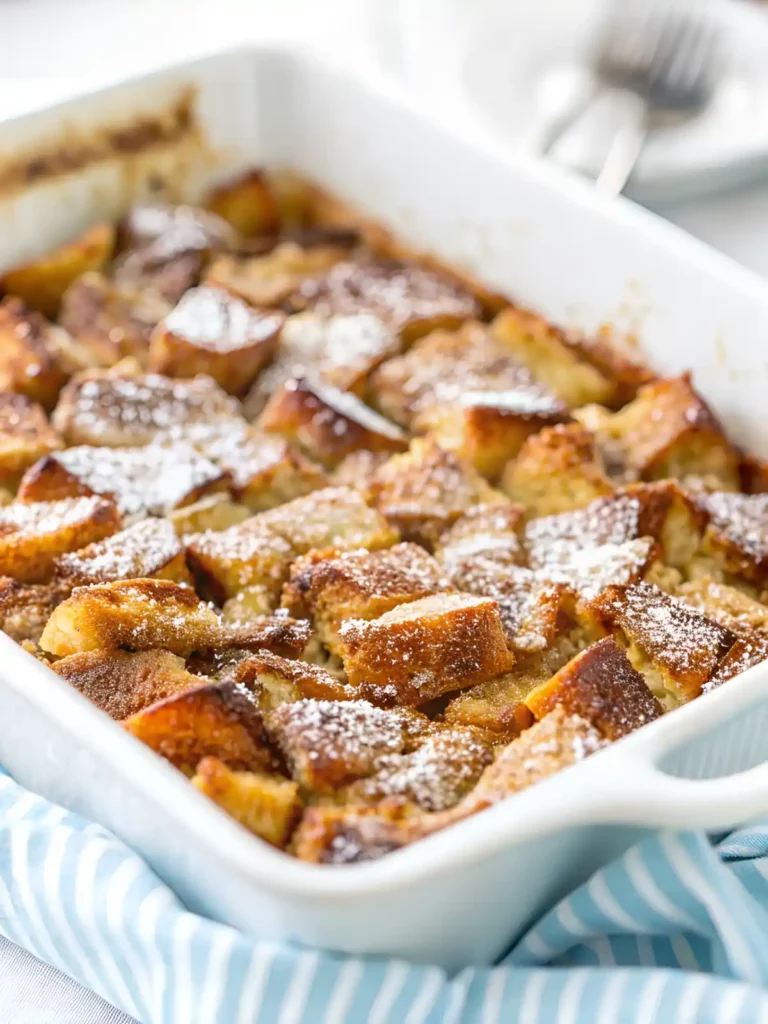
The center stays soft and custardy while the top bakes into a golden brown finish. You get contrast in every bite, not a flat or soggy result. This balance is what keeps people coming back for seconds.
Ingredients Needed
For the caramel base
- ½ cup butter, unsalted and sliced so it melts evenly
- 1 cup brown sugar, packed for a deep caramel flavor
For the casserole
- ½ loaf French bread, about 8 ounces, cut into bite sized cubes
- 6 large eggs, best at room temperature for smooth mixing
- 2 cups milk, whole milk gives the richest result
- 2 teaspoons vanilla extract for warmth and aroma
- 2 teaspoons cinnamon, split between the custard and the top
For the finish
- 1 tablespoon brown sugar, sprinkled on before baking
- Powdered sugar for topping, optional but nice for serving
Each ingredient has a clear job. The bread soaks up the custard, the eggs set the center, and the butter sugar mix creates that soft caramel layer everyone loves.
How to Make French Toast Casserole
- Heat the oven and prep the pan
Set your oven to 425°F so it is fully hot when the dish goes in. Grease a 9×13 inch baking pan well. This step helps stop sticking and makes serving easier later. - Create the caramel base
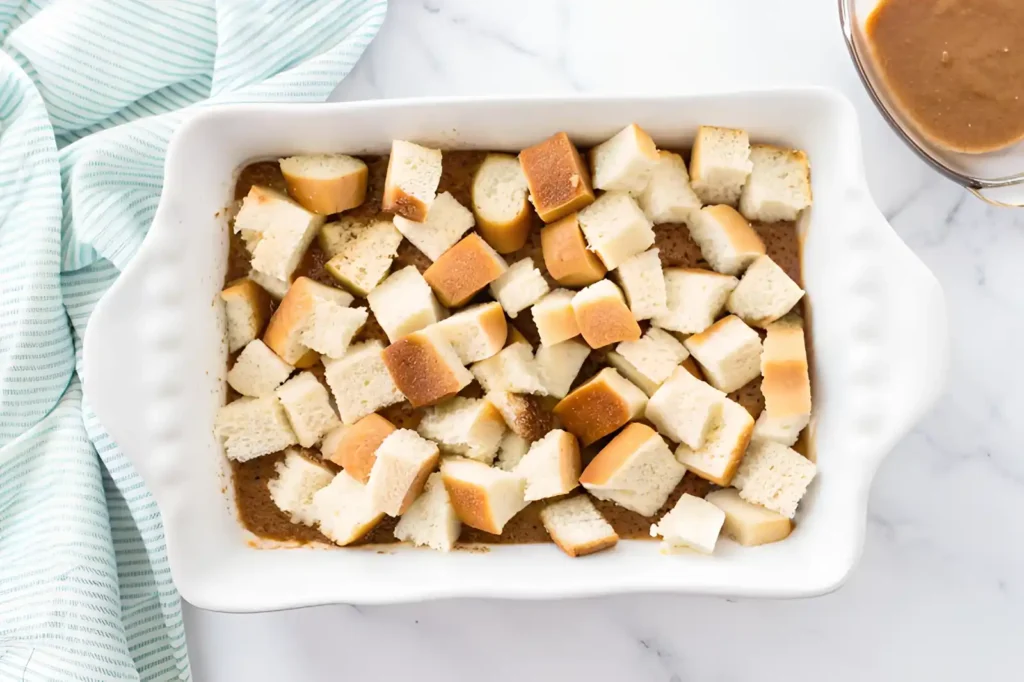
Place the butter in a small saucepan over medium heat. Let it melt slowly, then add the brown sugar. Stir until the sugar dissolves and the mixture looks smooth and glossy. Pour this mixture into the baking pan and spread it across the bottom. This layer will turn soft and rich as it bakes. - Add the bread
Scatter the bread cubes evenly over the butter and sugar layer. Try to keep the pieces in a single level so they soak at the same rate. - Mix the custard
In a medium bowl, whisk the eggs until the yolks and whites fully blend. Add the milk, vanilla extract, and one teaspoon of cinnamon. Whisk again until the mixture looks pale and smooth. - Soak the bread
Slowly pour the egg mixture over the bread. Take a moment to press the bread down gently so every piece absorbs the liquid. This step helps avoid dry spots after baking. - Finish the top
Sprinkle the remaining teaspoon of cinnamon and one tablespoon of brown sugar over the surface. This adds warmth and helps the top brown evenly. - Bake until golden
Place the pan in the oven and bake for 25 to 30 minutes. The top should look golden brown and the center should feel set when lightly pressed. - Serve
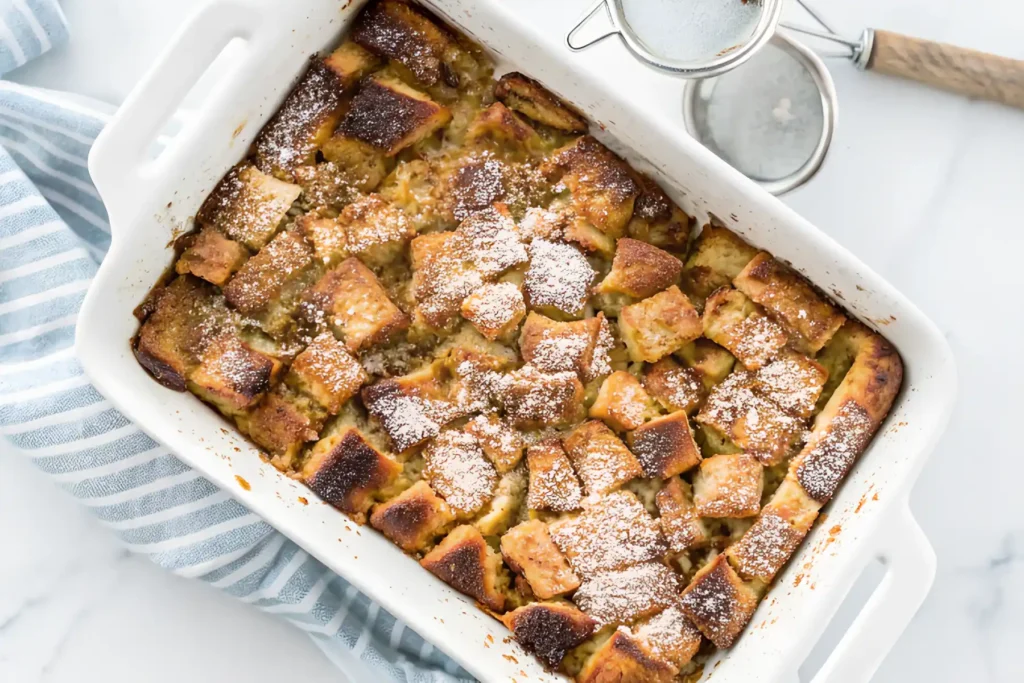
Remove from the oven and let it rest for a few minutes. Dust with powdered sugar if you like, then serve while warm.
Overnight and Make Ahead Instructions
The overnight soak
Once the casserole is fully assembled but not baked, cover the pan tightly with plastic wrap. Place it in the fridge and let it rest overnight. This gives the bread time to absorb the custard evenly, which helps the center bake soft instead of eggy.
Same day option
If you are short on time, you can bake the casserole right after assembling it. Let it sit at room temperature for about 20 to 30 minutes before baking so the custard settles into the bread. The texture will still be rich and satisfying, even without the overnight rest.
Dietary Substitutions
Dairy free swaps
You can replace the butter with coconut oil or a dairy free butter at the same amount. For the milk, almond milk, coconut milk, or soy milk all work well. Use the same volume listed in the recipe so the custard still sets properly.
Gluten free option
To make this dish gluten free, swap the French bread with gluten free French style bread using the same amount. Cut it into cubes and let it dry slightly before assembling. This helps the bread absorb the custard without turning soft in the center.
These changes keep the texture and flavor close to the original while fitting different needs.
Troubleshooting How to Prevent a Soggy Casserole
Start with the right bread
Very soft, pre sliced sandwich bread often leads to a wet result. It breaks down too fast and cannot hold the custard. French bread with a firm crust works better, especially if it is a day old or slightly dried.
Give the bread enough soak time
The bread needs time to take in the egg mixture evenly. If baked too soon, the liquid may settle at the bottom and create eggy spots. Letting the dish rest, either overnight or for at least 20 to 30 minutes, helps the custard spread through every piece.
Check doneness before serving
If the top browns fast but the center still feels loose, loosely cover the pan with foil and return it to the oven for a few more minutes. The center should feel set but still soft when pressed lightly.
Freezing, Storing, and Reheating
How to freeze
Bake the casserole first, then let it cool fully. Once cool, wrap the pan tightly with plastic wrap, followed by a layer of foil. Store it in the freezer for up to three months. Freezing after baking keeps the texture stable and avoids excess moisture.
How to store leftovers
Place leftovers in an airtight container and keep them in the fridge for up to four days. Reheat single portions in the microwave or warm larger pieces in the oven.
The best way to reheat
For frozen casserole, move it to the fridge and let it thaw for about 24 hours. Reheat in a 350°F oven for around 30 minutes, or until heated through. Cover loosely if the top starts to brown too much.
Conclusion
This French toast casserole works because it keeps things simple while still feeling special. The soft center, the golden top, and the sweet caramel base come together without extra effort. It is easy to prep ahead, easy to bake, and easy to serve to a group. That makes it a strong choice for holidays, weekends, or any morning when you want less stress and better food.
If you tried this recipe, I would love to hear how it turned out. Leave a comment below and share a star rating so others know what to expect. You can also share it on Pinterest or Facebook to save it for later. Did you add fruit, nuts, or a different spice? Tell us what you changed and how it worked.
You Might Also Like:
French Toast Casserole

Ingredients
Caramel Base
- ½ cup unsalted butter sliced
- 1 cup brown sugar packed
Casserole
- ½ loaf French bread cut into bite-sized cubes
- 6 large eggs room temperature
- 2 cups milk
- 2 teaspoons vanilla extract
- 2 teaspoons ground cinnamon divided
Finish
- 1 tablespoon brown sugar for topping
- powdered sugar optional, for serving
Instructions
- Preheat the oven to 425°F (220°C). Grease a 9×13 inch baking pan well to prevent sticking.
- In a small saucepan over medium heat, melt the butter. Add the brown sugar and stir until dissolved and glossy. Pour the mixture into the prepared baking pan and spread evenly.
- Scatter the bread cubes evenly over the caramel layer, keeping them in a single level as much as possible.
- In a medium bowl, whisk the eggs until fully blended. Add the milk, vanilla extract, and 1 teaspoon of cinnamon. Whisk until smooth and pale.
- Slowly pour the custard over the bread. Gently press the bread down so all pieces absorb the liquid.
- Sprinkle the remaining cinnamon and 1 tablespoon of brown sugar evenly over the top.
- Bake for 25 to 30 minutes, until the top is golden brown and the center feels set when lightly pressed.
- Remove from the oven and let rest for a few minutes. Dust with powdered sugar if desired, then serve warm.
Notes
Nutrition Facts Per Serving
- Calories: 382 kcal
- Carbohydrates: 48 g
- Protein: 9 g
- Fat: 17 g
- Saturated Fat: 9 g
- Cholesterol: 159 mg
- Sodium: 328 mg
- Potassium: 198 mg
- Sugar: 32 g
- Vitamin A: 630 IU
- Calcium: 131 mg
- Iron: 1.8 mg
FAQs
What is the best bread for French toast casserole?
French bread works best because it has a firm crust and a sturdy center. Day old bread is even better since it absorbs the custard without falling apart. Soft sandwich bread often turns mushy and should be avoided.
Does French toast casserole have to sit overnight?
No, it does not have to sit overnight. An overnight rest gives the most even texture, but you can bake it the same day. Letting it rest for at least 20 to 30 minutes before baking helps the custard soak into the bread.
What are common mistakes when making French toast casserole?
Using very soft bread is the most common issue. Skipping rest time can also cause eggy spots. Baking at too high a rack position may brown the top before the center sets.
What to have with French toast casserole?
Fresh fruit, crispy bacon, or sausage pair well with the sweet flavor. Yogurt or scrambled eggs also help balance the meal if you want more protein.
Can I use sourdough bread for French toast casserole?
Yes, sourdough works well. Its firm texture holds up during baking, and the slight tang balances the sweet custard. Use the same amount as French bread.
Do breakfast casseroles reheat well?
Yes, they reheat very well. Warm individual portions in the microwave or reheat larger amounts in the oven until heated through. The texture stays soft when reheated gently.